


The picture below made me start playing a word game in my mind.
What words can be created by adding new letters?
Some possible answers are beneath the photo. But before you look, play the game yourself!
Then the thought dawned on me that each answer to the puzzle creates a story, in and of itself. The potential for a short story of your own is ripe for creation.
See my 300-word attempt below. If you post your story in the comments, please keep it under 1,000 words. 🙂
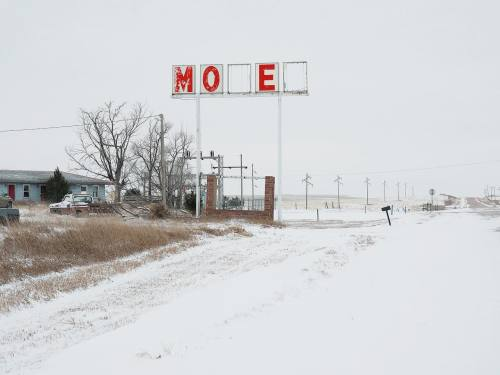
Photo by Josef Hoflehner
Possible answers:
MONEY
MOVED
MOTEL
MOPEY
MOVER
MOWED
MOSES
______________
The Roadside Riddle by Steve Laube
The sign had been meant to say “MOTEL.” Everyone knew that, even now, years after the T and the L had vanished, leaving the word stranded as a riddle posted against a bleak landscape.
People used to stop there when the motel was still open. Then the recession came, the bank closed, and the school consolidated with a town fifteen miles away. One by one, the lights went dark.
The owner had meant to replace the missing letters right away. He’d even stacked them in his garage. But life has a way of postponing such things until they no longer matter. Eventually, it was too late. All that was left was an empty building and a sign that no longer explained itself.
Children growing up afterward made games of it. They guessed what other words would fit. “MONEY,” someone would say. “MOSES,” said another, squinting at it as if it were an epiphany. Teenagers took photos beneath it, pretending to hold up the missing letters with their hands, laughing as if the joke were new. “MOWED” was popular in summer. “MOPEY” added an eighth name to the collection of Snow White’s dwarfs.
But to those who remembered, the missing letters suggested the town had “MOVED.” Moved past its promise and now the decrepit sign served as a form of apology: “Sorry. We existed once, and we cared enough to leave a note.”
Travelers still slow down there sometimes, uncertain. They see the sign, hesitate, and glance toward the decaying shell of a building next to the thin road. There’s nothing to see, but ahead lie many miles of quiet and the echo of something that used to be.
Such can be the melancholy of memory. One can let its shadow settle and mourn what has already gone. Or one can wistfully smile at the recollection and look ahead to the promise of a new day, a new adventure, a new sunrise.

 What I Am Looking For (Lynette Eason)
The church sign should have read MOTET
but it really seems to me
that the congregation got all het
up about polyphony,
thinking it must not be right
because that word did sound quite French,
and so way past one dark midnight
they buried letters in a trench.
Yeah, that’s right, they stole the t’s
leaving a gap-toothed might-have-been
that prevented the disease
of many voices moving in
to steal the Sunday solo life
of the mayor’s off-key wife.
Your story sounds much like my life. Thanks for the post. The glory days have passed me by. It seems as though it is over for me, but I will not give up. In the past, I have proved them all wrong, and I can, and I will do so now. Once again, thanks for your post. It cheered me up and gave me more hope.
Love the Roadside Riddle – you feel an attachment to the place in just 300 words!
I love the story you wrote to go with the picture. It sounds so true and heartwarming. Great job!
Model of the day.
While the story started out as cute and heartwarming, it turned too fast into sadness.
An old abandoned motel that had seen better loved days. The building cries. The people who made it laugh and love turned to newer things.
I knew of a small roadside restaurant called The Sugar Owl. When I asked why in the world it had that name, I was told that it started out as The Sugar Bowl. But there was a big storm and the B on the sign got knocked down and the owner never got around to putting it back it. Hence, The Sugar Owl.
She mowed her moose before she left. The T and L soon followed. He was never the same. Not strictly true. He was never the same before he came back.
Smartest kid in the class. Read everything, especially every Zane Grey book as it hit the library shelves. Wanted to see the world. Did. Saw Europe. Saw a few Pacific islands. Free tours paid by the government.
Don’t know why he didn’t come home then. Most did. Maybe the midwest seemed too boring after that. Checked out Korea next.
Brought her back with him. Didn’t fit in. She didn’t either. Folks tried. Seriously, they did.
The motel sounded smart. Old owner sold on contract. Boomed for a few summers. Later used the No Vacancy sign to cover a broken window in back. Old owner was patient; his heirs not. Odd jobs kept them off his back for a while.
Near the end, he’d sit in a lawn chair staring at the sign like he kept turning the same page backward in a book to re-read it.
He’d ramble. I never understood why mom would want to mow a moose or a mouse. I just remember she never smiled much. He did once in a while, though.
Jimmy and Carol were the farmers down the road. I could never call them dad or mom. They said I reminded them of him at my age.
Growing up on a farm was good. College worked out well. Met Angie there.
On the annual Christmas trip to Jimmy and Carol’s, we go past the old place. I mow a few moues myself when I see it. Probably look like my mom doing it.
I don’t ruin it for the kids. They shout when they see it. They call it Moe’s. Grampa and Gramma’s farm is a few minutes away.
I learned much from the other stories…and was embarrassed. I’m not sure if this is appropriate, but here is a more polished version. The two combined are less than 1000 words.
* * * * *
The T and L fell off the night mom left. Dad blamed the moose. Said she’d mowed too many of them. He was never the same. Well…not true. He’d already come back different.
Folks said he was the smartest kid in the class. Read everything, especially Radio Boys and Hardy Boys. Wanted to see the world. He saw Europe and a few Pacific islands. Free tours paid by the government.
He could’ve come home then. Most did. He saw Korea, too. He brought mom back with him. Folks respected him and thought she was sweet.
They bought the motel cheap. They lived there. It made money the first few summers. Later, I helped him board up a broken window with the faded No Vacancy sign.
After mom left, he kept putting the T and L back. He’d toss an old rope over the sign top and tie a letter to it. I’d help pull it up, and he’d tie the rope off. He’d climb a ladder and fasten it on. And they kept falling off with every strong wind. After every wind, we’d put them back.
Near the end, he’d sit in a lawn chair staring at the sign, like when you keep paging backward in a book because you forget what you read. The letters possessed him, especially when half-asleep.
“Move, move, move.” He’d roll off his chair and crawl away. I’d laugh. “Mowed ’em down” as his huge black pupils saw something.
Sometimes he really scared me. “Those aren’t morels!” He’d slap away whatever was in my hands.
Sometimes, he’d smile. “She was like a model…when she didn’t mope.” He’d look straight at me. “But she mowed too many moose. She couldn’t help herself. The moose killed her.”
I never understood why mom wanted to mow a moose, but it must have made them angry. I just remember she never smiled much…except when I walked in the room. That’s about all I remember of her. I used to be scared of the cows down the road.
The T and L fell off for the last time when I was at school. Carol picked me up. She and Jim were farmers down the road. Jim was Dad’s best friend. They took me in that day. Didn’t have any kids of their own.
I feel bad I never called them Mom or Dad. Jim said I reminded him of Dad when I helped with chores. He’d tell stories about when they were kids. When I was really sad or mad, Carol’d shake her head. I overheard her telling Jim I reminded her of my mom.
Growing up on the farm was good. College worked out well. Met Angie there. We’ve got three kids and another on the way.
Jim was right. Dad’s brain was KIA in Korea. Carol was right. Mom’s heart was buried with her village and little sisters.
Carol’d sometimes cry and hug me so hard I couldn’t breathe. “What they went through so you could be here…” After a long rainy night of herding escaped cows, Jim said something once. “I can’t imagine the world without you. Your Dad would be proud of you.” I didn’t find out ’til later their kids were in heaven.
I’ve been working up to tell Jim that Dad would’ve been proud of him as my father. But I think Dad knew Jim’d take better care of me than he could. I don’t want Jim to think of that…though he probably already has. He probably doesn’t say anything so I won’t think of it either.
On our annual Christmas trip to Jim and Carol’s, we go past the old place. I mow a few moues myself when I see it. Probably look like my mom doing it. But years of Carol and Jim’s Bible reading and dragging me to church rubbed off. I usually smile.
The kids shout when they see it. “Moe’s place!” They know what’s next. Grampa and Gramma’s farm is a few minutes away.
Mosey! Mosey along, kids. Get to school so I can write in peace!
They will be home, not going anywhere because of the snow storm coming to NJ. If any of you live in area that will be hit, I hope your pantries and full and your mind is also filled… with imagination.
Recovering Home Lori Roeleveld
“You sure, Mister?”
He nodded.
“There’s a town up the road with everything you might be wanting. What are you looking for here?” the driver asked, her brown eyes searching his face in the mirror.
“Redemption,” he replied.
She shrugged and pressed the brakes. As he descended the steps, she scanned the vacant road for life. “Even Jesus ain’t visited this place in a century. I’ll stop tomorrow. Won’t take you long to know this ghost town ain’t anyone’s destination.”
Inhaling the fumes as she drove on, he steadied himself. Weak-kneed, not from the relentless ache in his left leg but from the heartache washing over him as he faced the boarded-up church before him.
He imagined it full again, music from the upright piano pouring from the windows. Him tugging at the tie he resisted but Livvie insisted was only right for a man of God on a Sunday. Olivia. His Livie. All faith and fire.
When the gunman violated his sanctuary that day, painting the walls with the blood of those he’d been charged to protect, his faith had fallen beside them onto the hardwood floors. Before the smoke had barely cleared, Rev. Moe was on a bus to Little Hope where even God wouldn’t bother him.
As he trudged toward the town center, he realized Livvie probably moved on. Remarried? Passed away? Forgotten him for sure. Best find a room. Catch that bus tomorrow.
Then he saw it. His name on the broken sign.
Nah, coincidence. Even God had forgotten his name.
The bell over the door jingled as he entered.
How could this be? There was Livvie, young as the day he left, behind the counter.
“Livvie?” he asked.
“Mom!” the young woman called. “You’d better get out here.”
“Moe? Thank you, Jesus, He’s brought you home.”
Had He?
Maybe He had. Maybe he was home after all.
Wow!
Aw! This one made me cry. 😀
Your post of the MO E brought back memories for me since I had an Uncle who owned a motel when I was a kid. It was called Leonard’s Motel and many years ago it was a fun place to go as a youngster . It was bustling with people and everything seemed new and nice. The cafeteria had delicious food and it was one of my first experiences with pinball machines and a bowling game where you slid a puck down a polished wood alley and the pins that hung down would fold up if you supposedly hit them. As years went by the MO E became outdated and went out of business, then eventually was torn down. So I guess the MO E for me would stand for Memories Of Enjoyment that won’t be torn down as long as I can remember them.
MOPED was the first word that came to mind. We had a motel here that only certain letters would light up. I began to see a name by combining the lit letters into a first name, and the unlit letters into the last name. So it went from Safari Motel to Safamo Ritel. I even considered it as a potential pen name.
Well done, Steve.
A bonus thought for writers. Steve chose to add a coda–an application, even a suggestion of hope to his marvelous short story.
But what if the tale ended with the penultimate paragraph? Then the reader would have been left with an unanswered scenario. Unsettled and disturbing.
I know the short chapters in almost all of my books end with a “Takeaway.” As if I have all the answers. Clearly, I don’t.
Thanks for an engaging exercise, Mr. Laube. Now back to work.
“Yeah, I know it. And I know the whole story behind it. And no, that sign never spelled “Motel”, because while that building behind it was once partly a motel, it had its own sign that’s now gone. That sign read “Rusty’s” cause that was the name of the place. A motel and bar and sometimes a jazz joint and general hangout.
The sign you’re talking about used to read “Mover”, because Rusty used to rent out a space there that had a large garage and it was occupied by Jack Sullivan who ran a moving company.
Now that’s only the beginning of the story.
The main character of the story is a guy named Andy Bassinger. Andy had a place in town, never sure exactly where, but I knew him from hanging out at Rusty’s. Me and Andy got to talking one night over beers and found we had something in common. We were both Vietnam veterans, but while that brought us together, we could never really click.
I spent my year just outside of Saigon working in a motor pool, never saw combat or went on a patrol or slept in a rice patty. Andy was a real grunt, and it showed. I could understand what he was telling me, but I couldn’t, you know, relate. Not the way he was hoping I would.
Anyways, we stayed friends. And when he began falling apart, there wasn’t much I, or anybody else could do or say.
Rusty ran a late-night poker game back then, and Andy was usually a participant. He was not a great card player when sober and was terrible when drunk which was most of the time. Things went from bad to worse for Andy. He got in bad debt , knocked over a liquor store, did a 5 year stretch, and came back a different person.
I remember the night he walked into Rusty’s after his release. Nobody recognized him. He was nicely dressed, hair and beard nicely trimmed, and there was a light in his eyes I had never seen before. When the crowd realized it was him, everybody got excited and they all wanted to celebrate.
Andy stood in the middle of the room, holding a mug of beer that had been handed to him. Gave a big smile to the crowd and slowly spilled the beer right into the floor drain. The place got real quiet.
“Friends” said Andy “I am a new man. Three years ago I gave my life to Jesus, and have not had a drop to drink since”.
He kept talking about Jesus and after a while, people stopped expressing their shock and hostility toward this “new man”. I cant remember all he said, but I do remember it was powerful, and a lot of folks (including myself I will admit) had tears in their eyes.
Well, the next thing that happened was Jack Sullivan went bankrupt and Andy, who had taken a job with Jack and quickly became the foreman, took over the place and made it into a church. Andy was the preacher. And the congregation was mostly guys like the old Andy, desperate, lost, you know pretty much like you and me. I was a member of the church, and it changed my life like it did so many others – men and women.
Andy never took the sign down, he just added two words on top of it, so now it read “Christ, the Mover” And that’s the story up to, what is it, about 7 years ago, when Andy went home to the Lord, and the church building closed, and later burned down, and the new words on the sign as well as the V and R were lost in a storm.
But I can tell you one thing. Andy got it right. And my wife and kids will testify, that thanks to Andy and his church, Jesus was the mover in my life.
So, that’s the story, and thanks for asking.”
The sign over the old MOTEL was missing two letters, so it read: MOE. Jessie stared at it from the driver’s seat, hands locked on the wheel, lungs tight. She’d MOVED three times in two weeks, paid cash, left no forwarding address. Still, he’d found her. She climbed out of the car and made her way inside the room that still required a metal key. The space smelled like bleach and old rain. A sad, MOPEY lamp buzzed, throwing sick light across the gross bedspread. On the nightstand sat a Gideon Bible. She thought about MOSES and how he’d parted the Red Sea to rescue the Israelites.
Unfortunately, she didn’t have a Moses in her life. No one was coming to rescue her and she hadn’t opened a Bible in years. Not since she’d started believing God was for other people—clean people, brave people. Not women who ran. Not women who lied and stole to survive.
She checked the curtains and stilled.
A shadow MOVED outside.
It was him, of course. She swallowed the shriek that threatened to escape and instead grabbed her phone to dial 911. She knocked the Bible to the floor in her haste. When the dispatcher answered, she gave the address, then said, “He’ll kill me this time.” He acted like he had all the time in the world as he slipped inside the office directly across from her room. He was confident her time belonged to him. That she would be his all in good time.
Jessie slid her fingers into the pocket of her jacket and touched the roll of MONEY she’d stolen from the diner she’d worked at for less than a week before she had to run again. She should have stolen the butcher knife.
And now she couldn’t get to her car without going outside. Exposing herself. She’d be MOWED down before she could blink. Shot, stabbed, run over. She wasn’t sure the method—just the outcome.
But if she stayed put, she’d be a sitting duck. Maybe the clerk wouldn’t tell him her room number. Maybe—
The office door opened once more and his gaze went straight to her room to meet hers through the glass. And then he was walking toward her, a smile playing around the corners of his lips.
Jessie slammed the curtain shut and backed away until she ran into the dresser. The lamp toppled, glass shattering.
He knocked.
“Why are you doing this? Leave me alone!”
It only took him one kick to send the door flying inward, and one step to place him in her room. Facing her. Knife gripped in his right hand. He leaned against the doorjamb.
And smiled.
“Hello, Jessie. Fancy meeting you here.”
Her gaze snapped to the Bible on the floor. A verse popped into her head: God is our refuge and strength…Help me, God!
Not because she was good or deserved it. She definitely didn’t. But because she was out of time and He was her only hope.
The stalker lunged, knife aimed at her chest.
A gun barked three times and her attacker jerked, then dropped like a rock, his blood adding to the other stains on the carpet. She stood frozen, unable to move.
A tall figure stepped through the doorway and kicked the knife out of reach of the now motionless hand. “Detective Mark Rivers. You okay?” He knelt to check the bleeding man’s pulse then stood with a rough sigh. “He’s gone.”
“I know you.” Somehow she found her voice while numbness invaded her. “Fried chicken, green beans, garlic bread, and sweet tea every Friday.” Jessie’s knees threatened to give. “You followed me.”
“Saw you take the cash from the diner drawer. Then saw that guy follow you. I was hoping to find you before he did.” His gaze flicked to the Bible on the floor, then back to her. “Thankfully, God let me be right on time.”
Right on time. Jessie’s throat tightened for a different reason. She’d spent weeks thinking God was late. Silent. Distant.
But the three sharp pops still rang in her ears. Deliverance. Right on time.
Hours later, after giving their statements, she sat in the passenger seat of the detective’s car.
“You’re going to be okay, Jess,” Mark said.
She chewed her lip and nodded. “Guess we’ll see.”
“You hungry?”
Evie swallowed. “No, but I could go for some coffee. And I need to return some money to someone.”
He nodded once. “Coffee it is. My treat.”
Mark drove with the MO_E_ sign shrinking in the rearview mirror
And for the first time in weeks, Jess let herself look forward to tomorrow—one she didn’t have to run from.
She looked at Mark and smiled. “Thank you for being my Moses.”
A short story with a body. Why am I not surprised, Lynette? You know your writing scares me, but I still have to read it.
Thanks for the fun assignment! Would never have been so productive today without it! 😀
Here’s my attempt:
The instant the old sign appeared by the road, tall against the white sky, I knew my daughter was gone. Moved, as the sign indicated. She hadn’t even texted a forwarding address.
The sign, missing two letters, really meant “Motel.” But I saw “Moved,” because I’d been bracing for just that. It was as predictable as the utility poles that had flicked past my car for two hundred miles.
I slowed the sedan and pulled into the abandoned motel’s parking lot. Dead weeds poked through the snow. A remnant bush surged its branches up the motel’s peeling blue wall, shrouding one window.
I yanked the rearview mirror toward my eyes and smoothed white hair off my forehead, my thin hand dotted and creased with age. Someday, she’d look for me and I’d have moved—forever.
I collared the cynical thought and flung it from my mind.
The car door creaked as I shoved it open. Freezing air rushed in, biting through my jacket.
Gingerly, I stepped onto a patch of cracked asphalt. The wind scuttled a scrap of cardboard across the lot and smacked it against a broken fence, pinning it there with invisible force.
Wishing I’d brought my late husband’s cane, I crunched to the motel’s front door and peered through a murky window. A panel hung from the lobby’s ceiling. Chairs lay scattered on the filthy carpet. Clearly, the place had been closed for years.
The thin, piercing wail of a bird arced overhead. Back in the car, I unfolded a slip of paper and read the timeless admonishment:
“Be still, and know that I am God.”
I drove to a nearby town and checked into a hotel. After updating my son and his wife, I silenced my phone and knelt, head bowed. The familiar warmth of certain faith enveloped me.
I spread my hands to Heaven, and waited.
Renee crossed her arms and pinched the skin on her right arm, keep the movement small⸺invisible. “It’s the rez. Of course it’s closed. That’s why it’s dirt cheap.”
“C’mon, Bright side, Babe” Nate put his beloved car into park. “We got room in the budget. This is the easy part.”
When had that settled in—underlying anger toward him? As she contemplated the past year and poorly sold move to Montana, she remembered the brochures—peaks and vistas, all promise—and the place they’d actually landed. Not such a promise.
A brown car barreled down the gravel road that ran in front of the old motel. She recognized it as a Crown Vic from the ’80s. Her dad had the same model. It turned into the nearly buried driveway. Renee figured it was the realtor.
The old car moved with confidence.
“I didn’t want to buy a dumpy motel in the middle of nowhere,” she said. “Especially here.”
She glanced north on the gravel road. The wind was already trying to erase them.
A bundled figure climbed out of the Vic. Using the car door as a shield, he freed his arms and waved. The wind threatened to carry him with it.
“It doesn’t have to be about travelers,” Nate said, twisting in the seat to face her. “Locals. Long-term. There’s an outbuilding—maybe some livestock. More efficiency than overnight stays.”
“No, Nate. My vote is absolutely not. Between the repairs, the junk cars, the rats—no.”
Nate inhaled, slow, like he was the tired one. Then he said it, “I already signed the papers, Ranee. We’re under contract. There’s no backing out. I didn’t need your credit,” Nate added. “It’s mine. Ours.”
Something settled inside her.
It was like a high-pitched ringing she hadn’t noticed until it stopped.
She didn’t answer.
He’d signed without her. That was the clarity she needed.
He opened the door, letting the cold rush in. Then, fought the wind to keep it from ripping off its hinges. “Meet me inside, R.”
It wasn’t a question.
Renee stared through the windshield, heat blasting from the defrosters. The hills ahead were bare—snow drifts, tumbleweeds and no trees. This wasn’t the Montana he’d promised last April, in sunny south Florida. This was the butt hole to nowhere.
She watched him trudge toward the office, coat snapping against his legs, chin tucked against the wind. He didn’t look back. He never did.
When the office door closed, she shifted over the gear change, moved the seat to accommodate her shortness and put the Forte in reverse, easing onto the road. She dropped it into drive, tapped the gas, felt the tires slip on fresh snow.
She headed south.
In the rear view mirror, the broken sign shrank behind her. M-O-S-E-S.
She didn’t feel like she was fleeing.
She was leaving a man who’d already crossed without her.
(476 words)
Impressions
“Monet,” she said.
She’d seen the name, once, in an art journal she’d found abandoned under a bus seat. It hadn’t been her usual choice of magazine, but on long journeys one couldn’t be choosy; foot-sore and drowsy, she’d rested her head against the opaquing glass and peeled back the cover. And on the road between two dusty towns she’d discovered greatness, dappled and stippled in teals and pastels, under a timeless sun—
“That’s not a name for a roadhouse,” he said.
But she persisted, and in the end she won out.
And there was a defiance in the incongruity; sometimes when the mundanities of life–laundry, and noise, and bills—overwhelmed her, she’d slip outside, and look up at the lettering, and grasp a memory of beauty–a hint of transcendence on the side of a road that seemed to go on forever.
—
“Is this it?” he said. With the urgency of youth he left the engine running.
It was it, in a way. So much was there: the door, still red; the trees, taller but still reaching; the truck in the yard still waiting for repair–some day—and the lettering, defiant even in decay.
But the present tense didn’t live there any more.
They’d never said, in magazines, that things could change in a moment. Or that all one gave one’s life to, all one’s dreams, would be left to crumble on a lonely roadside.
They’d never said either that the mundanities–the voices, and faces, and tiny arms reaching for closeness; the passing immensities of fear and grief; the laughter, so much laughter–in a thousand colors of memory, could remain as the artwork of grace.
But when one looked back one saw it.
“Yes,” she said. “We can drive on now.”
In the abandoned town of Moses, a winter wind screamed through the rafters of the last house still standing. A lone traveler stepped inside, dropped his backpack onto the dusty floor, and scanned the room for a spot to escape the cold. Only one recliner sat in the middle of the room, facing nothing in particular. A plate rested on the counter, and a single picture of Jesus hung crooked on the wall.
Where had the people gone? What had life been like here before everything fell apart?
The traveler dug into his backpack and pulled out his last piece of jerky. His gloves were worn thin from years on the road. He chewed slowly, then opened a cabinet. Inside, he found only the lid of an old jar. The shelves were empty. Had they once been full, -packed with food, warmth, and the ordinary comforts of life?
A sudden blast of icy wind slammed a back door open. The traveler shivered, sank into the recliner, and pulled a Bible from his pack. He let it fall open, hoping God might speak into the silence of this forgotten place.
His eyes landed on a passage from Isaiah 41:18-19, words about barren heights turning into springs, dry land becoming flowing water, and deserts growing trees like cedars and olives.
In the middle of the ruined town, the promise felt almost impossible and yet, somehow, exactly what he needed.
Thank you, Mr. Laube, for allowing me to take up space in your comment section with my attempt at your word game story. I thoroughly enjoyed it! I managed to meek out 9 words while borrowing a couple of yours. I hope you don’t mind.
A Highlander’s Roadside Reunion – Lewis Pennington
Angus swung his massive leg over the dingy leather seat of his “MOPED” as if mounting a gleaming metallic steed, readying himself for the long lonesome trek to the shallow Wyoming foothills of “MOREH”—his promise land. There, by the grace of God, he would be reunited with the woman he thought had abandoned him twenty-three years earlier. Not until two days ago he learned that he had been kidnapped and that she had been in a manic search for him every day since.
With just a fragment of memory to accompany him, he started the engine and tucked a faded black-and-white Polaroid of her holding a baby boy, captured beneath the weary “MOTEL” sign, into his pocket. Never one to “MOSEY” about the English language looking for the perfect phrase, he smiled back at me and proclaimed in his thick highland accent, “I’ll be aff to find me “MODER” now if ye please.” I nodded, a gesture between us that had spoken so many different things in the most difficult situations.
As I watched him puttering away I chuckled at the site of his herculean six-foot, four-inch frame hunched over the diminutive vehicle struggling to propel him to a destiny that demanded more of an entrance. A “MOVER,” the likes of a hummer or a ridden hard mud-soaked jeep, better yet a Blackhawk helicopter fit the bill, but a “MOPED!” Talking about coming in under cover.
It was then that my thoughts jumped to the what ifs of the dangers of him encountering those that had stolen his childhood for his father’s tainted “MONEY.” It was my memories of our days in the Navy Seals that reassured me that Angus would not be the one in danger. My only solace for these naïve villains was in knowing his turning in his camouflage and beret for a Bible and prayer cloth might save their wretched souls. But then again, the fury of a battle-hardened Scot parted from his mother was the perfect “MODEL” for the making of a heavenly intervention.
He wasn’t sure if last summer’s mower had intentionally moved all the lawn furniture into a pile on the sidewalk, or if that was the work of winds from the recent snowstorm. But he honestly didn’t care. He’d moped around enough for one day. Now he was happy to step around it and carry his suitcases over it.
Why not? That’s what he was doing with his life wasn’t it–forging new pathways after the unsuccessful attempt at being his own boss?
And while his personal artistic tastes for wall hangings were more along the lines of pop art, he could ignore the Monet lily pads and the white-bearded Moses on the mountain for a few days. Or a few weeks. Or months.
The mover had arrived early with the van, rescheduling was impossible, what could he do? This had been his eighth attempt. The first seven had pointed to the No Vacancy sign and sent him away without a word.
Finally, a motel that had a room.
Success. After days of failures.
Years of failures, actually.
Yet, success!
No doubt, the first of many.
*******
Wrote before reading your post or any comments—interesting to see similarities 😀