
• Skip to main content
  • Skip to after header navigation
  • Skip to site footer

The Steve Laube Agency

Helping to Change the World…Word by Word

The Steve Laube Agency

The Steve Laube Agency

Helping to Change the World Word by Word

  • Home
  • About
    • Who We Are
    • Frequently Asked Questions
    • Interview with Steve Laube
    • Statement of Faith
    • Terms and Conditions
    • Privacy Policy
  • Guidelines
  • Authors
    • Who We Represent
    • Awards and Recognition
  • Resources
    • Recommended Reading
    • Christian Writers Market Guide Online
    • Christian Writers Institute
    • Writers Conferences
    • Freelance Editorial Services
    • Copyright Resources
    • Research Tools
    • Selling What You Write
  • Blog
  • Contact
  • Twitter
  • FaceBook
  • RSS Feed
  • Get Published
  • Book Proposals
  • Book Business
  • Writing Craft
    • Conferences
    • Copyright
    • Craft
    • Creativity
    • Grammar
  • Fun Fridays
Home » Writing Craft » Craft » Page 2

Craft

Mastering Subtext in Fiction, Part 1: Saying It Without Saying It

By Lynette Easonon March 12, 2025
Share
Tweet
22

Subtext is the hidden layer of meaning beneath the words and actions of a story. It’s what characters don’t say, what emotions they suppress, and what truths are left for the reader to infer, rather than being explicitly stated.

Great writing isn’t only about what’s written; it’s also about what’s implied. Readers love engaging with stories where they have to read between the lines, piecing together the unspoken truths of a character or situation.

Why Subtext Matters

Writing without subtext can make a story feel flat, too on-the-nose, or lacking in depth. Consider these two examples:

With Subtext

“Danny asked me out,” Lila said with a small squeal.

Sarah stilled, then forced a smile, her fingers tightening around the edge of the table. “I’m happy for you.”

Without Subtext

“Danny asked me out,” Lila said with a small squeal.

Sarah frowned and said, “I’m jealous of you.”

Do you see the difference? The first version leaves room for interpretation. Sarah is clearly not happy; but instead of telling the reader, her body language and dialogue contrast to suggest hidden emotions.

Where Subtext Appears in Fiction

Subtext exists in every part of storytelling. Let’s break it down.

Subtext in Dialogue

People rarely say exactly what they mean. In fiction, the best dialogue is often filled with:

  • Deflections & half-truths: “Of course, I trust you.”
  • Omissions & silences: A character hesitating before answering. I used this one above when Sara stilled.
  • Irony & double meanings: Saying, “Nice job,” when they really mean the opposite.

Subtext in Actions and Body Language

A character’s movements often say more than their words. Compare:

  • Explicit: “I’m really nervous.”
  • With subtext: She rubbed her palms against her jeans and hauled in a ragged breath.

Readers pick up on nonverbal cues, adding layers to the story without the author having to spell everything out.

Subtext in Setting and Symbolism

The environment and objects in a scene can convey unspoken emotions:

  • A pristine, too-perfect room → A character trying to maintain control.
  • A wedding ring left on a nightstand → Relationship trouble without explicitly saying it.

Examples from classic literature and one from me

The Great Gatsby 

Surface level: Gatsby throws extravagant parties filled with music, dancing, and high-society guests. People assume he loves wealth and entertaining.

Subtext: Gatsby doesn’t care about the parties themselves—he hopes that Daisy will one day walk through his door. The grandeur isn’t about fun; it’s a desperate, quiet plea for a second chance at love.

Pride and Prejudice 

Surface level: Mr. Darcy is formal, reserved, and sometimes even rude, especially toward Elizabeth. He appears cold and disinterested.

Subtext: His stiffness is a defense mechanism. He’s struggling against his feelings for Elizabeth, battling pride, social-class expectations, and personal fears.

Code of Valor 

Surface level: Brady St. John tells Emily Chastain, “You don’t have to be afraid.”

Subtext: Emily doesn’t respond. Instead, she presses her hands against the scars on her wrist and looks away. She wants to believe him, but her past trauma won’t let her.

Note: Silence is a powerful subtext. A character avoiding an answer, changing the subject, or physically reacting (rather than responding in words) speaks volumes.

Quick Writing Exercise

Take this line of dialogue and rewrite it with subtext: “I’m fine.”

Consider:

  • What body language suggests they’re not fine?
  • How can they avoid answering directly?
  • What setting details reinforce the unspoken emotion?

Drop your before- and after-versions in the comments, and let’s explore saying it without saying it.


Leave a Comment
Category: Craft, Creativity, Writing Craft

Writer’s Block Becomes Writer’s Talk

By Steve Laubeon February 3, 2025
Share
Tweet
13

Seth Godin once wrote in a blog post: No one ever gets talker’s block. No one wakes up in the morning, discovers he has nothing to say and sits quietly, for days or weeks, until the muse hits, until the moment is right, until all the craziness in his life has died down. What a liberating concept! It reminded me of a great book by Joel Saltzman, If You Can Talk, You Can Write. Of course, …

Read moreWriter’s Block Becomes Writer’s Talk
Category: Common Questoins, Craft, Creativity, The Writing Life, Writing CraftTag: Writers Block

How to Become a Better Novelist With Brad Pauquette

By Thomas Umstattd, Jr.on December 10, 2024
Share
Tweet
2

Imposter syndrome sometimes tells you the truth. Sometimes, you really do need to get better at the task in front of you to succeed. Many gurus will tell you that you already have everything you need. You just need to pay them money so you can be successful. But in the real world, success requires the hard work of improving your craft. Now, it’s true, sometimes imposter syndrome lies; but …

Read moreHow to Become a Better Novelist With Brad Pauquette
Category: Craft, Writing CraftTag: Writing Craft

Point of View #4

By Lynette Easonon November 13, 2024
Share
Tweet
7

Last time I talked about Deep Point of View. Now, let’s jump into some practical tips for application. Eliminate “Distance” Words Eliminate “distance” words like “saw,” “heard,” “felt,” “thought,” “wondered,” “noticed,” and so on. Is there ever a time you’d use those? Of course, but for now, let’s try not to use them. I call them “distance” words because they distance the reader from …

Read morePoint of View #4
Category: Craft, Writing Craft

Developing Characters’ Inner Conflicts

By Tamela Hancock Murrayon October 30, 2024
Share
Tweet
17

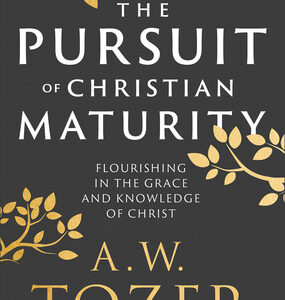
My husband and I just read The Pursuit of Christian Maturity: Flourishing in the Grace and Knowledge of Christ by A. W. Tozer, compiled and edited by James L. Snyder. Steve Laube represents a portion of Tozer’s literary estate. The book offers many excellent points and is worth reading. An overarching lesson on obstacles to a fulfilling relationship with God made me think of writing about the …

Read moreDeveloping Characters’ Inner Conflicts
Category: Craft, Writing Craft

Point of View #3

By Lynette Easonon October 24, 2024
Share
Tweet
3

I’m back to talk a little more about point of view, continuing to build on what I talked about in the last post. If you’ll remember, last time I dissected POV into three different types—the ones most often in fiction. Today, in this last post on point of view, let’s dig a little deeper and talk in depth about deep point of view since this is the preferred POV in fiction writing. Someone asked why …

Read morePoint of View #3
Category: Craft, Writing Craft

Point of View Post #2

By Lynette Easonon October 9, 2024
Share
Tweet
11

Welcome back to our discussion about point of view (POV). I want to continue to build on what I talked about last time. In the last post, I explored what point of view actually is. Now I’m going to break down three different types of POV. Note that these are not the only other points of view, but ones used most often in fiction. First Person Point of View This is when the narrator is a character …

Read morePoint of View Post #2
Category: Craft, Writing Craft

When You Don’t Feel Like Writing

By Steve Laubeon September 23, 2024
Share
Tweet
12
Multi-colored paperclips

“I don’t feel like writing today.” Ever said that to yourself? I’m saying it today. But if I followed through on the impulse, this page would be blank. Why You Won’t Write Today (1) Physical Illness can strike without warning. And some people suffer from chronic conditions. I have clients who pray for a “good” day so they can put a few words on the page. …

Read moreWhen You Don’t Feel Like Writing
Category: Career, Craft, The Writing LifeTag: Career, The Writing Life, Writing Craft

Point of View #1

By Lynette Easonon September 19, 2024
Share
Tweet
7

I’ve been discussing description over the past several posts, and I hope that’s been helpful. Let’s move on to a different topic. One that’s really important. Point of View (POV). I’ve been doing a lot of reading lately, and one thing that has jumped out at me has been the issue of  point of view. Many writers simply don’t seem to understand how to incorporate it into their stories correctly. …

Read morePoint of View #1
Category: Craft, Writing Craft

Description Part 4

By Lynette Easonon September 4, 2024
Share
Tweet
7

We’re still discussing description and how to use it effectively in your story. Today, let’s address how doing description right is crucial to the pacing of your story. Balancing description with action is key to maintaining the appropriate pace. Let’s write a little more of Oliver’s scene and see what happens to the pacing. Here’s the last little bit of the scene we’re writing: Someone had broken …

Read moreDescription Part 4
Category: Craft, Writing Craft
  • Previous
  • Page 1
  • Page 2
  • Page 3
  • Page 4
  • Interim pages omitted …
  • Page 31
  • Next
  • Home
  • About
    • Who We Are
    • Frequently Asked Questions
    • Interview with Steve Laube
    • Statement of Faith
    • Terms and Conditions
    • Privacy Policy
  • Guidelines
  • Authors
    • Who We Represent
    • Awards and Recognition
  • Resources
    • Recommended Reading
    • Christian Writers Market Guide Online
    • Christian Writers Institute
    • Writers Conferences
    • Freelance Editorial Services
    • Copyright Resources
    • Research Tools
    • Selling What You Write
  • Blog
  • Contact

Copyright © 2026 · The Steve Laube Agency · All Rights Reserved · Website by Stormhill Media