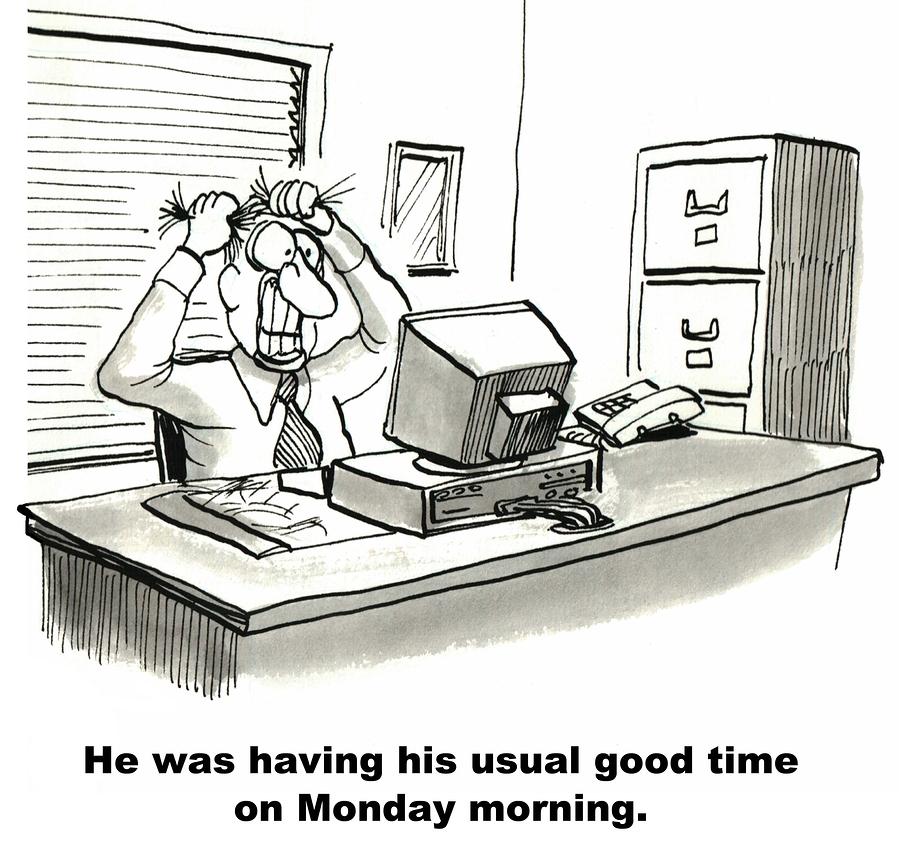


I think it is a mistake to reveal how much money you make as an author. The details of your royalty advance on your latest deal should not be shared with other authors. It is similar to finding out the salary of the co-worker in the office cubicle next to yours. When I was a retail store manager, we had major problems when salaries were discovered. I had to physically stop a near fistfight between two employees who had been friends. It was a veritable mess.
(By the way, the numbers I use in this post are complete fiction. I made them up on the spot as representative of income sources and income timing. To compare one to another is like comparing an apple to a carrot and proclaiming, “They came from the same grocery store. So, they must be the same!”)
Money Can be a Measure of Worth
Money is viewed by many as a measure of worth; i.e., a measure of the worthiness of your work. Consequently, if you contract for a $5,000 advance with AlphaGammaDelta publisher and a month later, your best writing friend, who is at the same stage in her career as you are, contracts for a $8,000 advance with the same publisher for a similar project, what is your reaction? Sure, at first, it is excitement and joy for your friend. But later, in private, you will naturally begin to wonder about your publisher’s commitment to you. You think, They must like Sally better than me! Jealousy and bitterness can set in.
I’m not saying that this will happen to you, but I caution you with every ounce of my being, be very careful about ever revealing monetary details of a book contract with anyone. It can become a form of gossip that does no one any good. I know of an email trail among authors that was very free with this kind of information; and, consequently, there was tension toward a particular publisher for not paying everyone the same.
Over the years, I’ve seen a few thousand book contracts. Those deals have landed all over the board. The timing of a publisher’s economic situation and certain management directives can change quarterly (even weekly!). The relationship the author has with the publisher, the relationship the agent has with the publisher, the perception of value that the publisher has of a project–they all influence each situation uniquely.
But we tend to compare contracts as if all contracts are equal. Trust me, they are not.
Also be aware that some contracts have a nondisclosure clause in them for this very reason.
A Major Blunder in Etiquette
Years ago, I was sharing the stage with several faculty members at a writers conference for a panel Q&A. One author took the microphone and, without thinking, blurted out the amount of money they were paid on their last contract. There was an uncomfortable silence in the room since no one really knew how to react.
Afterward, an editor turned to me and said, “I never want to work with that author. There’s no filter, nor is there any common sense.”
I Just Want to Help Others Know
As far as sharing your successes as an indie author? Again, be careful. You may want to help others succeed like you have. That is admirable. But at least limit your information to things other than your income. Sharing what you spent on editorial, production, cover design, and marketing can be helpful for comparison. But declaring that you made a million dollars last month might not be the right message for your audience.
Consider our human frailties. We will often use the publisher’s advance (the initial investment amount paid by the publisher prior to publication) as a measure of worth or value.
Imagine that author WOW gets a $2,500 advance and author STET gets a $4,000 advance; both are debut novelists and both are with the same publisher. Author STET posts on Facebook with excitement that they got a $4,000 advance from WannBe Publishing.
Author WOW sees that post and wonders why they only got $2,500 from WannBe. “It’s not fair! I’m a better writer than STET! My publisher must hate me! My agent is a failure! My career is over before it started! My publisher won’t promote my work as much as author STET! I’m mad! I’m sad!” Etc.
Author STET has no idea how crushing their detailed news was to author WOW.
How Am I Supposed to Know What’s Normal?
One cannot analyze or compare their own income, contract, advances, or royalties with absolute accuracy.
Recently I was asked, “What does the average author make in a year?” Instead of answering, I asked in return, “What do you think?” They responded, “$45,000 per year?”
I had to blink a few times and said, “That might be an average if you include a number of bestselling authors in the formula. But that also means there are a lot of others who would have to drop a zero from that number (down to $4,500) to create an average of $45,000.”
I then told the story of a writer who had a day job unrelated to writing but wrote 10 published books by getting up at 5 a.m. every morning to write for two hours–and then helped the kids get ready for school and then went to work. For that writer, books were a supplement to his income, not the primary source.
— One author may get a onetime deal for $15,000 but never write another book.
— Another author may write one book every two years, with each getting a $5,000 advance, but also publish 30 paid articles a year.
— A third author may write a novel once every five years and nothing in-between, but their advance for their novel is $100,000.
— A fourth author may be prolific and publish eight novels a year, four with a traditional publisher and four as an indie author with an annual combined income of $60,000.
Which one is normal?
You see the problem? There isn’t a straight answer to the question of what is normal when it comes to a writer’s income. Your agent is the best source of information. The agent knows what is typical in a situation and whether your deal is a good one or not.
Freelance Editors
Many freelance editors find that they need to post their prices on their web site to help prospective customers. However, some freelancers prefer to keep their pricing list private and only share it with prospective customers who ask.
Neither way is wrong. It is a personal preference.
But if said freelancer announces, “I made $197,000 last year as a freelance editor!” it might not endear them to their colleagues. Instead, the monster of envy will rise from the emotional ashes.
We Demand Equal Pay!
The writing world isn’t the same as having a job in a corporation or a government institution where there can be issues about equal pay for equal work. The idea of equal pay in those institutional environs can be fraught with misunderstanding since one has to define “equal work” and “equal pay” and “equal seniority” every time.
Look again at the example above with two author friends who find out that one received one advance and the other received a different one. The one getting the smaller amount is placing their “worth” on what they perceive as an objective criterion. Jealousy and disappointment reign. And thus, the need to keep your business to yourself (and with your agent).
Meanwhile, the bottom line is to keep your bottom line to yourself and be content with it being normal for you.