
• Skip to main content
  • Skip to after header navigation
  • Skip to site footer

The Steve Laube Agency

Helping to Change the World…Word by Word

The Steve Laube Agency

The Steve Laube Agency

Helping to Change the World Word by Word

  • Home
  • About
    • Who We Are
    • Frequently Asked Questions
    • Interview with Steve Laube
    • Statement of Faith
    • Terms and Conditions
    • Privacy Policy
  • Guidelines
  • Authors
    • Who We Represent
    • Awards and Recognition
  • Resources
    • Recommended Reading
    • Christian Writers Market Guide Online
    • Christian Writers Institute
    • Writers Conferences
    • Freelance Editorial Services
    • Copyright Resources
    • Research Tools
    • Selling What You Write
  • Blog
  • Contact
  • Twitter
  • FaceBook
  • RSS Feed
  • Get Published
  • Book Proposals
  • Book Business
  • Writing Craft
    • Conferences
    • Copyright
    • Craft
    • Creativity
    • Grammar
  • Fun Fridays
Home » Archives for Guest Blogger » Page 3

Guest Blogger

Real vs. Fictitious Settings

By Guest Bloggeron May 23, 2019
Share
Tweet
19

Today’s guest post is from our client Mindy Obenhaus. She is a three-time Carol Award nominee who writes contemporary romance. Mindy is passionate about touching readers with biblical truths in an entertaining, and sometimes adventurous, manner. When she’s not writing, she enjoys cooking and spending time with her grandchildren at her Texas ranch. Learn more at www.MindyObenhaus.com.

___________


Setting is an integral part of any story. Done well, it can become another character. But choosing your setting can be a challenge. Is it a real place or one that only lives in your head?

Me? All of my books have been set in the real town of Ouray, Colorado. However, there are others who find real places too restricting. So how do you decide?

Fictitious settings are limitless, while real settings have confines.

While this is true, there are pros and cons to both.

Fictional locations still need to be created and grounded in a real sense of place. This includes landmarks, gathering places, history, dialect, and weather. What grounds your setting? Do people meet at the local coffee shop or the stable? When they want a soda, do they reach for a “pop” or a “coke?” Do shops and restaurants stay open late, or do the streets roll up at sunset? And be sure to keep notes of all of those details. Especially if you’re writing a series. You don’t want your courthouse in one location in book one and then describe it differently in book three.

In real locations, most of those things are already decided for you. However, they can also create limitations. Case in point: my setting of Ouray. It’s a tiny town with one grocery store, a hardware store, no drive-through restaurants; and nothing is open 24 hours. It’s also 30 minutes to the nearest fast-food restaurant, supercenter, home improvement store, and hospital. These are all things that need to be kept in mind while I’m writing.

Yet while these limitations may force the author to be more creative, the good news is that they can also create conflict for our characters. If a baby wakes up at midnight with a fever and there’s no Tylenol in the house, what do they do? Or if your self-reliant heroine has a flat tire on her motorcycle and needs a plug to fix it but the hardware store is all out, she may be forced to ask our hero, the one man she does not want help from, to help her out.

Create fictitious places in a real setting.

Using a real setting in your book doesn’t mean you have to be rigid. Granted, Ouray would not be Ouray if it were not enveloped by mountains. And there are a few places in town that are fixtures, but that doesn’t mean I can’t create fictitious places in and around the area. I might give an existing shop or restaurant a different name or make it a different business altogether. Mountain settings can be a combination of more than one place. Or I can create a fictitious ranch set just outside of town. The key is believability, something that also holds true for fictional settings. You can create whatever you want; but if it doesn’t hold true with the character of your setting, readers aren’t going to buy it.

Work with your setting, not against it.

Whether real or fictitious, consider what’s unique about your setting. Are there any jobs or hobbies that might grow organically out of it? What about a town’s history and the legacy left behind?

I learned this when I was writing my first book. I knew that something potentially dangerous had to happen to one of my characters. I researched diseases and ailments until I was blue in the face before I finally decided what would be wrong with them. But when I told my husband, he said, “Well, that’s silly. Why not use your setting?”

Talk about a “duh” moment. Here I was trying to contrive something when I could have that danger grow organically out of my setting, which, in the end, made a much stronger story.

Think about how you can put your setting to work for you.

Take the time to get to know your setting.

Whether your setting is real or fictitious, you owe it to yourself and your readers to learn everything you can about it. What makes it special? If it’s a real place, how do locals view things versus how visitors see them? Learn what they might do or where they might go.

Setting is an important part of any story and can be a powerful tool. With a little thought and planning of your fictitious location or research and exploration of someplace real, you can make the most of your setting, putting it to work for you in ways you might never have imagined. And in the end, your story will be better for it.


Leave a Comment
Category: Craft, Guest Post, The Writing Life, Writing Craft

Tips on Writing a Novella

By Guest Bloggeron May 16, 2019
Share
Tweet
20

Today’s guest post is written by one of our clients, Lynn A. Coleman (www.lynncoleman.com). She is the founder of ACFW (American Christian Fiction Writers), as well as the author of more than 50 novels and novellas. She lives with her husband of 45 years, who is the lead pastor of a church. ___________ Novellas are fast paced, short novels that run anywhere from 20k to 30k words, depending …

Read moreTips on Writing a Novella
Category: Craft, Creativity, Editing, Get Published, The Writing Life, Writing Craft

What is Inspirational Romance?

By Guest Bloggeron May 24, 2018
Share
Tweet
40

Our guest blogger today is Angela Breidenbach. She is a Montana author & Christian Authors Network president, is the host of Lit Up! on Toginet Radio and Apple Podcasts. Angela went back to college for genealogical studies w/specialties in English & Scottish Records. She’ll graduate in 2019 as a professional genealogist. Find her at: AngelaBreidenbach.com …

Read moreWhat is Inspirational Romance?
Category: Branding, Genre, Guest Post, Marketing, Romance, Romantic SuspenseTag: Christian, Genre, Romance

Editors: Friend or Foe?

By Guest Bloggeron March 19, 2018
Share
Tweet
28

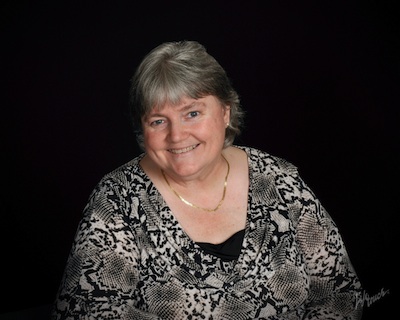
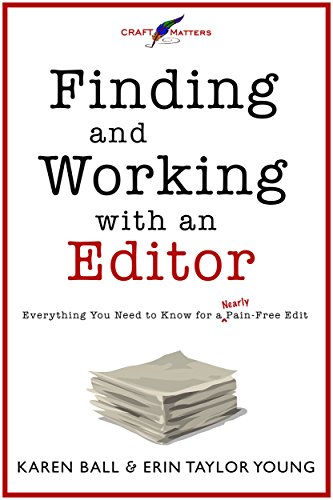
Our guest blogger today is our friend Karen Ball! She runs Karen Ball Publishing Services, LLC and is an award-winning, best-selling author; a popular podcaster/ speaker; and the co-creator with Erin Taylor Young of From the Deep, LLC. She has also been executive editor for fiction at Tyndale, Multnomah, Zondervan, and B&H Publishing Group, and a literary agent with the Steve Laube Agency. …

Read moreEditors: Friend or Foe?
Category: Editing, Get Published, Inspiration, Karen, The Writing Life, Writing CraftTag: Editing, Get Published, Writing Craft

Researching Your Historical Novel

By Guest Bloggeron September 21, 2017
Share
Tweet2
17

Angela Breidenbach is a bestselling author of fiction through the ages with most of her books set in Montana. She’s the host of Lit Up! on TogiNet.com and iTunes about great entertainment from books to movies. Visit Angela and her fe-lion personal assistant, Muse, posting comedic conversations with his Writer on social media, entertaining fans just for fun. Please find her web site …

Read moreResearching Your Historical Novel
Category: Get Published, Historical, RomanceTag: Historical, Research

Writing Cinematically: 10 Movie Techniques to Apply to Your Novel 

By Guest Bloggeron June 19, 2017
Share
Tweet
21

Our guest blogger today is Deborah Raney. We have had the fun of working together since I first became an agent. It also happens that while at Bethany House I was one of the first to review the proposal which became her first novel, A Vow to Cherish, (the inspiration for the World Wide Pictures film of the same title) and launched Deb’s writing career. Twenty years and thirty-plus books later, …

Read moreWriting Cinematically: 10 Movie Techniques to Apply to Your Novel 
Category: Craft, Writing CraftTag: Cinematic Technique, Craft, Writing Craft

Five Lessons from the Road to Publication

By Guest Bloggeron April 24, 2017
Share
Tweet
37

Our guest post is by Ginny L. Yttrup who is the award-winning author of five novels including her latest, Home, which released earlier this month. She writes contemporary women’s fiction and enjoys exploring the issues everyday women face. “Publishers Weekly” dubbed Ginny’s work “as inspiring as it is entertaining.” When not writing, Ginny coaches writers, …

Read moreFive Lessons from the Road to Publication
Category: Conferences, Get Published, The Writing LifeTag: Get Published, The Writing Life, Writing Conference

How to Balance a Busy Writing Schedule and a Busy Life

By Guest Bloggeron February 1, 2017
Share
Tweet
19

One of the things many writers struggle with is time management. I’ve heard so many writers cry out, frustrated that they just can’t find the focus or time to write like they want. I knew if there was one person who could share wisdom and tips on this topic, it was the author of today’s guest blog, Tricia Goyer. This woman is amazing! I’ve known her since her children were little, and it’s been a …

Read moreHow to Balance a Busy Writing Schedule and a Busy Life
Category: Guest Post, The Writing LifeTag: The Writing Life

6 Excuses (That Don’t Work) for Not Attending a Writers Conference

By Guest Bloggeron July 18, 2016
Share
Tweet
26

Our guest today is Linda Taylor, an author, an editor, a writer, a college writing instructor, and a constant learner. She teaches in the Professional Writing department at Taylor University and continues to do freelance editing and proofreading. She blogs about the joys of editing and grammar at www.lindaktaylor.com ___________ In our extremely virtual world, we have gotten used to our …

Read more6 Excuses (That Don’t Work) for Not Attending a Writers Conference
Category: Conferences, Get Published, Guest PostTag: Get Published, writers conferences

Top Ten Marketing Tools That Clutter my Toolbox

By Guest Bloggeron November 16, 2015
Share
Tweet
19

Today’s guest blog is from Pamela Tracy. Pamela has been a client of Steve Laube for over 11 years! She was one of the first who joined when he put out the agent shingle. She was first published in 1999 and has written over 30 books with over one million copies in print. In 2016 she has four new books coming out (two traditionally published, one Indie, and one repackaged reprint). She has …

Read moreTop Ten Marketing Tools That Clutter my Toolbox
Category: Branding, Guest Post, MarketingTag: Marketing, Tools
  • Previous
  • Page 1
  • Page 2
  • Page 3
  • Page 4
  • Next

Sidebar

Get Blog Updates

Enter your email address to get new blog updates delivered via email. You can unsubscribe at any time.

You have Successfully Subscribed!

Grow as a Writer


Find Out More →

Popular Posts

Top Posts on Book Proposals
  • Hints for a Great Cover Letter
  • The Keys to a Great Book Proposal
  • What Steve Laube is Looking For
  • Book Proposals I’d Love to See – Tamela Hancock Murray
  • What I’m Looking for – Bob Hostetler
  • What I’m Looking for – Dan Balow
  • What I’m Looking for – Lynette Eason
  • What’s the Best Way to Submit My Self-Published Book?
  • What Is the Agent Doing While I Wait?
  • God Gave Me This Blog Post
Top Posts on The Business Side
  • When Your Book Becomes Personal
  • The Myth of the Unearned Advance
  • How Long Does it Take to Get Published?
  • What Are Average Book Sales?
  • Can You Plagiarize Yourself?
  • Never Burn a Bridge
  • Who Decides to Publish Your Book?
  • That Conference Appointment
  • Goodbye to Traditional Publishing?
  • Who Owns Whom in Publishing?
  • Ten Commandments for Working with Your Agent
  • Writers Beware! Protect Yourself
Top Series
  • Book Proposal Basics
  • Publishing A-Z
  • A Defense of Traditional Publishing
Top Posts on Rejection
  • The Slush Pile: Enter at Your Own Risk
  • Even the Best Get Rejected
  • Five Reasons Why You May Never Get Published
  • The Unhelpful Rejection Letter
  • Writers Learn to Wait

Blog Post Archives by Month

  • Home
  • About
    • Who We Are
    • Frequently Asked Questions
    • Interview with Steve Laube
    • Statement of Faith
    • Terms and Conditions
    • Privacy Policy
  • Guidelines
  • Authors
    • Who We Represent
    • Awards and Recognition
  • Resources
    • Recommended Reading
    • Christian Writers Market Guide Online
    • Christian Writers Institute
    • Writers Conferences
    • Freelance Editorial Services
    • Copyright Resources
    • Research Tools
    • Selling What You Write
  • Blog
  • Contact

Copyright © 2026 · The Steve Laube Agency · All Rights Reserved · Website by Stormhill Media