

• Skip to main content
  • Skip to after header navigation
  • Skip to site footer

The Steve Laube Agency

Helping to Change the World…Word by Word

The Steve Laube Agency

The Steve Laube Agency

Helping to Change the World Word by Word

  • Home
  • About
    • Who We Are
    • Frequently Asked Questions
    • Interview with Steve Laube
    • Statement of Faith
    • Terms and Conditions
    • Privacy Policy
  • Guidelines
  • Authors
    • Who We Represent
    • Awards and Recognition
  • Resources
    • Recommended Reading
    • Christian Writers Market Guide Online
    • Christian Writers Institute
    • Writers Conferences
    • Freelance Editorial Services
    • Copyright Resources
    • Research Tools
    • Selling What You Write
  • Blog
  • Contact
  • Twitter
  • FaceBook
  • RSS Feed
  • Get Published
  • Book Proposals
  • Book Business
  • Writing Craft
    • Conferences
    • Copyright
    • Craft
    • Creativity
    • Grammar
  • Fun Fridays
Home » Blog

Blog

The Stages of Editorial Grief

By Steve Laubeon January 20, 2020
Share
Tweet
36

Nearly every writer will tell you they have experienced the proverbial red-pen treatment from their editor. The reactions to this experience can follow the well-known stages of grief popularized by Elizabeth Kubler-Ross.

Skip Denial, I’m Angry!

The official five stages of grief start with denial. For an author receiving their edited manuscript, they usually skip denial and go right into anger.

There is no denying that the edits have arrived. And for the author who was not expecting a hard-nosed edit, they can transition from shocked-angry to furious-angry to rage.

And then they call their agent.

“This is ridiculous!”
“I’ve written 35 books and have never had an editor like this!”
“Who do they think they are?”
“No one treats me like this!”

And for those without an agent, they call the editor and say the same thing. (See my post about burning bridges.) I was the recipient of a number of these explosions while an editor at Bethany House Publishers.

It is okay to be angry. You have permission.

Just be careful how you express it. In a misuse of the Scripture, let me quote, “Be angry and sin not” (Ephesians 4:26, KJV).

It doesn’t feel good to be told your writing needs help. Red pen on printed page or a blur of red track-changes onscreen is very unpleasant.

It is quite possible the editor held their breath before they clicked the send button. They might have even said a quick prayer asking that the author be receptive to the edits.

Depression: I’m a Terrible Writer

Here are some other common reactions:

“I knew I wasn’t a very good writer. I knew it.”
“I worked so hard and look at this mess.”
“I loathe myself. I’m just a hack.”
“Why bother? I’ll just click ‘accept all changes’; I don’t care anymore.”
“My agent hates me too.”

Sound familiar?

That ol’ demon of self-doubt has wormed its way into your creative soul.

It is okay to feel depressed. You have permission.

But only for an hour.

Then get back to work and tell that ol’ demon he has no place in your life.

One mark of the professional writer is to have thick skin and a teachable spirit.

Negotiation: What if We Did This?

This is the most critical stage in the editorial process. Talk to your editor using an inside voice. Calm and respectful.

All editing is a negotiation, not a dictation. Unless you are completely wrong with something, it is merely a matter of how your thoughts were understood by the editor. It is how they heard it in their head. And if they understood it one way and you meant it another, then maybe it needs to be rewritten.

Regarding a theological work I was editing, the author called me and said, “We need to go in my backyard and wrestle two-out-of-three falls on this editing job. There are 17 places where I completely disagree with what you wrote in the margin.” So we had a long conversation. You know what? I, the editor, was wrong in 12 of the places where I had made a notation. I had misunderstood something or was speed reading and missed a nuance. But I had to ask that if I missed it, could a reader do the same? But in 5 of those 17 places, the author realized he had written the sentence or paragraph poorly. So we fixed all 17 spots to where we were both pleased. That is called “negotiation.”

Also note that there are times where you need to stand your ground. I’ve seen editors decide they didn’t like a main character’s name and did a global search and replace! There are cases where a crucial plot point was deleted and messed up the entire story’s timeline. I’ve run into situations where the editor and the author are on completely opposite sides of a nonfiction topic, and there isn’t a compromise position. (Once it meant the publisher actually cancelled the contract!) That can be dicey. But it is also extremely rare.

You will find that most editors are on your side. They are trying to make your book the best it can be. That is their job. Granted, some editors have a heavy hand, but is that always a bad thing? I found I learned more from the hardest teachers in school because they pushed me toward excellence. But at the same time, a light hand doesn’t mean it is a weak edit. It could mean that your writing was exactly suited for this story or topic. There is no one-size-fits-all in the editing process.

Sometimes while editing I can read for dozens of pages without making a mark because I can become so engrossed in the story I forget to edit. That is instructive in and of itself.

Acceptance: Time to Write Another One

When you are finally over your angry-face and have stopped wallowing in your negative self-talk and you have communicated with your agent and your editor, it is time to accept that there is no more tinkering or fixing to be done on your manuscript.

And, yes, there are times when you might still like your original more than the final edited version; but accept that it may actually be better because of the editing process.

I find it somewhat ironic with regard to today’s stages-of-grief analogy that a book contract usually has payment attached to the “acceptance” of a manuscript. Once it is considered acceptable by the publisher, after all the edits are done, the author receives payment. Therefore, “acceptance” is a good place to arrive at,.especially if you want to get paid.

Acceptance is the best place for a writer to be. To be done and the project on its way to your readers. Many authors say, “I hate to write but I love to have written.”

Your Turn

Have you ever been mad about an edit you have received?

How often do you let critical comments about your writing make you depressed?


[An earlier version of this post ran in 2012.]

Leave a Comment
Category: Editing, Writing CraftTag: Agents, Editors, Grief, Writing Craft

A Nice Accolade

By Tamela Hancock Murrayon January 18, 2020
Share
Tweet
11

Our blog was listed on The Write Life’s popular 100 Best Websites for Writers in 2020! You can check out the full list here: Best Websites for Writers Special thanks to Farrah Daniel who researched, compiled and wrote this year’s list. And to Jessica Lawlor, Managing Editor and Alexis Grant, Founder of The Write Life.        

Read moreA Nice Accolade
Category: Awards

Fun Fridays – January 17, 2020

By Steve Laubeon January 17, 2020
Share
Tweet
9

The famous “Toccata & Fugue in D minor” (Bach) originally composed for the organ but here performed by the Canadian Brass. Such virtuosity! If you enjoy brass brilliance, this 10-minute performance is for you!

Read moreFun Fridays – January 17, 2020
Category: Fun Fridays

A Contest Win May Not Help You Get Published

By Tamela Hancock Murrayon January 16, 2020
Share
Tweet
33

If you are looking to be published, yes, DO enter contests. But a contest win may not result in your book’s publication by a traditional publisher. Today I hope to help you become less frustrated and more understanding regarding some reasons why. First of all, contests’ criteria don’t reflect all the requirements of publishers, nor should they. Most contests judge on such factors as grammar, …

Read moreA Contest Win May Not Help You Get Published
Category: Career, Contests, Get Published

How to Write Plenty in 2020

By Bob Hostetleron January 15, 2020
Share
Tweet
26

We’re a couple weeks in, and it’s still hard to believe: It’s 2020! I’m still writing 2010 on the checks I hope no one cashes. I hope last year held many blessings for you, and I hope the coming year will be even better. Maybe you met your writing goals, hopes, and dreams in 2019. But even if you didn’t, you can still make this coming year a great one. And one way to help that happen will be to …

Read moreHow to Write Plenty in 2020
Category: The Writing Life

056 How to Find Your Hustle

By Thomas Umstattd, Jr.on January 14, 2020
Share
Tweet
5

For the next few weeks, we will be releasing some “best of” episodes while I spend time with our new baby Thomas Gregory Umstattd, III. Episode Notes This episode originally aired in 2018. We live in a world that is cursed. Because of our sin, God cursed the soil to have thorns and weeds. That curse is pervasive and continues to this day. If you want to have success in farming, you have to put in …

Read more056 How to Find Your Hustle
Category: The Writing Life

056 How to Find Your Hustle

By Thomas Umstattd, Jr.on January 14, 2020
Share
Tweet
0

For the next few weeks, we will be releasing some “best of” episodes while I spend time with our new baby Thomas Gregory Umstattd, III. Episode Notes This episode originally aired in 2018. We live in a world that is cursed. Because of our sin, God cursed the soil to have thorns and weeds. That […]
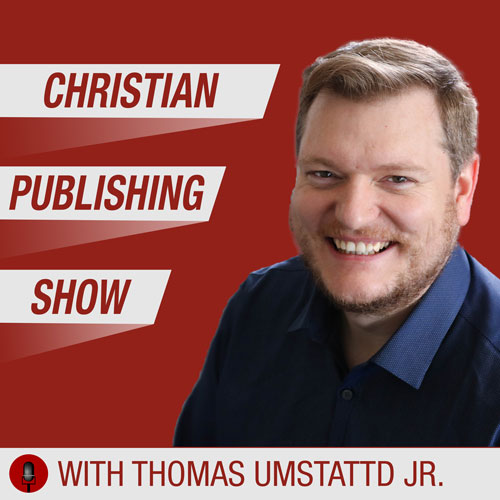
You can listen to this episode 056 How to Find Your Hustle on Christian Publishing Show.

Read more056 How to Find Your Hustle
Category: The Writing Life

Public Domain in 2020

By Steve Laubeon January 13, 2020
Share
Tweet
29

According to the 1998 Copyright Term Extension Act, works published between 1923 and 1977 were given an extension to their copyright from 75 years to 95 years. Works published after 1978 are under copyright for the life of the author plus 70 years. This means that works published in 1924 are now in the public domain. They can be reproduced, revised, performed, etc., without having to pay any …

Read morePublic Domain in 2020
Category: Publishing History

Fun Fridays – January 10, 2019 – Why English Is So Hard

By Steve Laubeon January 10, 2020
Share
Tweet
23

Why English Is So Hard It is fun to compile some of the idiosyncrasies and inconsistencies of the English language. Most are found around the internet, so I claim no originality. Some are sentences with homonyms, one is a list of homophones, and others are simply fun! Do you have any to add? Comment below! Hamburger has no ham. When shot at, the dove dove into the bushes. How can I intimate this …

Read moreFun Fridays – January 10, 2019 – Why English Is So Hard
Category: Fun Fridays

Is Signing with an Agent Your New Year’s Resolution?

By Tamela Hancock Murrayon January 9, 2020
Share
Tweet
51

If you are currently without representation, signing with a fantastic agent is an excellent resolution to make! Here are some ideas to consider as you prepare to approach agents: Visit agency websites. Ask yourself: Does the agency have a website, such as www.stevelaube.com? Does the website appear professional? Is it easy to navigate? On the sites that list their clients such as we do, do you see …

Read moreIs Signing with an Agent Your New Year’s Resolution?
Category: Book Proposals, Career
  • Previous
  • Page 1
  • Interim pages omitted …
  • Page 134
  • Page 135
  • Page 136
  • Page 137
  • Page 138
  • Interim pages omitted …
  • Page 333
  • Next

Sidebar

Get Blog Updates

Enter your email address to get new blog updates delivered via email. You can unsubscribe at any time.

You have Successfully Subscribed!

Grow as a Writer


Find Out More →

Popular Posts

Top Posts on Book Proposals
  • Hints for a Great Cover Letter
  • The Keys to a Great Book Proposal
  • What Steve Laube is Looking For
  • Book Proposals I’d Love to See – Tamela Hancock Murray
  • What I’m Looking for – Bob Hostetler
  • What I’m Looking for – Dan Balow
  • What I’m Looking for – Lynette Eason
  • What’s the Best Way to Submit My Self-Published Book?
  • What Is the Agent Doing While I Wait?
  • God Gave Me This Blog Post
Top Posts on The Business Side
  • When Your Book Becomes Personal
  • The Myth of the Unearned Advance
  • How Long Does it Take to Get Published?
  • What Are Average Book Sales?
  • Can You Plagiarize Yourself?
  • Never Burn a Bridge
  • Who Decides to Publish Your Book?
  • That Conference Appointment
  • Goodbye to Traditional Publishing?
  • Who Owns Whom in Publishing?
  • Ten Commandments for Working with Your Agent
  • Writers Beware! Protect Yourself
Top Series
  • Book Proposal Basics
  • Publishing A-Z
  • A Defense of Traditional Publishing
Top Posts on Rejection
  • The Slush Pile: Enter at Your Own Risk
  • Even the Best Get Rejected
  • Five Reasons Why You May Never Get Published
  • The Unhelpful Rejection Letter
  • Writers Learn to Wait

Blog Post Archives by Month

  • Home
  • About
    • Who We Are
    • Frequently Asked Questions
    • Interview with Steve Laube
    • Statement of Faith
    • Terms and Conditions
    • Privacy Policy
  • Guidelines
  • Authors
    • Who We Represent
    • Awards and Recognition
  • Resources
    • Recommended Reading
    • Christian Writers Market Guide Online
    • Christian Writers Institute
    • Writers Conferences
    • Freelance Editorial Services
    • Copyright Resources
    • Research Tools
    • Selling What You Write
  • Blog
  • Contact

Copyright © 2025 · The Steve Laube Agency · All Rights Reserved · Website by Stormhill Media