

• Skip to main content
  • Skip to after header navigation
  • Skip to site footer

The Steve Laube Agency

Helping to Change the World…Word by Word

The Steve Laube Agency

The Steve Laube Agency

Helping to Change the World Word by Word

  • Home
  • About
    • Who We Are
    • Frequently Asked Questions
    • Interview with Steve Laube
    • Statement of Faith
    • Terms and Conditions
    • Privacy Policy
  • Guidelines
  • Authors
    • Who We Represent
    • Awards and Recognition
  • Resources
    • Recommended Reading
    • Christian Writers Market Guide Online
    • Christian Writers Institute
    • Writers Conferences
    • Freelance Editorial Services
    • Copyright Resources
    • Research Tools
    • Selling What You Write
  • Blog
  • Contact
  • Twitter
  • FaceBook
  • RSS Feed
  • Get Published
  • Book Proposals
  • Book Business
  • Writing Craft
    • Conferences
    • Copyright
    • Craft
    • Creativity
    • Grammar
  • Fun Fridays
Home » Writing Craft » Craft » Page 12

Craft

Never Assume Biblical Literacy

By Steve Laubeon April 16, 2018
Share
Tweet
26

It wasn’t long ago that a reference to a Biblical character or a Bible verse would be widely understood without explanation. That is no longer true. Researcher George Gallup said “We revere the Bible, but we don’t read it.”

This was recently illustrated in our local newspaper in an article about a football player named Shadrach. “It is a name his mom found in the Old Testament, the Babylonian god of the moon who was cast into a fiery furnace but saved by God, according to its origin.” The Biblical story found in Daniel chapter 3 was evidently unfamiliar to the writer of the article.

A few years ago, an article in Christian Century told this story:

When Peter Hawkins, a professor at Boston University, asked the students in his entry-level course on the Bible if they had ever heard of the 23rd Psalm, about five hands went up. After he recited the text, almost everyone recognized parts of it, even if they did know the source. For one student it was a line in rock group Pink Floyd’s “Sheep,” for another a reference in rapper Coolio’s “Gangsta’s Paradise.” A third student claimed to recognize a refrain in the psalm from Pulp Fiction – but there the text is actually Ezekiel 25:17. “My students knew their movies and their lyrics but not the biblical source of ‘the valley of the shadow of death,’” says Hawkins. “They were shocked when I revealed it.”

Know Your Audience

It is one thing to make Biblical allusions and references when writing to those who know the scripture. It is another if your audience is not as well versed (pun intended).

Last month while reviewing a book I was startled that the author, a pastor, was over explaining the most basic Biblical texts and concepts to his reader. At first I was critical of the simplistic approach, then it dawned on me that he knew his audience. His book was intended for a reader who had no Bible experience; either a new believer or someone who was asking eternal questions. The simplicity of language and explanation did not assume anything of his reader.

Contrast that with another book I read on the theological doctrine of Justification by Faith. Only a reader  with a foundation of Biblical understanding could follow that author’s presentation.

This issue is mostly a non-fiction one, but there can be trouble in your contemporary novel if you assume your characters know what each other is referring to (and assuming your reader does as well).

When it’s Not Obvious

When teaching this subject I often joke by saying “You can’t just refer to Noah and expect your reader to know you aren’t talking about the professional basketball player Joakim Noah. Or they might think you are talking about the boat-guy, Russell Crowe.”

What if you want to make reference to the Parable of the Talents? Do you just mention it or do you stop to explain? The flow of your writing may be interrupted if you have to stop at every turn. Sometimes it is hard to find that balance between over simplicity and broad assumptions. There is no right or wrong answer here. Merely the principle of being aware of who your reader might be.

Try Not to Overthink it

I suspect some may begin to doubt their work after reading advice like this. First hand experience as a conference teacher confirms this.

It is healthy to step back and consider your assumptions.

It is healthy to step back and look hard at what you’ve written and imagine that your reader is your neighbor or co-worker. Would you write it differently? Or have you been clear, concise, and sharp with your words?

At the same time an author has the opportunity to inspire and grow a reader. If a work uses a challenging vocabulary and makes literary or Biblical references it is up to the reader to rise to the task. Not all books are meant to spoon-feed the reader. Wrestling with a difficult book is a good thing. I remember trying (emphasis on trying) to read volume one of Helmut Thielicke’s The Evangelical Faith. I had to have a dictionary open at the same time in order to understand his vocabulary.

Your Turn

Have you run into this issue with your writing?

What would you change in your current work-in-progress?


Leave a Comment
Category: Book Proposals, Craft, Trends, Writing CraftTag: Bible, Biblical Knowledge, book proposals, Writing Craft

A Writer’s Best Friend

By Bob Hostetleron January 31, 2018
Share
Tweet
50

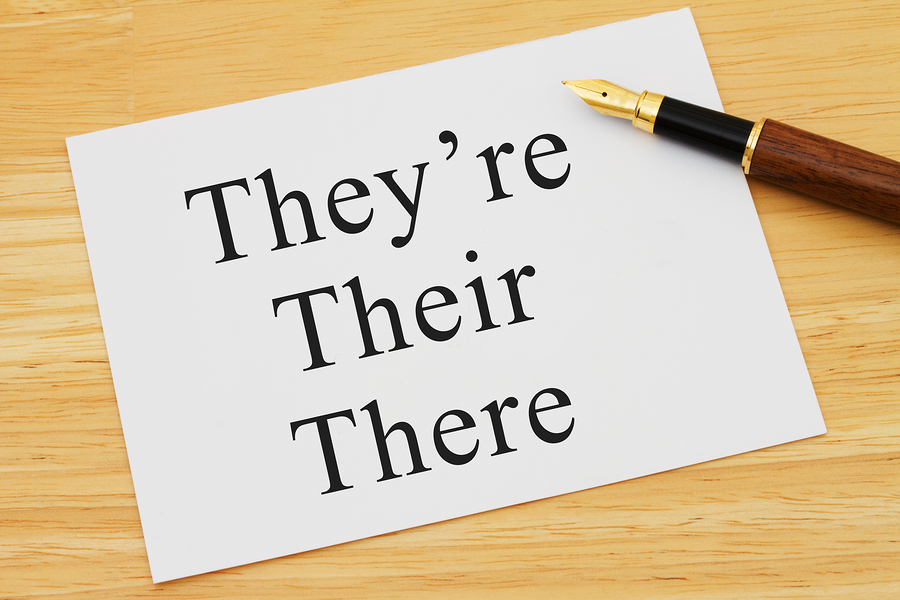
If I asked you what you considered to be a writer’s best friend, what would you say? Please don’t say “Wikipedia.” My clients would probably reply, “Bob Hostetler.” But that can’t be everyone’s answer. You might consider “a fine fountain pen” or “a blank page in a brand new journal” to be your best friend as a writer. Maybe the thesaurus is your best friend (ally, associate, buddy, companion, …

Read moreA Writer’s Best Friend
Category: Craft, Grammar, The Writing Life, Writing CraftTag: Editing, Grammar, Writing Craft

I Can’t Believe I Wrote the Whole Thing

By Tamela Hancock Murrayon January 25, 2018
Share
Tweet3
57

You’re an author with lots of talent and a great idea! You know the market and are confident your story will work. There’s plenty of plot to make word count. So why not sell on proposal? Selling on proposal seems ideal, but might not be a good idea for the new author. Why not? Pacing A new author can’t necessarily gauge how long it will take to write a book. Perhaps the first book rode like the …

Read moreI Can’t Believe I Wrote the Whole Thing
Category: Book Proposals, Craft, Creativity, The Writing LifeTag: book proposals, The Writing Life, Writing Craft

Are You Curating or Creating?

By Dan Balowon January 23, 2018
Share
Tweet2
10

Every once in a while, a book proposal crosses my desk and catches my attention with its creativity and approach. It is engaging and makes me think.  Whether I agreed to work with the author or not, I needed to give them kudos for their great work. Rarely, if ever, does something catch my attention (in a good way) which is simply assembled from or built entirely on the thinking of someone else. I …

Read moreAre You Curating or Creating?
Category: Book Proposals, Craft, The Writing Life, Writing CraftTag: book proposals, Creativity, Nonfiction

Fix These 16 Potholes on Grammar Street

By Bob Hostetleron January 17, 2018
Share
Tweet4
51

Don’t worry. I hated grade school grammar as much as the next guy. Still, as a magazine editor and, later, as a freelance book editor and (now) literary agent, I have come across far too many grammatical and usage mistakes in writing submitted to me. Not all of us can be Strunk or White (though every writer should own their valuable book, The Elements of Style). But we can profit from a little …

Read moreFix These 16 Potholes on Grammar Street
Category: Book Proposals, Craft, Writing CraftTag: Grammar, Writing Craft

Read It Twice!

By Tamela Hancock Murrayon November 30, 2017
Share
Tweet
41

I read Gone with the Wind for the first time in the seventh grade. Then I reread it in the eighth grade. Daddy fussed at me for this. “Why are you reading the same book again? You should read something else.” I know he had a point, but I consumed it a second time, all the way to the ambiguous, 1,200-page end. Because. I. Wanted. To. By the way, the unsettling ending is probably one reason why I …

Read moreRead It Twice!
Category: Craft, ReadingTag: Craft, Reading

Fix Your Worst Writing Pitfalls

By Bob Hostetleron November 29, 2017
Share
Tweet
32

Writers should know how to write. Right? But that is easier said than done. “Monsters. . . lie in ambush for the writer trying to put together a clean English sentence,” says William Zinsser in On Writing Well. Numerous dangers line the road to becoming an accomplished and published (and much-published) writer. As a writer, editor, and agent, I see the same mistakes over and over and over (such as …

Read moreFix Your Worst Writing Pitfalls
Category: Craft, Writing CraftTag: Writing Craft, Writing Pitfalls

Unnecessary Words

By Dan Balowon November 14, 2017
Share
Tweet1
25

From my earliest days writing and communicating, I’ve needed to fit whatever I wrote or spoke into space and time required by the medium in which I was using at the moment. In electronic media, a clock runs everything. If you have 90 seconds to fill before the radio newscast, you actually have 89 seconds to make a point. Not 91 or 105 seconds…89 seconds, so the network feeds are picked up without …

Read moreUnnecessary Words
Category: Craft, Writing CraftTag: word count, Writing Craft

Beyond the Hook: Character Flaws?

By Tamela Hancock Murrayon November 9, 2017
Share
Tweet
29

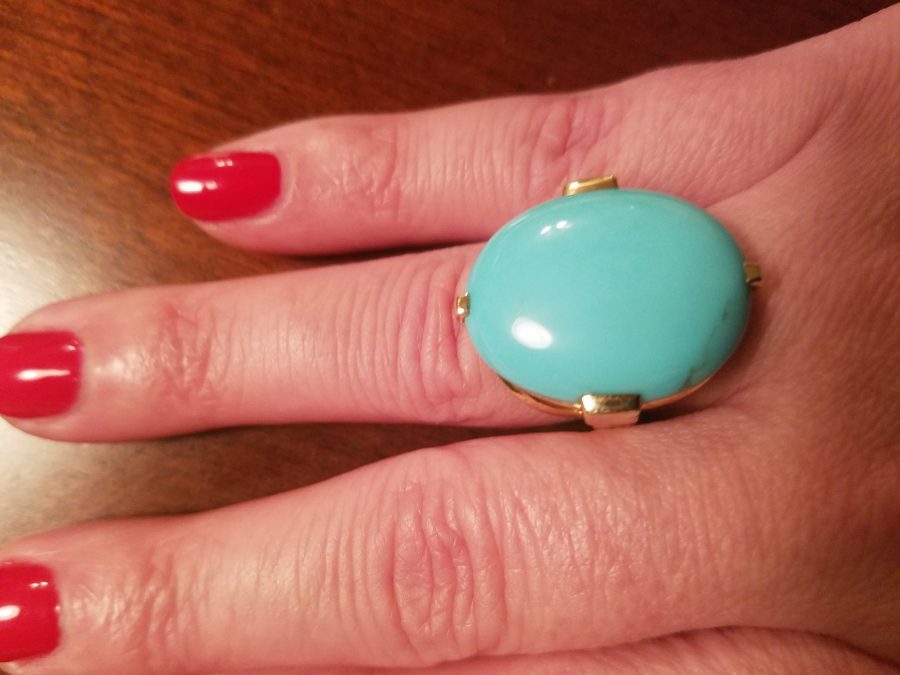
My husband gave me a turquoise ring I enjoy wearing. For one, the stone was unearthed from the Sleeping Beauty Mine in Arizona, which has since closed. The location seems cool to me since our agency’s corporate headquarters is located in Phoenix. And since the mine is no longer in operation, the stone possesses special cachet. But more important, my husband likes the ring and wants me to have it. …

Read moreBeyond the Hook: Character Flaws?
Category: Craft, Writing CraftTag: Characters, Writing Craft

Beyond the Hook: What Makes Your Reader Care?

By Tamela Hancock Murrayon November 2, 2017
Share
Tweet
15

Any book lover who’s made the hobby of reading a lifelong habit can name stories that kept him reading well past anything else – dinner, chores, bedtime… What makes this happen? The Problem Sympathetic characters can help as a start, but while they serve to draw in a reader, the story’s dilemma itself keeps the reader engaged. The reader can’t put the book down until the characters solve the …

Read moreBeyond the Hook: What Makes Your Reader Care?
Category: Craft, Writing CraftTag: Characters, Craft
  • Previous
  • Page 1
  • Interim pages omitted …
  • Page 10
  • Page 11
  • Page 12
  • Page 13
  • Page 14
  • Interim pages omitted …
  • Page 31
  • Next
  • Home
  • About
    • Who We Are
    • Frequently Asked Questions
    • Interview with Steve Laube
    • Statement of Faith
    • Terms and Conditions
    • Privacy Policy
  • Guidelines
  • Authors
    • Who We Represent
    • Awards and Recognition
  • Resources
    • Recommended Reading
    • Christian Writers Market Guide Online
    • Christian Writers Institute
    • Writers Conferences
    • Freelance Editorial Services
    • Copyright Resources
    • Research Tools
    • Selling What You Write
  • Blog
  • Contact

Copyright © 2026 · The Steve Laube Agency · All Rights Reserved · Website by Stormhill Media