
• Skip to main content
  • Skip to after header navigation
  • Skip to site footer

The Steve Laube Agency

Helping to Change the World…Word by Word

The Steve Laube Agency

The Steve Laube Agency

Helping to Change the World Word by Word

  • Home
  • About
    • Who We Are
    • Frequently Asked Questions
    • Interview with Steve Laube
    • Statement of Faith
    • Terms and Conditions
    • Privacy Policy
  • Guidelines
  • Authors
    • Who We Represent
    • Awards and Recognition
  • Resources
    • Recommended Reading
    • Christian Writers Market Guide Online
    • Christian Writers Institute
    • Writers Conferences
    • Freelance Editorial Services
    • Copyright Resources
    • Research Tools
    • Selling What You Write
  • Blog
  • Contact
  • Twitter
  • FaceBook
  • RSS Feed
  • Get Published
  • Book Proposals
  • Book Business
  • Writing Craft
    • Conferences
    • Copyright
    • Craft
    • Creativity
    • Grammar
  • Fun Fridays
Home » Writing Craft » Page 39

Writing Craft

Unnecessary Words

By Dan Balowon November 14, 2017
Share
Tweet1
25

From my earliest days writing and communicating, I’ve needed to fit whatever I wrote or spoke into space and time required by the medium in which I was using at the moment.

In electronic media, a clock runs everything. If you have 90 seconds to fill before the radio newscast, you actually have 89 seconds to make a point. Not 91 or 105 seconds…89 seconds, so the network feeds are picked up without talking over them.

In the early part of my career, everything I wrote needed to fit into a timeframe as well. A 30-second radio commercial is actually 28-29 seconds. Trust me, when you need to fit a very precise timeframe, unnecessary words stick out like a sore thumb.

For example, I recall first learning about numbers in radio/TV spots. The number of days in a year is “three hundred sixty five.” Four words. You might write “365,” but it counts as four words.

My wife taught public speaking on the collegiate level for many years. I remember her saying one of the universal truths of public speaking was “no one knows how to limit their time.”  She would tell me stories of a student giving a required five- minute speech and the introduction taking three minutes. They needed an extra 10 minutes to finish the five-minute speech.

Every person alive has been in a situation where someone else asked for five minutes of their time and took twenty-five.

Rule of thumb – normal paced speech is about 150 words per minute. If you need to speak for five minutes, you get 750 words…not 1,250.

When writers are disciplined by writing for time or word-count, they often find a lot of unnecessary words can be edited out.

Aspiring authors of books often consider books somewhat like untimed media where length restrictions are suspended. This is not true. Using too many unnecessary words slows down the pace of a book and could cause a reader to stop reading, which is not something you want to occur.

Books need to be the most effective use of words, simply because they are longer, you need to hold attention by writing well. You want the reader to turn the page, again and again.

And part of writing well almost always involves removing unnecessary words.

You want to learn how to be an excellent writer? Try writing hundreds of devotionals or scripts for a short-form 90-second radio program. Both require something important and interesting in 200-250 words.

Every word is important.

A while ago, while reading the first page of a manuscript from an aspiring author, I began counting the number of times the word “had” appeared. I stopped counting at twenty in the first couple paragraphs.

I asked the writer how long their complete manuscript draft was. You guessed it…280,000 words. (That’s two hundred eighty thousand for those of you who are radio announcer/word-counters.) Evidently the work originally was 500,000 words and “substantially edited” to eliminate over 200,000.

Yikes. (A technical publishing term for this type of manuscript used throughout the publishing industry.)

The author could have cut the length another 10% by limiting the use of one unnecessary word, appearing 30 times a page!

I could list a number of overused, unnecessary words but most writers with some training know them already.

Writing a book is difficult, especially when an author realizes it is not a puffed up blog post or a no-limits open-mike session in the public forum.

If you write a 70,000-word book, it is relatively easy to slip into “school term paper mode” wrapping 30,000 well-chosen words in 40,000 unnecessary words. But the nature of books, holding someone’s attention for many hours, requires the author’s full attention for every single word they write.

And that is what makes writing books difficult. (Hey, sometimes you can use “that.”)



Leave a Comment
Category: Craft, Writing CraftTag: word count, Writing Craft

Our Rapidly Changing Culture

By Steve Laubeon November 13, 2017
Share
Tweet7
31

Every year Beloit College creates a "Mindset List" which reflects the culture that the incoming Freshman class have grown up experiencing. It helps their faculty know how to relate to these incoming students. Click here for this year's Mindset List.

I download this list every year and read it with increasing wonder at the speed of our cultural changes.

The college graduating class of 2014 …

Read moreOur Rapidly Changing Culture
Category: Publishing A-Z, The Publishing Life, Trends, Writing CraftTag: Book Business, The Publishing Life, Trends, Writing Craft

Beyond the Hook: Character Flaws?

By Tamela Hancock Murrayon November 9, 2017
Share
Tweet
29

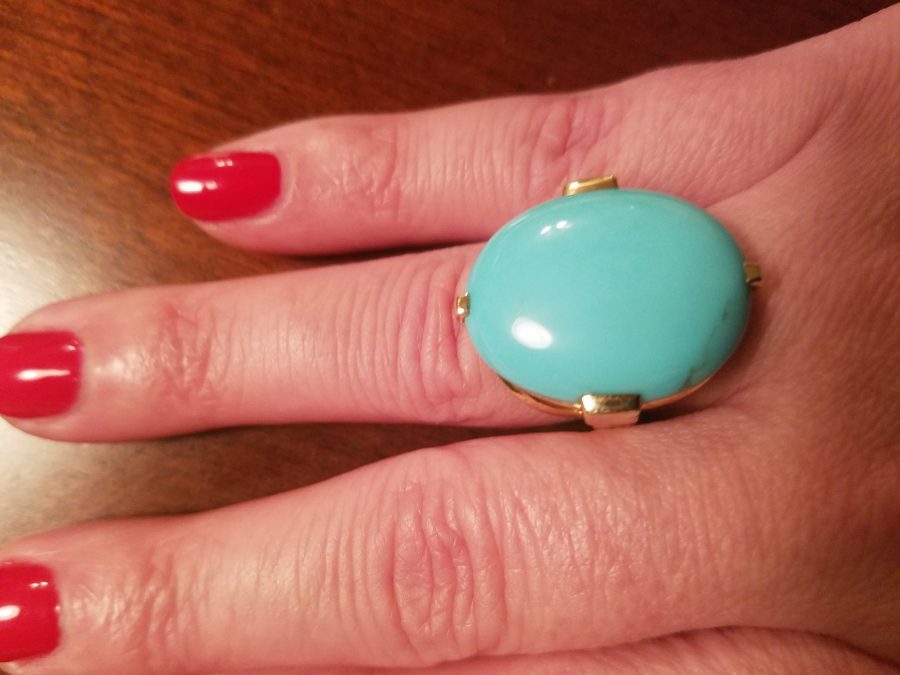
My husband gave me a turquoise ring I enjoy wearing. For one, the stone was unearthed from the Sleeping Beauty Mine in Arizona, which has since closed. The location seems cool to me since our agency’s corporate headquarters is located in Phoenix. And since the mine is no longer in operation, the stone possesses special cachet. But more important, my husband likes the ring and wants me to have it. …

Read moreBeyond the Hook: Character Flaws?
Category: Craft, Writing CraftTag: Characters, Writing Craft

Beyond the Hook: What Makes Your Reader Care?

By Tamela Hancock Murrayon November 2, 2017
Share
Tweet
15

Any book lover who’s made the hobby of reading a lifelong habit can name stories that kept him reading well past anything else – dinner, chores, bedtime… What makes this happen? The Problem Sympathetic characters can help as a start, but while they serve to draw in a reader, the story’s dilemma itself keeps the reader engaged. The reader can’t put the book down until the characters solve the …

Read moreBeyond the Hook: What Makes Your Reader Care?
Category: Craft, Writing CraftTag: Characters, Craft

Beyond the Hook: Writing Sympathetic Characters

By Tamela Hancock Murrayon October 26, 2017
Share
Tweet
14

The first page may be promising. The opening chapters may be engrossing. But a reader might still abandon your book if it doesn’t deliver. How can you keep your readers going? Sympathetic Characters Some writers are talented in creating sympathetic characters from page one. Perhaps Page one occurs during a fire, when the characters have lost everything. Or the heroine has been abandoned by a …

Read moreBeyond the Hook: Writing Sympathetic Characters
Category: Craft, Creativity, Editing, Romance, Romantic SuspenseTag: Characters, Craft, Reading

Grammar and the Singular “They”

By Steve Laubeon October 9, 2017
Share
Tweet
40

Yesterday I opened a can of worms. There were many worms in the can; some male and some female. I discovered that a few of the worms were married to each other. One couple was having a marital disagreement. They were arguing about grammar, of all things. The fight was about the proper use of gender pronouns. Here is the sentence under dispute:

“When a spouse greets a partner with derision …

Read moreGrammar and the Singular “They”
Category: GrammarTag: Grammar, pronouns

Don’t Write What You Know

By Bob Hostetleron October 4, 2017
Share
Tweet1
44

I asked some of my writing and publishing friends to tell me what one “writing rule” they’d like to see go away…forever. Many of them gave the same answer. Emphatically. Author, blogger, and writers’ conference director Edie Melson said, “We need to quit killing creativity with the time-worn advice, ‘Write what you know.’ Instead, go write what you’re passionate about.” New York Times and …

Read moreDon’t Write What You Know
Category: The Writing Life, Writing CraftTag: The Writing Life, Writing Craft

Author Nuances

By Dan Balowon October 3, 2017
Share
Tweet3
18

Writer and humorist Dave Barry wrote, “The one thing that unites all human beings, regardless of age, gender, religion or ethnic background, is that we all believe we are above-average drivers.” The same applies to artists and writers. Most feel they are pretty good at their craft. But success as an author is a complicated mix of factors. If accuracy, neatness and timeliness were the secret to …

Read moreAuthor Nuances
Category: Craft, Creativity, The Publishing Life, The Writing LifeTag: Art, Nuances, The Writing Life, Writing Craft

When Does a Book Become Public Domain?

By Steve Laubeon October 2, 2017
Share
Tweet
22

Writers frequently ask about whether they need permission to quote from another book. The answer is usually yes. But if the book is in the public domain that permission is unnecessary. I don't want to tackle the issue of "Fair Use" today, but instead provide a few links that you can use to find out if a book is in the public domain, or not.

First, use this form …

Read moreWhen Does a Book Become Public Domain?
Category: Copyright, Legal Issues, Writing CraftTag: Copyright, Legal Issues, public domain

Vocabulary Word of the Day: Bifurcation

By Dan Balowon September 19, 2017
Share
Tweet
19

Some words are specific to a certain field of endeavor and some are flexible, used to describe something in a variety of arenas. One such word is our vocabulary word of the day: bifurcation. Simply, it involves splitting something into two distinct parts. The prefix “bi” indicates two, so it is simple to remember the number of parts involved. It is used in general science, medicine, law, …

Read moreVocabulary Word of the Day: Bifurcation
Category: Book Business, Conferences, The Writing LifeTag: Book Business, The Writing Life, Writers Conference
  • Previous
  • Page 1
  • Interim pages omitted …
  • Page 37
  • Page 38
  • Page 39
  • Page 40
  • Page 41
  • Interim pages omitted …
  • Page 87
  • Next
  • Home
  • About
    • Who We Are
    • Frequently Asked Questions
    • Interview with Steve Laube
    • Statement of Faith
    • Terms and Conditions
    • Privacy Policy
  • Guidelines
  • Authors
    • Who We Represent
    • Awards and Recognition
  • Resources
    • Recommended Reading
    • Christian Writers Market Guide Online
    • Christian Writers Institute
    • Writers Conferences
    • Freelance Editorial Services
    • Copyright Resources
    • Research Tools
    • Selling What You Write
  • Blog
  • Contact

Copyright © 2026 · The Steve Laube Agency · All Rights Reserved · Website by Stormhill Media