

• Skip to main content
  • Skip to after header navigation
  • Skip to site footer

The Steve Laube Agency

Helping to Change the World…Word by Word

The Steve Laube Agency

The Steve Laube Agency

Helping to Change the World Word by Word

  • Home
  • About
    • Who We Are
    • Frequently Asked Questions
    • Interview with Steve Laube
    • Statement of Faith
    • Terms and Conditions
    • Privacy Policy
  • Guidelines
  • Authors
    • Who We Represent
    • Awards and Recognition
  • Resources
    • Recommended Reading
    • Christian Writers Market Guide Online
    • Christian Writers Institute
    • Writers Conferences
    • Freelance Editorial Services
    • Copyright Resources
    • Research Tools
    • Selling What You Write
  • Blog
  • Contact
  • Twitter
  • FaceBook
  • RSS Feed
  • Get Published
  • Book Proposals
  • Book Business
  • Writing Craft
    • Conferences
    • Copyright
    • Craft
    • Creativity
    • Grammar
  • Fun Fridays
Home » Writing Craft » Page 53

Writing Craft

The Great Slot Mystery

By Dan Balowon May 26, 2015
Share
Tweet
22

Every traditional publishing company has a personality or focus that defines them and their product. Usually that personality or focus is determined by past success. They also know how many books they can effectively publish during a year. Combining focus and capacity, you have the beginnings of a publishing strategy.

No publisher (or for that matter any company) will succeed for long unless they have a diversity of product to offer. Even companies selling lawn furniture offer a variety of sizes, features and price ranges. It simply makes good business sense.

Being one-dimensional at anything is not generally a good thing for companies. Diversifying acquisitions will allow a publisher to appeal to a wider range of customers and navigate the changing trends in consumer book-buying habits.

This applies to a publisher, not authors.

Authors are usually known for one type of writing. The publisher is the whole, the author is one of the parts. Writing too widely might show your creativity, but confuses agents, publishers and readers as to who you are. It muddies your brand. The same concept applies for indie authors, except you will only confuse readers.

Let’s see how all this might work in practice for a book publisher.

While it is an ever-evolving process, a publisher knows the general categories they want to publish. For the sake of this example, let’s say they can effectively publish 100 titles a year and they are good at ten general categories with a suggested title quantity for each: (FYI- there are over fifty official BISAC categories utilized in organizing publishing information across the industry – click the link to see them all.)

Biographies and Autobiographies (5 titles)

Cooking (5 titles)

Family & Relationships (10 titles)

Fiction – adult (20 titles)

Gardening (5 titles)

Juvenile Fiction (10 titles)

Music (5 titles)

Self-Help (15 titles)

Sports and Recreation (10 titles)

Travel (5 titles)

Misc. opportunities (10 titles)

While not a rigid process, this general overview is communicated to acquisitions people to serve as a guide for how much they need to acquire. Maintaining the diversity of books is why some publishers create “imprints” or companies within companies focusing only on one or two categories.

Various terms are used for this, but publishers commonly refer to these as “slots”. The editor of cooking titles has five “slots” to fill for a year and might see 200 proposals for those five slots and must determine which ones are best for them.

Since the publisher won’t get all 200 proposals at once, they hesitate at making a quick decision on most unless they know something definitely won’t work for them. Rejection travels fast.

The added element of competition with other publishers means that of the top ten books on cooking in a particular year, maybe an individual publisher can only acquire one or two of those titles at best.

Now, let’s say you have a great proposal for a cooking book and the publisher really likes it, but they have already acquired their target number of titles for the next year. They might have a “slot” open two years in the future. Even though you have a ready manuscript, the publisher still has a limit on the number of books they want to acquire for a particular category in a year.

Opportunities can be jumped on, but mostly publishers try to publish within a general plan and a key element of that plan is a finite number of titles.

Our hypothetical publisher doesn’t publish the best 100 books they can during the year. They publish the best 100 books that fit the company personality in a mix of the categories they are good at publishing.

So what?

It is simply another factor for an author (and agent) to consider in book publishing. A publisher might really like your book, and they need something like that to fill a slot two or three years from now. But they often don’t want to contract books that far out, in case something better comes along. Honestly, in the next year, they might find something they like better.

Some categories of products are very limited. Many publishers of Christian books will do only one or two devotional products in a year. Maybe one or two memoirs. Bible studies? Maybe one every other year.

While attending a recent meeting of writers, a humorous group discussion began using a social “dating” metaphor (in its worst form) to explain how publishing really works.

“Let’s be friends until I find someone better to date.”

“I don’t want to make any long-term commitments.”

“We should be seeing different people.”

“This just isn’t working for me.”

“It’s not you, it’s me,”

Believe it or not, there is a lot of truth to these statements explaining why a proposal is declined. (No wonder it has been suggested to kiss dating goodbye.)Anyway that’s generally how it works.

There is a fine line between being discouraging and being a realist. Knowing how things work in the real world should lower your blood pressure. I am sorry if that wasn’t the case today.

It was me, not you. No, really.

Leave a Comment
Category: Book Business, The Publishing LifeTag: Categories, publishing, The Publishing Life

Wordsmiths of the World, Unite!

By Karen Ballon May 20, 2015
Share
Tweet
56

Did you know you’re a wordsmith? If you’re a writer, you are. A wordsmith is defined by Webster’s as a “craftsman or artist whose medium is words.” That, my friends, is you. Which is why I’m coming to you today and asking you to have mercy on your readers. (Yes, I’m making this same request of myself as a writer.) Whether you write fiction or nonfiction, let’s be done with empty words in our …

Read moreWordsmiths of the World, Unite!
Category: Craft, Editing, Grammar, Writing CraftTag: words, Writing Craft

All Dialogue Mechanics Are Not Equal (Viva la Différence!)

By Karen Ballon May 13, 2015
Share
Tweet
27

While editing a novel recently, I was writing a note to explain the importance of beats. Which led me to an explanation of the importance of varying the kinds of beats we use. Which led me to a realization: dialogue tags and beats and descriptive beats are very different things. Okay, okay…yes, I already knew that. But I hadn’t really thought it over much. As a writer, I sometimes tend to operate …

Read moreAll Dialogue Mechanics Are Not Equal (Viva la Différence!)
Category: Craft, Editing, Grammar, Writing CraftTag: Beats, Craft, Dialogue, Writing Craft

Worshipping Words

By Dan Balowon May 5, 2015
Share
Tweet
27

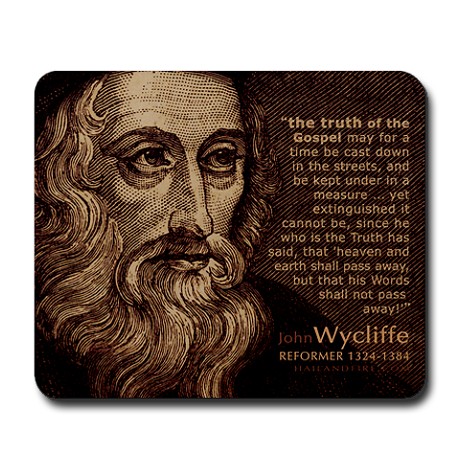
Yesterday was a strange and eerie anniversary.  Six hundred years ago, on May 4, 1415 the body of Bible translator and Christian dissident John Wycliffe was exhumed from his grave in England, burned and his ashes were thrown into the river. And if that wasn’t weird enough, this was done over thirty years after his death. It sounds like something from a Dirty Harry movie. “You think this is …

Read moreWorshipping Words
Category: Communication, Craft, CreativityTag: Communication, words

A Definition of a Successful Artist

By Tamela Hancock Murrayon April 30, 2015
Share
Tweet
17

Recently I witnessed an artist (not a writer) put work out to the public that I believe needed some polish. Some of my close family and I agreed that it shouldn’t have been released without being improved first. However, this artist was being cheered by intimate friends and family. I’m not positive all of these people actually like the art itself. I think many of them just want to …

Read moreA Definition of a Successful Artist
Category: Art, Awards, Craft, CreativityTag: Art, Career, Success

What Should I Wear to a Conference

By Tamela Hancock Murrayon April 23, 2015
Share
Tweet
23

If you have been following my posts on this blog, you may be aware that this topic was prompted by a question asked on last week’s blog. One of our faithful readers wanted to know what to wear to a major conference. I didn’t intend to devote a complete post to this seemingly shallow topic until the answer she deserved became quite detailed. So here we are. I don’t believe God …

Read moreWhat Should I Wear to a Conference
Category: Career, Conferences, Get PublishedTag: Attire, writers conferences

Tools from the Front Lines: Emotional Memory

By Karen Ballon April 22, 2015
Share
Tweet25
16

You’ve heard it over and over: Show, don’t tell. And that’s appropriate whether you’re writing fiction or nonfiction. When you communicate emotions in your writing, when those emotions are vital to your scene or message, it’s more powerful to show them. Now, I’m not going to tackle the pros and cons of telling, or when and why it’s better to show. (I covered at that in a previous post, so go there …

Read moreTools from the Front Lines: Emotional Memory
Category: Craft, Creativity, Writing CraftTag: Craft, Emotional Memory, Writing Craft

Conference Travel Mishaps

By Tamela Hancock Murrayon April 16, 2015
Share
Tweet16
12

Last week, I listed a few things that can go wrong when you travel to a conference. Today, I’ll offer a few ideas that might help overcome these mishaps. Getting there 1.) The car taking me to the airport doesn’t show up. This has never happened to me, but I know an alternative car service I can call if need be. 2.) I don’t arrive at the airport on time. I always allow much more …

Read moreConference Travel Mishaps
Category: Conferences, Get PublishedTag: travel, writers conferences

Tools from the Front Lines: Quotations on Writing

By Karen Ballon April 15, 2015
Share
Tweet21
45

Okay, admit it, you love to read quotes about writing or writers. Especially if they’re from other writers. So do I. In fact, I keep a growing list of quotations that inspire me, or make me laugh, or make me think. And on those days when I’m struggling, or when I feel the right words are eluding me, I fix myself a cup of coffee, open up the list, and spend time just reading. So here, to get you …

Read moreTools from the Front Lines: Quotations on Writing
Category: Craft, Creativity, The Writing LifeTag: The Writing Life, Writing Quotes

Conference Travel: What Could Go Wrong?

By Tamela Hancock Murrayon April 9, 2015
Share
Tweet8
17

When traveling to a conference recently, I realized, as I always do when traveling, how many things can go wrong. Such as: Getting there 1.) The car taking me to the airport doesn’t show up. 2,) I don’t arrive at the airport on time. 3.) I accidentally pack something in my suitcase that sets off the airport security alarm. 4.) My flight is delayed. 5.) I miss my flight because of my …

Read moreConference Travel: What Could Go Wrong?
Category: Conferences, Get PublishedTag: Conferences, travel
  • Previous
  • Page 1
  • Interim pages omitted …
  • Page 51
  • Page 52
  • Page 53
  • Page 54
  • Page 55
  • Interim pages omitted …
  • Page 87
  • Next
  • Home
  • About
    • Who We Are
    • Frequently Asked Questions
    • Interview with Steve Laube
    • Statement of Faith
    • Terms and Conditions
    • Privacy Policy
  • Guidelines
  • Authors
    • Who We Represent
    • Awards and Recognition
  • Resources
    • Recommended Reading
    • Christian Writers Market Guide Online
    • Christian Writers Institute
    • Writers Conferences
    • Freelance Editorial Services
    • Copyright Resources
    • Research Tools
    • Selling What You Write
  • Blog
  • Contact

Copyright © 2026 · The Steve Laube Agency · All Rights Reserved · Website by Stormhill Media