

Have you ever started a book that grabbed you from the first page, but somewhere in the middle, you started to lose interest? Maybe you drifted off or didn’t finish it at all. That can happen to your readers, and you may not even be aware of it.
If you’ve ever wondered whether your novel is gripping enough, you’re not alone. One of the biggest challenges writers face is keeping readers hooked to the end.
So, how do you write a book that readers can’t put down? The answer comes down to one word: tension. Tension isn’t only about plot twists or cliffhangers; it’s any curiosity that compels the reader to keep going. It’s the unanswered question, the unresolved emotion, or maybe even a ticking clock.
On the other hand, some readers will put down a book if it gets too intense. You can’t just crank the tension to 11 all the time. You have to tune it carefully to fit your genre and audience. So, how do you do that?
I asked Cara Putman, a former homeschool kid who graduated high school at 16. Cara is an award-winning, bestselling author who’s written over 40 mystery and suspense novels.
How do you tune tension for your genre?
Thomas: How do you know how to tune that tension for your genre?
Cara: One of the best ways for writers to figure that out is to be a voracious reader. If you’re not reading in the genre you want to write, you’ll probably miss the mark every time because you won’t know what readers expect. The best way to understand those expectations is to read widely in your genre.
When I shift into a new space, I start by dissecting some of the best books in that genre to pick up on pacing and see what the top authors are doing. What makes their books unputdownable? How are they crafting stories and building characters that keep me hooked?
I get a bit nerdy and build an Excel spreadsheet, but you don’t have to. You can intuit it by thinking about what grabs you. Talk to other readers and ask, “What’s the last book you couldn’t stop thinking about? What kept you up late or distracted you from things you should’ve been doing? Why?” Listening to what they say can reveal what pulls readers in. It’s not always a ticking time bomb.
Won’t reading other books make my writing derivative?
Thomas: But, Cara, if I read other people’s books, won’t my book become derivative? I don’t want to read all those books; I just want to write my own stories.
Cara: That’s the biggest lie and cop-out out there. I know it’s controversial, but many writers tell me they don’t read while writing because they’re afraid their book will sound like someone else’s or they’ll be accused of stealing ideas.
To me, reading is like breathing. If I’m not reading, I feel like I’m shriveling up. That’s just me, though. If you check my Goodreads, you’ll see I’ve read 49 books this year, and it’s only May. Some are audiobooks, some are paperbacks or Kindle books; but I read voraciously. Part of that is because I want to see what’s working across different genres.
I get ideas from various authors, and I bring those ideas about pacing and character development into my writing. My style is still my own because I’m a unique person, and the way I write reflects that. It’s not derivative; it’s a unique blend.
Thomas: The fear of being derivative shows an ignorance of the zeitgeist or the spirit of the age or the common culture.
We’re all influenced by the same cultural forces because we’re experiencing the same zeitgeist. If you’re not reading other books in your genre, you will be derivative in the worst way because you’ll be accidentally derivative.
Often, an idea’s time has come; and multiple authors write similar books simultaneously because that idea is in the air. They may not even know others are writing the same thing. In publishing, certain kinds of writing persist for years, sometimes decades. Some genres and readerships shift quickly from one trend to another, while others remain remarkably consistent. If you’re not familiar with the vocabulary, tropes, and reader expectations, your book will be the worst kind of derivative. It’s the kind of book that struggles to sell. Your ads don’t work, and you don’t understand why.
Bestselling authors like James Patterson, Stephen King, and Brandon Sanderson are all voracious readers. I can’t think of a single mega-bestseller who isn’t. They read their genre and spiral out from there.
What tools create effective tension in storytelling?
Thomas: Tension is more than saying, “The whole world is at stake.” Hollywood has forgotten how to tell a high-tension small story. They try “the multiverse is at stake!” but that doesn’t ramp up the tension. I don’t care about the multiverse.
Compare that to a story where one person might never marry the love of their life. That can create higher tension for certain readers than the collapse of the multiverse. We often think stakes have to be world-ending to be high.
Cara: Speaking of the multiverse, Marvel fell apart after Endgame because they lost sight of character arcs. Characters drove the first wave of Marvel. I haven’t seen Thunderbolts yet, so I’m not sure if they’re getting back to it. Initially, I hated Tony Stark because he was such a selfish character. I also disliked Thor initially. But you see their character arcs develop with a moral core, and you start to care deeply.
Thomas: It’s the slow repentance of Tony Stark.
Cara: Exactly. By Endgame, I sob every time because of what Tony Stark gives up. It’s Captain America—Steve Rogers—strapping on his broken shield, standing alone against everyone. We watch these characters across multiple movies, and their development creates tension. That’s why I cry in Endgame. It’s Black Widow as an individual I care about.
Authors often focus only on the external and forget the internal and spiritual. As Christian authors, if you’re only focused on the external—like a ticking time bomb, whether it’s the world exploding, losing a job, or not getting the guy—it’s not enough. Without internal character development and spiritual growth, readers will think, Who cares?
I always come back to the first Jason Bourne movie. There’s that fabulous chase through Paris in the tiny car, where Jason discovers he’s a super spy. He pulls into the parking garage, sits there, and processes, “Oh my gosh, I’m a super spy.” The girl next to him just sits there, stunned, thinking, “I’m alive, I’m alive!” You get to breathe with them for those few cinematic minutes. It gives the audience a moment to catch their breath.
As authors, we often forget this up-and-down momentum in tension. Our goal is to push our characters further into the dirt, but we also have to lift the pressure just enough for them to catch their breath before the next dark moment. If we forget those small lifts, we lose that tension.
Thomas: There’s a musicality to it in that the quiet moments are paired with the loud ones.
After that garage scene, they drive away and are cruising through the countryside. There’s no music playing and not a lot of dialogue. They’re just in the car. In one sense, it’s a quiet moment compared to the loud chase they just experienced. However, in another sense, it’s incredibly tense because, as the audience or reader, you have no idea where they’re going or what will happen next. Neither do the characters.
At any moment, an assassin could jump out of the shadows and start trying to kill Jason Bourne; and suddenly, there’s a fight scene. So even the quiet scenes are intense.
When I say “musicality,” I mean that in a very real way. This is where studying other arts can help. If you look at a piece of music, there are the notes that create melody or harmony, and there are the lyrics. But there are also letters and words that indicate dynamics. You have piano, which means quiet, forte for loud, and fortissimo for really loud. They just keep adding Fs for louder and Ps for quieter. Then there are mezzo piano and mezzo forte, which fall in the middle.
A good piece of music knows when to get loud and when to get quiet. The temptation is to be fortissimo the whole time. But if you do that, you lose the musicality. That’s what’s happened in modern pop music. It’s compressed to be fortissimo all the time, so it loses that dynamic range. If you compare it to older styles of music, you’ll notice that musicality is being lost. Musicality gives music its lasting power. People still want to listen to older music because it knows when to be quiet and when to be loud.
Tension can come from action, but the most common form of tension is curiosity.
What’s the secret to writing mystery as a component of tension?
Thomas: I’m a big believer that every author, early in their career, needs to write a mystery. It teaches you how to withhold information from the reader while still revealing things. That’s a core skill of writing that you won’t learn in English class. You probably won’t learn it while writing in other genres. Yet every genre benefits from the author knowing how to convey while withholding.
Cara: There’s definitely an art to writing mysteries, and it takes attention. With every book, you have to figure out how to dial the tension up or down and how to reveal the right things at the right time.
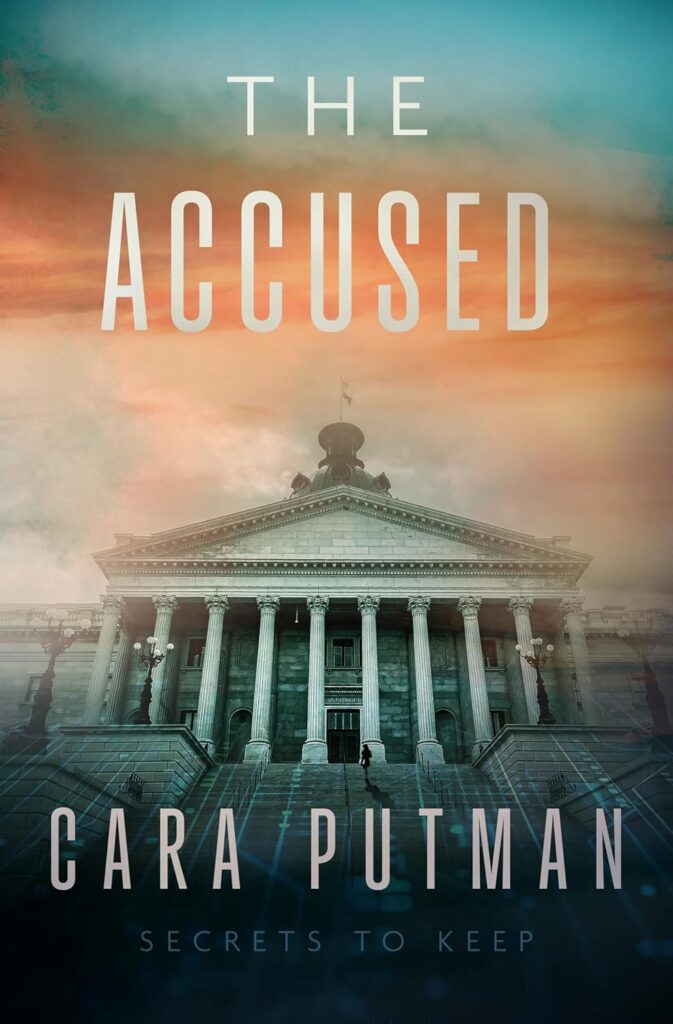
In my recently released book, The Accused, there’s a big secret. One of the things my editors and I wrestled with was what the heroine should call one character. I didn’t want to lie to the reader, but I also didn’t want to reveal the secret too early. We wrestled with that all the way through to the copyedit stage because it was such a major secret.
I didn’t want to spoil it too early because so much of the emotional tension came from that reveal. Smart readers might figure it out early; but you want to reveal things at the right time, in the right order.
You’re constantly asking, “When will the emotional payoff be strongest for the reader?” At the same time, you don’t want to make them feel like you pulled a cheap trick. Readers are smart, and you want to honor that.
The goal is that when the reveal happens, they go, “Oh man, how did I miss that?” You want them to go back and look for the breadcrumbs. You’re trying to get it dialed in just right.
When I read, I’m always racing the author. Often, I can figure out the twist halfway through just because I’ve read and written so many books. I’m rarely surprised anymore. Sometimes, that makes reading less fun. So when I am surprised, I’m like, “Yes! This is great!”
But readers are smart. You have to treat them that way. That actually makes each book harder to write because the more of them you write, the more sophisticated you have to be in laying out the clues.
Thomas: Decide on purpose what you’re not going to tell the reader. The temptation is just to dump a bunch of info early in the story.
That being said, information dumps can make your book more interesting, especially for male readers. Guys often want information dumps, particularly if they’re learning about the real world or a fantasy world with consistent rules.
But just because you include info dumps doesn’t mean you can’t also have mysteries.
How do story questions relate to tension?
Cara: Creating tension means knowing how to add questions. In romance, we all know the boy and girl get together at the end. A straight romance can be kind of boring.
So, how do you add questions? How do you add realistic roadblocks to keep readers engaged and wanting to continue reading? If there are no roadblocks, I’ll stop reading. I just don’t care because I already know they will get together.
You must also know your audience. I read a lot of Tom Clancy books growing up because my dad read them, and I love the Jack Ryan series. But I’ll never forget reading The Hunt for Red October and thinking, I could drive a submarine now, because there was so much information presented.
I remember hearing that when those books were published, Clancy would get called in by national security. They asked him, “How do you know all of this?” He had done so much research they thought it might be a national security threat.
Male readers want all that. But I don’t need to know how to drive a submarine.
Is there a role for the info dump?
Thomas: I remember a friend very excitedly summarizing Clear and Present Danger. He wasn’t summarizing the plot or the characters. He was summarizing the 30-page info dump on how to build a nuclear bomb.
If you read that book, you know how nuclear bombs work. You don’t know how to refine uranium, but everything else you could learn from that book.
A certain kind of male reader thinks, “Yes! I’ve always wanted to know that.”
You can also see this in older fiction. In Les Misérables, Hugo pauses the action and devotes an entire chapter to describing Paris’s streets from a bird’s-eye view. A modern-day reader finds that chapter fatiguing. They think, This is such a waste. Don’t you have Google street view? Don’t you have National Geographic?
But back then, they didn’t. For an American who had never been to Paris, getting a bird’s-eye view of the streets and culture was intriguing.
Today, you can visit any place via YouTube, but we forget that wasn’t possible back in the day. Those chapters were features, not bugs. They were the attraction.
That kind of curiosity still works today. People are just curious about different things. If your editor says that info dumps are always bad, I can guarantee that the editor is a woman.
Cara: But an info dump still has to move the story forward and fit the genre. So, you need to know your audience and genre.
Otherwise, it will slow down the story. Do it too many times, and people will throw the book against the wall or put it down and never come back to it. They may not even be able to tell you why they stopped, but it was the info dump that did it.
It must be relevant. For example, my character is in love with drone technology and fascinated by what they’re seeing through the drone. He has always wanted to travel; but for some reason, he couldn’t. At that point, the drone becomes his window to the world.
In that case, the info dump makes sense. It’s relevant. You have to tie it back to the characterization or plot.
Thomas: If you read the original Jurassic Park, the book isn’t really about dinosaurs. It’s about chaos theory. There’s a point where Malcolm is injured. He’s lying in a room, and velociraptors are chewing on the bars of the skylight above him, and he’s talking about chaos theory.
Chaos theory isn’t random. It’s connected and interwoven throughout the story. The very act of the dinosaurs escaping supports the conversation about the nature of chaos. It’s a fascinating book.
Michael Crichton is able to use a ticking clock effectively. If you want to pull someone through an info dump, make the information necessary for a useful task. Or tie it to a ticking clock.
Tension is a dial you can turn up or down.
Info dumps, when done well, can add to curiosity and tension, especially if you sprinkle them in. Jurassic Park doesn’t start with an essay on chaos theory and then get to the dinosaurs. You get bits of chaos theory throughout the book through different characters who have different perspectives. It’s an exploration of an intellectual idea as much as it is a story with dinosaurs and children in peril.
Cara: I remember reading The Da Vinci Code, and there were whole chapters where I thought, This has nothing to do with the book. You’re just preaching. I would skip those chapters. I’d think, Get back to the action.
That’s what you don’t want people doing. As authors, we’re all trying to communicate something. We have a purpose in what we’re writing. But if the reader starts skipping chapters or scenes, that means there’s no tension or purpose.
Readers are smart. Whatever you’re trying to integrate or communicate has to tie back to the plot and characters. There has to be a purpose. If there’s not, and it’s not creating tension, cut it from the book.
How do you avoid forcing a message into the story?
Thomas: A good way to judge whether a scene is needed is to ask, “Is there a strong reason the characters need this information?” Often, Christian authors are tempted to write with the mindset, “I need to get this message to the reader.”
Although, this is less a problem with Christian authors now than it is with Hollywood. So many modern Hollywood films are essentially saying, “We have a message, and we will deliver it to you. If a movie breaks out in the middle, great. But if the movie gets ruined? So be it. You’re still getting the message.” It’s aggressive. Moviegoers hear them preaching very loudly, and it’s hurting Hollywood at the box office because people find that fatiguing.
Yet, you can incorporate religious elements. Hollywood has its own religion. Christians have a different religion, and we can weave it into a story in really intriguing ways if it’s done organically and tied to what the characters want. I think that’s a key part of tension.
How is peril related to tension?
Thomas: Another key element of tension is peril. Peril could be falling off a cliff, but it could also be not getting a promotion at work. It’s anything that threatens the character’s desires or leaves them unsatisfied. Peril operates at the scene level and even at the conversation level.
That kind of peril is a useful dial. It forces you to create well-developed characters who want things and whose desires conflict with each other. In a conversation, maybe only one character gets what they want. Sometimes, neither does. Occasionally, both do. But that tension keeps things interesting.
Cara: Sometimes you’ll hear people say every scene and conversation should have a goal, motivation, and conflict. By the end of the book, the character needs to do something they wouldn’t have done at the beginning. That’s the arc.
There are lots of tools to help you get to know your characters. I’ve never been comfortable imagining interviewing my characters. I’m an attorney and much too left-brained. But I use tools like the Enneagram. I love Susan May Warren’s Story Equation (affiliate link). I use all kinds of frameworks to dig deeper into my characters.
I’ve found the Enneagram helpful. It can help identify the lie the character believes and their motivation. Thanks to authors like Beth McCord, who bring in a gospel perspective, it can also offer a redemptive element.
There are many ways to shortcut that process. You can even use mythology as a basic story structure. Since almost all of my last ten heroines have been attorneys, I’ve needed to find as many ways as possible to make them distinct. Otherwise, they’d all start to feel like the same character.
But one of the most important things is knowing what you’re trying to accomplish with the character. What’s their purpose in the story?
How do you incorporate Christian themes?
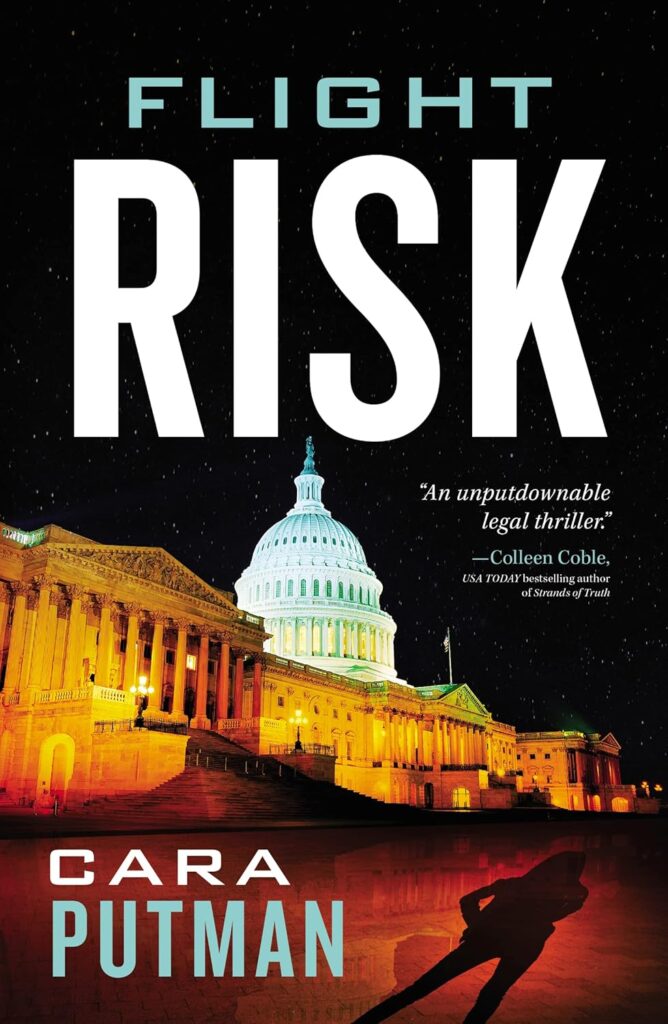
Cara: I rarely go into a book saying, “This is the theme.” But with my book Flight Risk (affiliate link), the clearest theme was “How do you find truth in a fake-news world?”
With my Secrets to Keep (affiliate link) series, the theme was “Everybody has secrets, and we need to bring them to the light because that’s where freedom is.” That’s the spiritual theme for that book series. Everyone has a secret, and they’re all dealing with it in different ways. But God wants to bring secrets into the light because that’s how we get to freedom.
I’ve only written a few books where there’s a clear salvation message because that was what was organic to those characters. As Christians, we’re partnering with God in the creative process, and that means every book is going to be different.
I will not shoehorn something in if it’s not organic. I think that’s part of what you’re talking about with Hollywood in that there’s a lot of shoehorning going on.
Everybody has faith. The question is, “What do you place your faith in?” My faith is in Jesus Christ as the Lord and Savior of the world. Since that’s foundational to who I am, it will come out in my books. However, it will look different in each one because each book has a different purpose.
That being said, I always want people to leave one of my books with hope. Too many books I read don’t leave you with that sense of hope. If there’s no hope at the end of one of my books, I don’t want to write it.
Thomas: When it comes to working the gospel message into your story, there’s a certain kind of Christianity that reduces everything down to praying a prayer one time. But that’s not biblically supported. Read the New Testament, and you’ll see that Jesus gave us many instructions; and at no point did He ever lead someone in a sinner’s prayer. He called people to live a certain way.
You can incorporate repentance and a moral system into every book. When characters choose to repent, it becomes a comedy. When they don’t, it becomes a tragedy. Even the ancient Greeks understood that stories have a moral core. They had two basic categories of story.
As it says in James 2:24, “You see that a person is justified by works and not by faith alone.” There’s a justification process where characters work out their faith. In the Marvel movies, we see Iron Man repenting of evil and Captain America repenting of good. In other words, Captain America is learning to be selfish, and Iron Man is learning to be selfless. Their arcs crisscross and that’s why the ending of Endgame is so powerful. Both characters are “repenting” in that they’re changing their minds.
You can repent toward evil and change your thinking to believe more lies, or you can repent toward truth.
Can personality tools help with character development?
Thomas: I’m not a big fan of the Enneagram. The Catholic bishops said it well: There’s no scientific or theological basis for it. However, it is useful for authors, internally, as a tool to help differentiate characters. If giving your characters numbers helps you make them distinct from one another, that’s fine.
The gnosticism and the antichrist spirit behind the Enneagram scare me. Gnosticism poses as Christianity but removes key elements. It’s an ancient philosophy that goes back 2,000 years. If you want to read more about gnosticism, read the biblical book of First John.
There’s no scientific validity to Myers-Briggs either. They’re both like horoscopes. But neither are your characters “real,” so using these systems to help make your characters distinct is better than making them all the same.
What often happens in someone’s first novel is that all the characters are just different aspects of the author’s own personality. Eventually, you have to learn how to make characters who are their own people. You’re not interesting enough for your personality to be split across the entire cast of your book.
Elements of you will end up in all your characters. But unless you’re really wild, you need to build characters who are distinct from yourself.
How do conflicting desires create tension?
Thomas: The key is to give your characters different desires based on who they are and then put those desires in conflict with each other. Sometimes, characters even experience internal conflict, where they want something but also don’t want it at the same time.
That’s part of what makes people human. The conflict isn’t just man-versus-man. It can also be man-versus-himself, man-versus-society, man-versus-God, or man-versus-nature. When well implemented, these layers of conflict raise the tension in your story. To learn more, check out my episode on Writing Conflict.
Cara: Death as a consequence of the conflict can show up in lots of ways. It’s not just physical death. It could be economic death, romantic death, or career death. Conflict and tension can come from all those kinds of “death” and more. We need to get more creative.
For my heroes, the looming threat is often career death. For men, so much of their identity is tied to their careers. They value what they do, how they earn, and how they’re seen. Maybe the job’s in jeopardy. Maybe the dream is falling apart. If a character starts to question that career identity, it creates huge tension.
Women experience conflict in similar ways. I know my identity is in Christ, and I’m a child of God, but I also find meaning in the students I’m impacting and the work I’m doing. That matters. There’s so much to unpack on that side of life too.
Identity in relationships can also be a source of conflict. Being part of a family, a friend group, a church, or a community is how we find belonging. We long for belonging. Gallup talks about five or six areas of well-being; and if you harm even one, people feel it.
We haven’t even touched on physical or mental health. And any one of these areas can be the site of conflict.
One of my favorite books by Randy Singer had so much happening to the heroine. She was hit from five or six directions. When I started to unpack it, I thought, No wonder this is so compelling. It wasn’t just a legal thriller. There was so much going on.
How can you vary tension across different levels?

Cara: There are so many dials you can turn. One might be set to a two, another to an eight. They can shift in different chapters and at different times. Too many authors only turn two dials, and there’s so much more available if we just get creative.
How do you know when your characters are truly different?
Thomas: You know, you’ve created differentiated characters when their desires are different at a deeper level. One character doesn’t even think the other’s desire is worth caring about.
For example, one of my children deeply values his food staying together. If he’s eating a taco and the food falls out of the bottom, it causes him real emotional distress. Just last week, I toasted his hamburger bun in our air fryer, but the bun cracked in half. For him, that was the greatest tragedy of the day. There were tears, wailing, gnashing of teeth.
And people might say, “Why are you upset? This isn’t important.” And objectively, they’d be right; it’s not important. But that’s the point when it comes to characters.
You’re at the dinner table. One kid is upset about something that happened at school. Maybe another kid made fun of him on the playground. The dad is stressed about money. The mom just wants the crying to stop because the toddler’s been melting down over his hamburger bun for five minutes.
Each character wants something completely different. Then, you add stakes to those wants. It requires a lot of empathy to get into the head of that three-year-old.
Why is it such a big deal that the food stays together? Maybe it’s because he wants to feel like a big kid, and his food falling apart makes him feel like a baby. It feels like failure. He sees his older siblings eating whole burgers. His parents eat whole burgers. All he wants is to be a big kid, but right there on his plate is undeniable proof that he’s not.
Meanwhile, everyone else is thinking, “It’s just a hamburger.” But that doesn’t matter.
Good conflict is born when people view and value things differently.
This is also what happens in theological debates. One person takes a hard stand on predestination, and the other says, “I don’t even think that topic matters.” One side says, “This is everything!” and the other side says, “I couldn’t care less.” And now you have conflict.
How do you choose the right character perspective?
Cara: The other key piece is getting the right people in the scene or “at the table,” so to speak. Then, you have to set the scene from the right character’s point of view.
Sometimes, we take the easy road. I’ve done it myself. Later, I realized that I had written the scene from the wrong perspective. I need to rewrite it from a different seat at the table, from the point of view of the character who has the most to lose.
Thomas: One of the best scenes in all of sci-fi is the banquet scene in the original Dune book, and they cut it from the movie completely. It’s an unfilmable scene because it jumps into every single person’s head during the conversation. Everyone at the table wants something different. They almost come to blows at one point. Several wars nearly break out because it’s a meeting of counts and dukes and wizards, and everyone has cross-purposed desires.
By going into each character’s thoughts (head-hopping, which Christian editors tend to frown on), works in that context. In certain genres, it can enhance the friction, but it makes it harder to adapt to film. The best scene in the book couldn’t be adapted because watching it on screen would be like watching a bunch of people talking.
You miss all the subtext. You miss what the dialogue really means. The character is thinking, If I don’t answer this question, my honor is besmirched. But on screen, it just looks like they’re eating dinner and getting a little tense. You’d never know a war almost broke out. These people represent rival factions that both have weapons. You can’t see all of that unless you’re in their heads.
Cara: That’s the beauty of the written word. You can convey all that subtext and hidden meaning, which don’t translate as well onto the screen.
What are some ways to increase or decrease tension?
Thomas: What are some ways to increase or decrease tension? How do we give the reader or viewer a breather like that moment with Jason Bourne, where they’re driving quietly in the car before the next big action sequence?
Cara: I think it’s about adding in small, real-life moments. Even in the biggest romantic suspense or thriller, there are usually little segues between scenes. Sometimes, the character has to pack a suitcase before flying off to save the world. Or they get a phone call from their kid saying, “You forgot to pick me up from school!” Just those everyday moments.
They help us remember that the character isn’t just an advisor to the president or a superhero; they’re also a real person. Those brief snapshots let us catch our breath before diving back into the action. They don’t have to be long, but they’re important.
Even in Endgame, there’s that moment when Natasha and Steve Rogers are sitting there, and she’s making a peanut-butter-and-jelly sandwich. It’s just a glimpse of life during that five-year gap between the snap and when they reverse it. The scene is short, but it tells us what life was like in that “in-between.”
It’s the same in books. Once the action ends, you’re supposed to have that closing scene that lets readers know the characters are going to be okay. In reviews, sometimes people say the ending felt too fast. That’s usually because I’m good at writing the action, but I’ve rushed that final “exhale” moment.
Even if life’s not perfect, readers need that sense that the character will be all right. Then, they can imagine what’s next.
Why is the final transformation scene important?
Thomas: You need that moment to show repentance. I know “repentance” is an old word—and the trendy word is “transformation.” But I like the old ways.
You need that moment to show the character has changed. Like Sam and Frodo returning to Hobbiton at the end of The Lord of the Rings and facing the fallen Saruman. He’s no longer Saruman the White; he’s just an old man and a bully who can’t even control a group of hobbits.
Meanwhile, Pippin, Merry, and Sam are bigger, bolder, stronger, and more courageous. Sam says, “I was fighting Nazgûl two chapters ago. I’m not afraid of you.” That contrast shows how far they’ve come.
The return reveals transformation. That’s what gives the story its true arc.
Whose story is The Lord of the Rings?
Cara: I have a question for you. Is The Lord of the Rings trilogy Frodo’s story or Sam’s?
Thomas: I’d say this is what makes great classic literature. Multiple characters carry the story. If you zoom out and include The Hobbit, it’s absolutely Frodo’s story because Frodo’s and Bilbo’s stories kind of rhyme in that they begin and end in similar ways. But Sam is the moral heart of the story.
The movie zooms in and makes it Sam’s story. The book, arguably, is almost Aragorn’s story.
Cara: To me, it’s Sam’s story because without Sam, Frodo doesn’t make it. You have to have Sam.
Thomas: Sam shows a lot of agency, especially in the Shelob sequence. He gets the happy ending more than Frodo does. Frodo survives, but he never really recovers. He never thrives. He becomes a shadow of his former self, like Bilbo.
Both of them were forever wounded by the Ring. Sam, on the other hand, wasn’t. He also got the Grey Havens ending. So, I can see the argument for it being Sam’s story, especially if you leave The Hobbit out of the narrative.
This is how you know you’ve created a great story. It’s also Aragorn’s story and Gandalf’s story. He’s been on Middle-earth for 3,000 years with one job. And when he finally laughs at the end of The Return of the King, it’s the first time he laughs in the whole saga. That weight is finally off his shoulders.
He was sent to Middle-earth to deal with this evil, and the other wizards who were sent with him all fell to corruption in one way or another. Ultimately, he was the only one who stayed faithful, and he succeeded.
He has that moment of relief, knowing, “Okay, my work here is done.”
Cara: That’s the feeling we all want.
I couldn’t read the books until after I saw the Peter Jackson movies. All the long descriptions made me ask, “Where’s the story?” But once I saw the movies, I could read the books and enjoy them. I read them aloud to my kids when I was homeschooling.
I love the movies, especially the extended versions of the trilogy. I’ve watched all the outtakes.
We want to create those kinds of emotions we feel in classics like Anne of Green Gables. It has so much conflict and tension, but it’s a very different kind of tension.
How do you create tension without danger?
Thomas: How does Anne of Green Gables add tension? For someone used to reading The Lord of the Rings, Anne of Green Gables doesn’t seem like it has high tension. There’s no Mount Doom, no invading orcs, and very few people die. How does that story have tension?
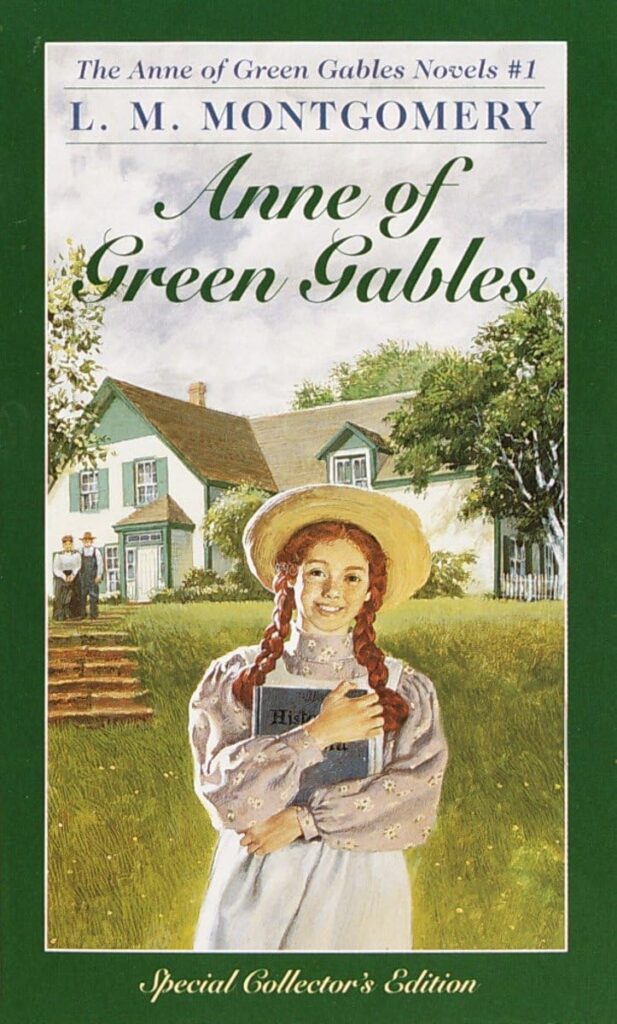
Cara: The tension comes through the relationships. If you’re writing women’s fiction or romance, you need to study books like that to see what masterful tension looks like.
Anne wonders whether Marilla will keep her. There is tension between Diana’s mother and Anne. Then you have Matthew subtly managing Marilla so they can keep Anne. And, of course, the romantic tension with Gilbert that starts in childhood and develops throughout the book and beyond.
It’s all set on this small island in a close-knit community. But it feels huge because of what’s at stake emotionally.
When Anne is cut off from Diana, she’s lost her bosom buddy. She feels like no one loves her. She’s desperate for connection because she’s an orphan, and finding a sense of belonging is everything.
And when Matthew says, “You’re not what we expected, but we will love you anyway”—that’s powerful. Later, when Matthew dies, Anne’s left wondering, “Will Marilla keep me now? Will someone love me now? Can I be accepted for who I am?”
She has orange hair. Nobody loves orange hair. That might seem like a small thing, but to her, it’s huge.
So, it doesn’t matter how “big” or “small” the conflict is—if it’s real, if it’s genuine, and if it touches the character’s core wound, readers will go with them.
It’s all about relationship tension and that deep wound of being abandoned. This is how you write community-based tension.
Thomas: Tension is a dial. Not every book should have high tension. Not all readers want to read something like The Bourne Identity. For many, it’s just too stressful.
Three primary motivations cause people to read books. The first is education, which is the biggest category. This is why info dumps are still important, particularly in men’s literature. A big group of men have been soured on fiction altogether because female editors started cutting the info dumps. About 20 years ago, it became a truism in publishing that info dumps were bad, so they got cut out. Now, those readers just read nonfiction, and they read a lot of it.
But it’s not just about knowledge. It’s also about wisdom. Fiction can convey a lot of wisdom in addition to facts. While most nonfiction falls into the “education” category, some fiction does too.
The second category is entertainment. These readers typically want high levels of tension, as in mystery, thriller, and suspense stories.
The third motivation is escape. These readers want to escape their current emotional reality. This is where you find romance and fantasy readers. Tension still matters here, but it’s much more genre specific. In fantasy, the world might be at risk. In sci-fi, sometimes the entire galaxy is at stake. You might not even realize the galaxy’s in peril until 12 books into the series, and that’s not necessarily what pulls readers through.
What readers want to escape from is what matters. This is where the zeitgeist becomes important.
If people are bored with their lives, they want exciting books. If they’re stressed, they want calming books. For someone experiencing future shock, overwhelmed by constant cultural change, escaping to the Amish world where nothing ever changes is deeply relaxing.
I’m curious, as we transition into this new zeitgeist, where many cultural changes are being reversed, whether the psychological pull toward Amish fiction will remain as strong. If each year starts to feel more like five years ago, that sense of future shock might fade.
If that psychological driver starts to wane, maybe Amish fiction has finally reached its peak. That’s the fun thing about following the zeitgeist: You have to watch it play out over long periods of time.
Cara: I’ve always thought what draws people to Amish fiction is the same thing that draws them to historical fiction.
I love writing about World War II, and I think the appeal is similar. It’s nostalgia for a simpler time but set in a way that still feels relevant today.
If that’s what you’re writing, great. But it still needs tension. Even in simpler, slower-paced fiction, you need some form of conflict. Often, it’s found in relationships.
Writers who do it well know how to weave that in. If you’re trying to break into that genre, don’t forget the tension. Don’t equate “Amish” or “Mennonite” with “nothing happens.” That’s not what it means.
There still needs to be conflict, or readers are going to get bored.
Why should authors read bestsellers in their genre?
Thomas: When you start reading in a genre, begin with the enduring bestsellers. What are the all-time bestselling fiction books? You need to read those and get a sense of the top authors in that space.
You also want to read what’s currently selling. Go to Amazon, look up the number one book in your genre, and read it. Don’t read the book with critical eyes saying, “Look at all these terrible things this author did. I could do so much better.”
Instead, repent of your wicked pride and read the book asking, “What do readers find so appealing in this?” Because they do find it appealing. That book has outsold every other book in its category for that reporting period, so it’s doing something right.
Until you figure out what that “something” is, don’t criticize the book just to make yourself feel better. Repent of your pride.
What does reading in your genre teach you about writing?
Cara: A few years ago, I read Where the Crawdads Sing and All the Light We Cannot See. People had been talking about them for years, but I’d been head-down writing and teaching. I finally decided to read them.
Both blew me away for different reasons. One of them made me think, “I wish I could write like this.” The other one, I thought, “Eh, I could write better,” but the story and characters still captivated me. There were parts where you had to suspend disbelief, but I understood why book clubs loved it, and I still learned from it.
I don’t read every Reese’s Book Club pick, but I do read quite a few. The Open Door was a little spicy, so I added that warning to my Goodreads review, knowing my readers wouldn’t love that element. But the story and characters were fabulous. So I can still learn from it.
You’ve got to approach books as a student of the craft. If you’re not willing to be a student of the craft, don’t bother writing.
Thomas: It’s hard to be a student of the craft if you’re not also reading books about craft.
For people going through our Five-Year Plan course, we assign one book on craft every month. Most months, students also write a short story implementing what they’ve learned.
Reading craft books opens your eyes to how scenes, tension, and characters work. If you haven’t studied filmmaking, you just watch a movie. But once you start studying it, you notice more. I watched a movie a few weeks ago, and I thought, This is a good story, but the editing is rough. It distracted me.
Most people watching that film wouldn’t consciously notice the editing, but they probably didn’t like the movie as much as they would have if the editing had been better. That’s what reading books on craft will help you with.
Which of your books best shows how to handle tension?
Thomas: Which of your books would you say gives a master class on how to handle tension?
Cara: I think I nailed it with The Accused (affiliate link), which just came out in April. The other one readers talk about a lot is Flight Risk (affiliate link).
The Accused is a courtroom drama like a John Grisham novel. If legal fiction isn’t your thing, then Flight Risk might be a better fit.
What are some craft books on tension?
Cara: James Scott Bell’s Plot & Structure (affiliate link) is really good, and so is Write from the Middle (affiliate link). That one I especially loved.
To learn more, check out the following episodes featuring James Scott Bell:
Connect with Cara Putman
Check out Cara’s other 38 books at CaraPutman.com, where you can sign up for her newsletter. Check out her podcast Book Talk with Cara, where she talks with authors about the books they’re writing.
Featured Patron
J. A. Webb, author of Fragments (affiliate link)
A Thrilling Epic Christian Fantasy Adventure: Ayn Rand and George Orwell meet Frank Peretti.
It is the year 2158, and Hegemony has fallen.
But the Order remains the unseen power behind all human government. Father Curtis, learning the Order is built on a foundation of lies, is branded a heretic, and must flee for his life.
Now, his fate and the fate of humanity hang in the balance as he battles to find the truth about himself, the Order, and Creation in a world where seeking truth is a capital offense.