• Skip to main content
  • Skip to after header navigation
  • Skip to site footer

The Steve Laube Agency

Helping to Change the World…Word by Word

The Steve Laube Agency

The Steve Laube Agency

Helping to Change the World Word by Word

  • Home
  • About
    • Who We Are
    • Frequently Asked Questions
    • Interview with Steve Laube
    • Statement of Faith
    • Terms and Conditions
    • Privacy Policy
  • Guidelines
  • Authors
    • Who We Represent
    • Awards and Recognition
  • Resources
    • Recommended Reading
    • Christian Writers Market Guide Online
    • Christian Writers Institute
    • Writers Conferences
    • Freelance Editorial Services
    • Copyright Resources
    • Research Tools
    • Selling What You Write
  • Blog
  • Contact
  • Twitter
  • FaceBook
  • RSS Feed
  • Get Published
  • Book Proposals
  • Book Business
  • Writing Craft
    • Conferences
    • Copyright
    • Craft
    • Creativity
    • Grammar
  • Fun Fridays
Home » Archives for Bob Hostetler » Page 24

Bob Hostetler

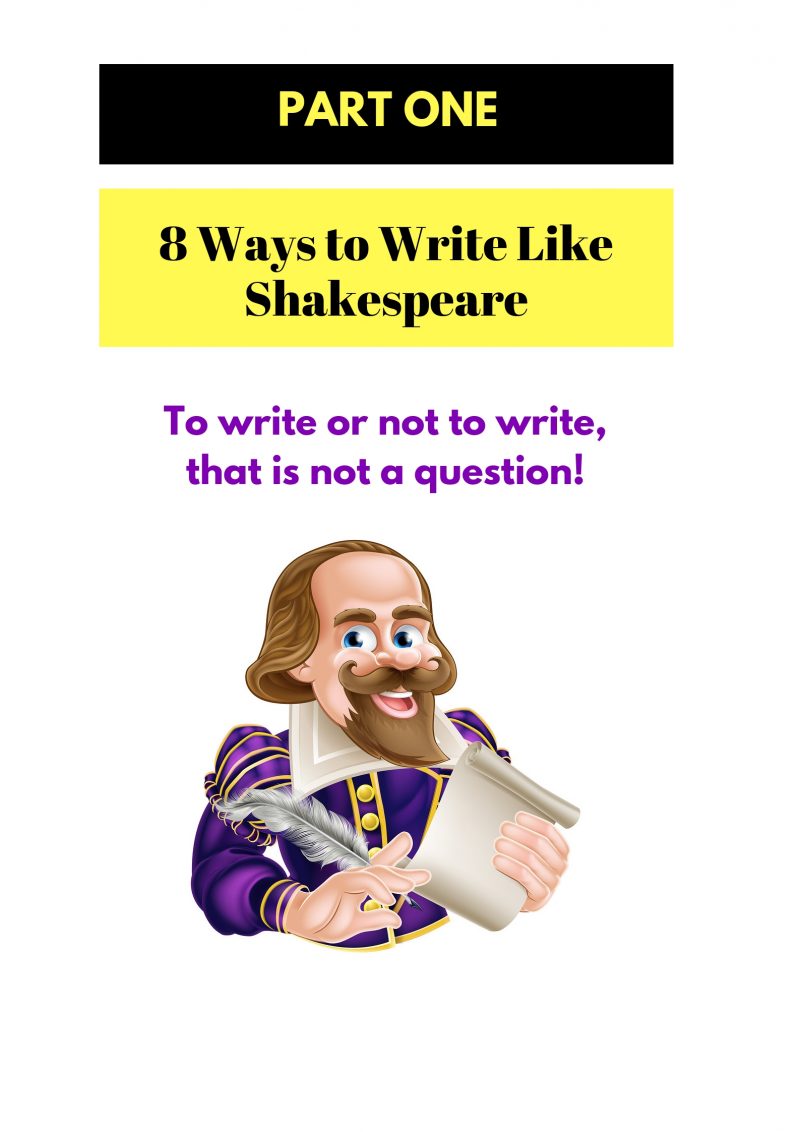
8 Ways to Write Like Shakespeare (Part 1)

By Bob Hostetleron September 12, 2018
Share
Tweet
36

I learn something new in every article or book I write, but perhaps never as much as I learned while composing my book The Bard and the Bible: A Shakespeare Devotional, a book of daily reflections drawn from a quote from Shakespeare and a verse from the King James Bible. Even after more than forty books, hundreds of articles, and thousands of blog posts, I learned from the Bard of Avon at least eight crucial and valuable lessons:

  1. Study thy craft.

No one knows when Shakespeare started writing poems and plays, but he probably learned stagecraft and playwriting from the likes of John Lyly, Thomas Kyd, and Christopher “Kit” Marlowe—the best of his day—while trodding the boards as a young apprentice.

So how are you studying your craft? If you don’t read voraciously in your genre, pick another genre. If your grammar needs work, take a class or read a book. Subscribe to Writer’s Digest. Absorb The Elements of Style, On Writing Well, Stephen King’s On Writing, Annie Dillard’s The Writing Life, and everything else you can find about the craft of writing. Read blogs like this one. Make writers conferences a part of your growth strategy. Enlist a good critique partner.

  1. Know thy audience.

Shakespeare knew exactly who would be in the audience, from the “groundlings” to the nobility, and injected specific elements into his writing for each part of his audience. He may even have revised his plays when they were presented at court (as opposed to in the countryside or theaters).

What is true of his plays is also true of his poetry. Many of his sonnets, for example, were clearly written for a specific person in a specific situation. So be that specific in identifying and writing for your audience. You can’t and you shouldn’t write for everyone. You need a target to shoot at, an audience to play off, a clear picture of who your reader is for any given project.

  1. Take the time to find the best word.

Do not dip your pen in an inkwell of ordinary language. Take the time and trouble to find the best words, as Shakespeare did in one of his most justifiably famous scenes, as the dying nobleman John of Gaunt describes his homeland:

This royal throne of kings, this scepter’d isle,

This earth of majesty, this seat of Mars,

This other Eden, demi-paradise,

This fortress built by Nature for herself

Against infection and the hand of war,

This happy breed of men, this little world,

This precious stone set in the silver sea,

Which serves it in the office of a wall,

Or as a moat defensive to a house,

Against the envy of less happier lands,

This blessed plot, this earth, this realm, this England

(Richard II, II, 1).

You have tools Shakespeare lacked: a thesaurus and Google and probably a larger library than the Bard, who never owned more than a hundred books in his life. So take the time to find the word that best expresses what you want to say.

  1. Find thy funny bone.

Shakespeare’s reputation was made on his early histories, the tales of kings and wars and death and succession. But he would not have done so well if he had neglected the funny bone and never created Falstaff, the fat knight, or Mistress Quickly, the innkeeper.

In fact, you could say that Shakespeare invented both the stage musical and the romantic comedy. He used humor everywhere in his plays. He wrote scenes for specific company “clowns,” writing to their particular talents. He even inserted comic relief into his darkest tragedies, like Macbeth and Hamlet.

“But I’m no comedian,” you might say. You don’t have to be. Start with what makes you smile or chuckle. Use surprise, exaggeration, and unlikely combinations. You don’t have to get readers to laugh out loud, but lighten things up occasionally. And remember that humor always works best when it has an element of truth.

(to be continued)

Leave a Comment
Category: The Writing Life, Writing Craft

A Writer’s Worst Enemy?

By Bob Hostetleron September 5, 2018
Share
Tweet
43

If you’re a writer, what would you say is your worst enemy? Distraction? Procrastination? Starvation? I admit, those are all candidates. And thank you for not saying “agents.” Unless you did. But I doubt that I am alone in thinking that my worst enemy, as a writer, is hurry. Don’t misunderstand. I work on deadlines. Daily, in fact. Book deadlines. Article deadlines. Blog-post …

Read moreA Writer’s Worst Enemy?
Category: The Writing Life

How Authors Make Money

By Bob Hostetleron August 29, 2018
Share
Tweet
20

So, you’ve written a book. Good for you. Now the money will start rolling in, right? Not exactly. There are a number of ways authors make money, but writing a book is only one step in a long and arduous journey. And, though the details vary widely from one author to another (and one book to another), there are six basic ways an author makes money. An advance When you sign a book contract, the …

Read moreHow Authors Make Money
Category: Book Business, Money, The Writing LifeTag: Career, Money, The Writing Life

The Author’s Life in 39 Easy Steps

By Bob Hostetleron August 22, 2018
Share
Tweet
65

Someday I ought to write a book. Woohoo! I’ve just started writing a book! I deserve some ice cream. I’m so excited, things are going great. Writing is hard. No, writing is cool. I’m having the time of my life. Writing is hard. I should just give up. I’m almost done with my first book. Writing is so fun. I have written 4,000 words! I deserve some ice cream. I just found out …

Read moreThe Author’s Life in 39 Easy Steps
Category: Humor, The Writing LifeTag: Humor, The Writing Life

The Automatic Writer

By Bob Hostetleron August 15, 2018
Share
Tweet
29

My coffee maker is on a timer. My thermostat is programmed to different temperatures at night and by day. My computer screen even dims to a softer hue as the day progresses. I try to automate everything I can, believing that the fewer tasks I have to remember every day, the more I can focus and achieve. That may or may not be true, but I’m convinced that automation has helped me—and many of my …

Read moreThe Automatic Writer
Category: Social Media, Technology, The Writing Life, TrendsTag: Technology, The Writing Life, Time Management

Don’t Write Your Bio, Write a “Why Me?”

By Bob Hostetleron August 8, 2018
Share
Tweet
16

Once upon a time, in a land not so far away, writers who were pitching their articles or books to editors and agents included in the query or proposal a “bio” paragraph. These writers would include such things as their education, previous publishing credits, and whatever other claims to fame they could cite. Some still do that, but for many years now my recommendation has been not to write a “bio” …

Read moreDon’t Write Your Bio, Write a “Why Me?”
Category: Book Proposals, Branding, Marketing, Pitch, PitchingTag: Author Bio, book proposal, Pitching

A Literary Agent’s Prayer

By Bob Hostetleron August 1, 2018
Share
Tweet
31

God, Who used words to speak the whole universe into existence, Who chose human language to communicate Divine truths, Who wrote your commandments on tablets of stone, And inspired mere mortals to publish your immortal and eternal Word, hear my prayer. ___ I am your servant, and I am a literary agent. Lord, help me. Grant that even with all the words and sentences, paragraphs and pages I must read …

Read moreA Literary Agent’s Prayer
Category: Agents, FaithTag: Agents

How to Annoy Your (Fiction) Readers

By Bob Hostetleron July 25, 2018
Share
Tweet
60

Some people are more annoying than others—and you know who you are. And some writers are more annoying than others—and you may not know who you are. So I’m here to help. Here are six ways writers of fiction can annoy the heck out of the readers: Give your characters similar or hard-to-pronounce names Fantasy writers, I’m talking to you. How in the world am I supposed to pronounce Fleurxgh? Sure, I …

Read moreHow to Annoy Your (Fiction) Readers
Category: Craft, Writing CraftTag: fiction, Writing Craft

A Writer’s Beatitudes

By Bob Hostetleron July 18, 2018
Share
Tweet
50

In the famous “Sermon on the Mount” passage in the Bible’s Gospel of Matthew, Jesus presented a series of eight “beatitudes.” Each was a saying that turned conventional wisdom on its head, showing how in God’s eyes the oppressed are blessed and the despised are prized. No one can improve on those inspired beatitudes, of course. But what if we tried to capture their perspective and redirected them …

Read moreA Writer’s Beatitudes
Category: Creativity, Inspiration, The Writing Life, TheologyTag: Creativity, Inspiration, The Writing Life

The Art of the Sentence

By Bob Hostetleron July 11, 2018
Share
Tweet
22

A month or so ago I asked some social media friends what sentence from a book rocked their world. The replies were delightful, and I shared some of them in my June 27 post on this site, titled “In Praise of Memorable Sentences.” There were too many, however, to include them all at that time, so I offer the rest below, with  the author, title, and (in parentheses) the friend who …

Read moreThe Art of the Sentence
Category: Craft, Writing CraftTag: Craft, Sentences, Writing Craft
  • Previous
  • Page 1
  • Interim pages omitted …
  • Page 22
  • Page 23
  • Page 24
  • Page 25
  • Page 26
  • Interim pages omitted …
  • Page 29
  • Next

Sidebar

Get Blog Updates

Enter your email address to get new blog updates delivered via email. You can unsubscribe at any time.

You have Successfully Subscribed!

Grow as a Writer


Find Out More →

Popular Posts

Top Posts on Book Proposals
  • Hints for a Great Cover Letter
  • The Keys to a Great Book Proposal
  • What Steve Laube is Looking For
  • Book Proposals I’d Love to See – Tamela Hancock Murray
  • What I’m Looking for – Bob Hostetler
  • What I’m Looking for – Lynette Eason
  • What’s the Best Way to Submit My Self-Published Book?
  • What Is the Agent Doing While I Wait?
  • God Gave Me This Blog Post
Top Posts on The Business Side
  • When Your Book Becomes Personal
  • The Myth of the Unearned Advance
  • How Long Does it Take to Get Published?
  • What Are Average Book Sales?
  • Can You Plagiarize Yourself?
  • Never Burn a Bridge
  • Who Decides to Publish Your Book?
  • That Conference Appointment
  • Goodbye to Traditional Publishing?
  • Who Owns Whom in Publishing?
  • Ten Commandments for Working with Your Agent
  • Writers Beware! Protect Yourself
Top Series
  • Book Proposal Basics
  • Publishing A-Z
  • A Defense of Traditional Publishing
Top Posts on Rejection
  • The Slush Pile: Enter at Your Own Risk
  • Even the Best Get Rejected
  • Five Reasons Why You May Never Get Published
  • The Unhelpful Rejection Letter
  • Writers Learn to Wait

Blog Post Archives by Month

  • Home
  • About
    • Who We Are
    • Frequently Asked Questions
    • Interview with Steve Laube
    • Statement of Faith
    • Terms and Conditions
    • Privacy Policy
  • Guidelines
  • Authors
    • Who We Represent
    • Awards and Recognition
  • Resources
    • Recommended Reading
    • Christian Writers Market Guide Online
    • Christian Writers Institute
    • Writers Conferences
    • Freelance Editorial Services
    • Copyright Resources
    • Research Tools
    • Selling What You Write
  • Blog
  • Contact

Copyright © 2026 · The Steve Laube Agency · All Rights Reserved · Website by Stormhill Media