

• Skip to main content
  • Skip to after header navigation
  • Skip to site footer

The Steve Laube Agency

Helping to Change the World…Word by Word

The Steve Laube Agency

The Steve Laube Agency

Helping to Change the World Word by Word

  • Home
  • About
    • Who We Are
    • Frequently Asked Questions
    • Interview with Steve Laube
    • Statement of Faith
    • Terms and Conditions
    • Privacy Policy
  • Guidelines
  • Authors
    • Who We Represent
    • Awards and Recognition
  • Resources
    • Recommended Reading
    • Christian Writers Market Guide Online
    • Christian Writers Institute
    • Writers Conferences
    • Freelance Editorial Services
    • Copyright Resources
    • Research Tools
    • Selling What You Write
  • Blog
  • Contact
  • Twitter
  • FaceBook
  • RSS Feed
  • Get Published
  • Book Proposals
  • Book Business
  • Writing Craft
    • Conferences
    • Copyright
    • Craft
    • Creativity
    • Grammar
  • Fun Fridays
Home » Marketing » Branding » Page 5

Branding

We Need More Reader Segments

By Dan Balowon August 22, 2017
Share
Tweet
18

In the bookselling world, books are categorized with a coding system developed by a collaborative industry organization called the Book Industry Study Group (BISG). They own and manage the BISAC codes, an acronym for “Book Industry Standards and Communications.”

No matter how you are published, you will be required to categorize your book in one of the fifty-two primary categories, then by second and often third tier groupings.

There are a surprising number of combinations.  Thousands.

And to make it more complicated, you need to choose three different codes for each book so an online search can more easily find you. For instance, your novel might be:

FICTION/Christian/Romance

FICTION/Christian/Historical

FICTION/Historical/20th Century

There are over 160 different codes for classifying fiction, three-dozen classifications for poetry and nine different types of “Needlework” books under Crafts & Hobbies. (I would have guessed only one!) BISG makes changes regularly, with five hundred changes between 2016 and 2017 alone.

But while there are thousands of book classifications, there are relatively few methods of categorizing readers.

Whenever I see a book described for “teens,” I cringe.

Really? Thirteen year olds and nineteen year olds might enjoy it?

And don’t get me started on the “Adults age 55+” classification. A person, now seventy years old who rocked along with Jimi Hendrix at Woodstock in 1969 should not be in the same audience classification as their 95-year-old parents who were disgusted by the entire unsavory event. It’s just wrong.

Granted, age and gender distinctions between book audiences are the simplest and fastest way to aim a book, but simple and fast are often not very effective.

You want to know why Amazon does so well selling books?

Among other things, they recommend books to people in a customized manner, not simply because you are a woman, man, teen or senior citizen. To them, you are as complicated as the BISAC coding system used to identify books accurately. Amazon looks at your searches and purchases to recommend titles.

When Amazon bought GoodReads in March 2013, publishing insiders nodded their heads and smiled. It was about as logical a business move as anyone could imagine. At GoodReads, you are like no one else.

In 2014 Apple purchased a company called Booklamp, which was described as “Pandora for books.”  We have yet to see where it leads for iBooks. They might just take the software engine and weave it into their iBooks store.

Books are personal, not one size fitting all.

I will cover this more next week, but books are not mass media, they are “niche” media and no one should be afraid to embrace the niche.

For example, if you are aiming a book at adult men, you are aiming at a caricature of a man, not a real person. You are aiming at what you think all or most men are like and craft a message, which will miss most of them, because readers are diverse and complicated, just like the book you hope they read.

Some men love football, Bible studies, gardening and don’t mind changing diapers. How does this fit the target caricature?

Similarly, if you aim a book at women or teens or Eskimos, you are aiming at a caricature, not a real person.

Married, single, divorced, widowed, parent, grandparent, no children, physically challenged, caretaker, PhD, GED, white collar, blue collar, hobbyist, no hobbies, Democrat, Republican, Baptist, Methodist, atheist, athlete and thousands more combinations comprise what might be termed “Human BISAC codes.” Age and gender are not nearly as important as the combinations of personal characteristics.

With all this complexity, the only recourse for an author is to pay no attention to it.

When you write, think of one person and only one person. Books are personal letters many people read. Don’t worry about aiming too small.

 Sure, a publisher will aim the book at a group containing millions and millions of caricatures, but in reality, the book will have a life of it’s own and will go where it goes. Rarely will a book remain within its predetermined borders.

And you wondered why book publishing is more art than science?

Leave a Comment
Category: Book Business, Branding, MarketingTag: Book Business, Branding, Marketing, readers

How Do I Grow My Market?

By Steve Laubeon April 17, 2017
Share
Tweet
8

I work with a ministry that self-publishes its own books. These are posted on our website, displayed at ministry-related conferences, and mentioned to donors via print and email. How can we expand our market? It depends. (For those of you following this blog regularly, I hope that made you smile.) It depends on a number of factors. In this case the question is more specific to non-fiction authors, …

Read moreHow Do I Grow My Market?
Category: Branding, MarketingTag: Branding, Marketing

The Non-Partisan Author

By Dan Balowon April 4, 2017
Share
Tweet
31

The political environment has been toxic for author branding since the Internet debuted over 20 years ago, but has gotten significantly worse and more dangerous as social media grows in the last decade. When expressing opinions became as easy as a mouse-click “like,” authors entered a danger-zone. Unless your author brand includes political commentary, or a focused societal issue, it is probably …

Read moreThe Non-Partisan Author
Category: Branding, Career, Marketing, Social MediaTag: Politics, Social Media

Life Hands You A Platform

By Dan Balowon March 28, 2017
Share
Tweet
20

Every writer’s conference or gathering includes at least one presentation about developing or maintaining an author-marketing platform. Social Media, public speaking, blogging, newsletters…everything working together to establish and support your personalized and unique author “brand.” This agency and other publishing blogs address various elements of the issue on a regular basis. If you are …

Read moreLife Hands You A Platform
Category: Branding, Career, Marketing, PlatformTag: Branding, Marketing, Platform

Author Platforms Can Destroy Your Life (aka Making Money from Friends)

By Dan Balowon March 7, 2017
Share
Tweet
11

American society contains a very interesting subculture built around using your friends and relatives to make money, either as a primary or secondary source of income. I must admit it bothers me when an individual will view those around them mainly as a revenue source instead of relationships to experience and serve. It is also interesting that a number of the most successful multi-level marketing …

Read moreAuthor Platforms Can Destroy Your Life (aka Making Money from Friends)
Category: Book Business, Branding, Marketing, Platform, Self-Publishing, Social Media, The Writing LifeTag: Book Business, Marketing, Platform

Work First, Book Second

By Dan Balowon September 27, 2016
Share
Tweet
18

For successful authors of non-fiction, no one career or life-path is common. Family situations, upbringing, education and experiences are unique to each person. Listening to an author explain how they became successful is always a combination of things someone else could never duplicate perfectly. It’s like someone giving a business seminar titled, “This is how I did it.” It is rarely an exact …

Read moreWork First, Book Second
Category: Book Proposals, Branding, Marketing, Pitch, Pitching, PlatformTag: Nonfiction, Pitching, Platform

The Bestseller Code: Decoded

By Steve Laubeon September 26, 2016
Share
Tweet6
24

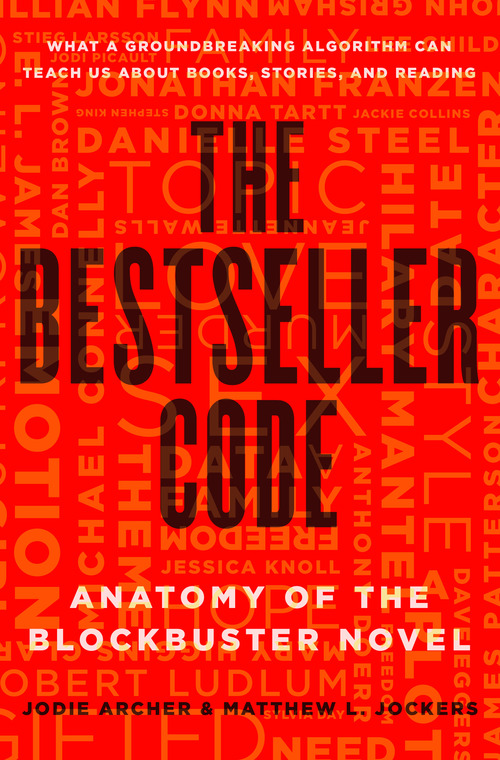
Last week, to great fanfare, a new book analyzing bestselling books hit the market. In my opinion, The Bestseller Code: The Anatomy of the Blockbuster Novel by Jodie Archer and Matthew L. Jockers is intriguing and provocative, but ultimately an exercise in futility. Every author wants a short cut to achieve bestseller success. What if there is an algorithm that, if followed, will produce a …

Read moreThe Bestseller Code: Decoded
Category: Book Business, Book Proposals, Branding, MarketingTag: Bestsellers, Book Business

Two Types of Nonfiction Books: Which Are You Writing?

By Tamela Hancock Murrayon September 22, 2016
Share
Tweet3
10

Broad Appeal I receive a number of emails each day advertising new books and older books being released as ebooks. Recently one notice contained summaries of several titles in a series. I thought the book on three views regarding remarriage after divorce sounded interesting. As faithful blog readers, you may gasp, “Is Tamela getting divorced?” The answer is a resounding, “No!” I credit my long …

Read moreTwo Types of Nonfiction Books: Which Are You Writing?
Category: Book Proposals, Branding, Marketing, PlatformTag: book proposals, Niche Books, Non-Fiction

The Work of a Cover Designer

By Steve Laubeon September 12, 2016
Share
Tweet2
20

We have all heard the phrase “a book is judged by its cover.” And it is true. We all do it. Even when the cover is as small as a postage stamp in an online bookstore. It is the first impression of what’s inside. Rarely will you buy the book after you’ve read it. Instead you make the purchase before reading. What you are buying is the promise of the cover, and the title, and …

Read moreThe Work of a Cover Designer
Category: Art, Branding, MarketingTag: Book Covers, Branding, Marketing

Choosing a Good Title For Your Book

By Dan Balowon August 23, 2016
Share
Tweet
14

Placing a good title on a book is not as simple as one might think. In fact, some prominent books have had rather circuitous journeys to their final title. Jane Austen’s Pride and Prejudice started out as First Impressions. Tolstoy’s All’s Well That Ends Well released to some yawns until it was re-titled and published as War and Peace. On the Road to West Egg; Under the Red, White, and Blue; …

Read moreChoosing a Good Title For Your Book
Category: Book Proposals, Branding, Craft, Get Published, Marketing, Pitching, Writing CraftTag: Craft, Titles, Writing Craft
  • Previous
  • Page 1
  • Interim pages omitted …
  • Page 3
  • Page 4
  • Page 5
  • Page 6
  • Page 7
  • Interim pages omitted …
  • Page 10
  • Next
  • Home
  • About
    • Who We Are
    • Frequently Asked Questions
    • Interview with Steve Laube
    • Statement of Faith
    • Terms and Conditions
    • Privacy Policy
  • Guidelines
  • Authors
    • Who We Represent
    • Awards and Recognition
  • Resources
    • Recommended Reading
    • Christian Writers Market Guide Online
    • Christian Writers Institute
    • Writers Conferences
    • Freelance Editorial Services
    • Copyright Resources
    • Research Tools
    • Selling What You Write
  • Blog
  • Contact

Copyright © 2026 · The Steve Laube Agency · All Rights Reserved · Website by Stormhill Media