
• Skip to main content
  • Skip to after header navigation
  • Skip to site footer

The Steve Laube Agency

Helping to Change the World…Word by Word

The Steve Laube Agency

The Steve Laube Agency

Helping to Change the World Word by Word

  • Home
  • About
    • Who We Are
    • Frequently Asked Questions
    • Interview with Steve Laube
    • Statement of Faith
    • Terms and Conditions
    • Privacy Policy
  • Guidelines
  • Authors
    • Who We Represent
    • Awards and Recognition
  • Resources
    • Recommended Reading
    • Christian Writers Market Guide Online
    • Christian Writers Institute
    • Writers Conferences
    • Freelance Editorial Services
    • Copyright Resources
    • Research Tools
    • Selling What You Write
  • Blog
  • Contact
  • Twitter
  • FaceBook
  • RSS Feed
  • Get Published
  • Book Proposals
  • Book Business
  • Writing Craft
    • Conferences
    • Copyright
    • Craft
    • Creativity
    • Grammar
  • Fun Fridays
Home » Writing Craft » Page 8

Writing Craft

Fix Your Worst Writing Pitfalls

By Bob Hostetleron November 29, 2017
Share
Tweet
32

Writers should know how to write. Right?

But that is easier said than done. “Monsters. . . lie in ambush for the writer trying to put together a clean English sentence,” says William Zinsser in On Writing Well. Numerous dangers line the road to becoming an accomplished and published (and much-published) writer. As a writer, editor, and agent, I see the same mistakes over and over and over (such as repetitive wording). Here are some of the most common:

  1. Overwriting. Never use a dollar word when a dime will do. Your object should not be to impress with the size of your vocabulary, but to communicate.
  2. Using too many adverbs and adjectives. Let nouns and verbs do the heavy lifting. “In general,” write Strunk and White in The Elements of Style, “it is nouns and verbs, not their assistants, that give to good writing its toughness and color.”
  3. Using unnecessary words. Eliminate all unnecessary words (as well as sentences and paragraphs, of course). “If you give me an article that runs to eight pages and I tell you to cut it to four,” says Zinsser, “you’ll howl and say it can’t be done. Then you will go home and do it, and it will be infinitely better. After that comes the hard part: cutting it to three.”
  4. Using cliches, platitudes, qualifiers, jargon, and overdone words. Like “white as snow.” And “God works all things together for good.” Like rather, very, little, pretty. And “washed in the blood of the Lamb.” And if I hear about someone being “impacted” again, I’ll scream like a banshee.
  5. Using long, run-on sentences. “When a sentence is shorter,” writes Susan Titus Osborn in Write Now, “it usually becomes stronger. Try to keep your sentences under 25 words.”
  6. Not varying sentence length. Vary the length and the structure of your sentences.
  7. Not explaining your terms. Readers aren’t stupid, but they’re not mind-readers, either. When you use a term that may be unfamiliar, define it. These days, this applies especially to Bible quotes, references, and allusions; don’t assume that your reader knows anything about the Bible.
  8. Using passive verbs and construction. “Pain clutched his abdomen” is better than “he was in pain” or “he felt pain.”
  9. Generalizing. Avoid abstractions; be concrete and specific. For example, did he sit under a tree? Or was it a magnolia? A manzanita?
  10. Exaggerating. “Don’t overstate,” writes Zinsser. “You didn’t really consider jumping out the window.” And “literally” literally means “literally” (for example, please don’t say “he literally hit the ceiling” unless he literally hit the ceiling).
  11. Telling. “Show, don’t tell” means letting such things as action, dialogue, and (sparingly) flashbacks—not exposition—convey what you want the reader to know.
  12. Neglecting transitions. “Your paragraphs must flow into each other,” writes Osborn. Sometimes a single word will do: however, nevertheless, later, therefore.
  13. Not reading your work aloud. Read it aloud. Seriously, read it aloud. Or, better yet, have someone else read it aloud to you.
  14. Overwriting dialogue tags. “He said” is better than “he interjected,” “he exclaimed,” or “he whispered.” And it’s always better than “he interlocuted.” Better yet: let action and pacing indicate who is speaking.
  15. Not inviting or accepting criticism. Henry James self-published his books before allowing a publisher to print them; he passed them out to friends whose opinions he valued and invited their criticism. You may not go to that extreme but you should invite others to edit and critique your work and learn to accept wise feedback.

These may seem obvious to you, but you would probably be surprised (as I often am) at how many writers make these mistakes—and then show them to an agent or editor! Don’t be that person. Exterminate these fifteen mistakes in everything you write, and you’ll be glad you did (and so will your agent or editor).


Leave a Comment
Category: Craft, Writing CraftTag: Writing Craft, Writing Pitfalls

The Curse of the Writer

By Steve Laubeon November 20, 2017
Share
Tweet
61

Speaking from an agent's perspective...
I have more conversations with clients about their feelings of anxiety, apprehension or insecurity than almost any other topic. Almost every writer I have ever worked with as an editor or an agent severely doubts themselves at some point in the process.

Doubts occur in the midst of creation.
Doubts occur when the disappointing royalty statement …

Read moreThe Curse of the Writer
Category: Career, Encouragement, Faith, Inspiration, Reviews, The Writing LifeTag: Book Business, Doubt, Editors, Get Published, Pitching, Rejection, Writing Craft, Writing Life

Unnecessary Words

By Dan Balowon November 14, 2017
Share
Tweet1
25

From my earliest days writing and communicating, I’ve needed to fit whatever I wrote or spoke into space and time required by the medium in which I was using at the moment. In electronic media, a clock runs everything. If you have 90 seconds to fill before the radio newscast, you actually have 89 seconds to make a point. Not 91 or 105 seconds…89 seconds, so the network feeds are picked up without …

Read moreUnnecessary Words
Category: Craft, Writing CraftTag: word count, Writing Craft

Our Rapidly Changing Culture

By Steve Laubeon November 13, 2017
Share
Tweet7
31

Every year Beloit College creates a "Mindset List" which reflects the culture that the incoming Freshman class have grown up experiencing. It helps their faculty know how to relate to these incoming students. Click here for this year's Mindset List.

I download this list every year and read it with increasing wonder at the speed of our cultural changes.

The college graduating class of 2014 …

Read moreOur Rapidly Changing Culture
Category: Publishing A-Z, The Publishing Life, Trends, Writing CraftTag: Book Business, The Publishing Life, Trends, Writing Craft

Beyond the Hook: Character Flaws?

By Tamela Hancock Murrayon November 9, 2017
Share
Tweet
29

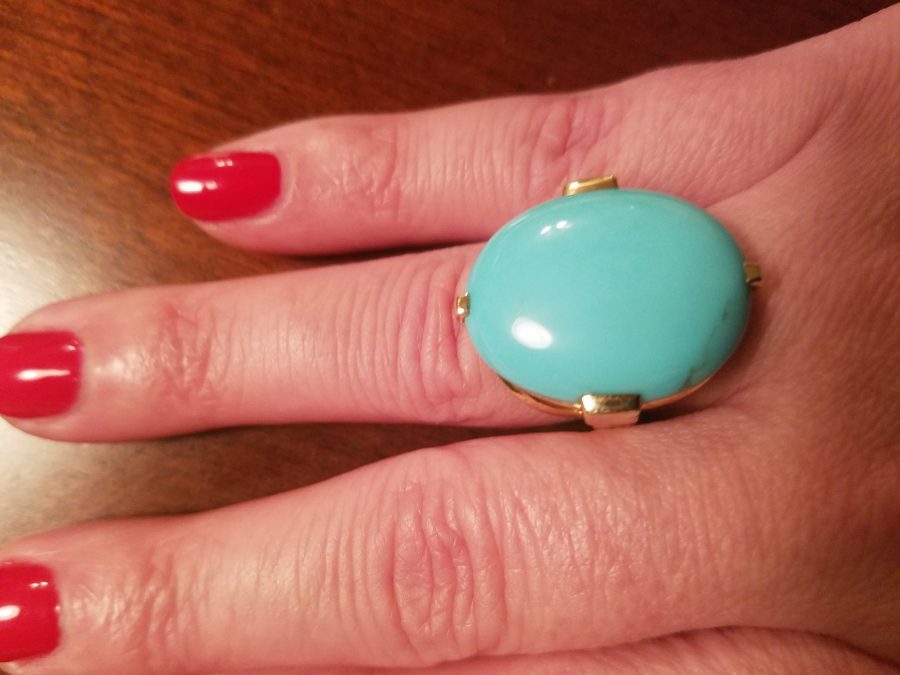
My husband gave me a turquoise ring I enjoy wearing. For one, the stone was unearthed from the Sleeping Beauty Mine in Arizona, which has since closed. The location seems cool to me since our agency’s corporate headquarters is located in Phoenix. And since the mine is no longer in operation, the stone possesses special cachet. But more important, my husband likes the ring and wants me to have it. …

Read moreBeyond the Hook: Character Flaws?
Category: Craft, Writing CraftTag: Characters, Writing Craft

Don’t Write What You Know

By Bob Hostetleron October 4, 2017
Share
Tweet1
44

I asked some of my writing and publishing friends to tell me what one “writing rule” they’d like to see go away…forever. Many of them gave the same answer. Emphatically. Author, blogger, and writers’ conference director Edie Melson said, “We need to quit killing creativity with the time-worn advice, ‘Write what you know.’ Instead, go write what you’re passionate about.” New York Times and …

Read moreDon’t Write What You Know
Category: The Writing Life, Writing CraftTag: The Writing Life, Writing Craft

Author Nuances

By Dan Balowon October 3, 2017
Share
Tweet3
18

Writer and humorist Dave Barry wrote, “The one thing that unites all human beings, regardless of age, gender, religion or ethnic background, is that we all believe we are above-average drivers.” The same applies to artists and writers. Most feel they are pretty good at their craft. But success as an author is a complicated mix of factors. If accuracy, neatness and timeliness were the secret to …

Read moreAuthor Nuances
Category: Craft, Creativity, The Publishing Life, The Writing LifeTag: Art, Nuances, The Writing Life, Writing Craft

Every Book is a How-To

By Bob Hostetleron August 23, 2017
Share
Tweet
27

C.S. Lewis famously said, “We read to know we’re not alone.” I think that is true. But I have long subscribed to a similar statement that I see as sort of a corollary to “Lewis’s Law.” It is this: No one reads about other people. We read only about ourselves. Feel free to quote me. And send me royalties. But you might say, “How can that be, Bob? I read a lot of romance novels. They’re fiction. …

Read moreEvery Book is a How-To
Category: Craft, The Writing LifeTag: readers, The Writing Life, Writing Craft

A Few Little Letters Can Make All the Difference

By Tamela Hancock Murrayon August 17, 2017
Share
Tweet
52

Recently I heard a great anecdote about one little letter. Seems our pastor did a Google search as he researched the parable of the weeds. He typed in “weed” and, well, let’s just say the topic of dandelions didn’t sprout. He had to add an “s” to find the right type of weed. Don’t try this at home and definitely not on a corporate computer. I assure you I didn’t! A couple of weeks ago my husband …

Read moreA Few Little Letters Can Make All the Difference
Category: Craft, Language, Writing CraftTag: Language, Writing Craft

Six Books I’ve Already Recommended

By Bob Hostetleron August 16, 2017
Share
Tweet1
37

I have been a literary agent for a whole month now. I’m still waiting for my anniversary letter and gift from the Steve Laube Agency. I’m sure it’s on the way. I would say it has been a whirlwind so far, but that would be a cliché. And clichés are old hat. But I already feel blessed by the interactions I’ve had with clients, potential clients, editors, fellow agents, and others. And what is more …

Read moreSix Books I’ve Already Recommended
Category: Book Review, Craft, Writing CraftTag: Book Review, Craft, Writing Craft
  • Previous
  • Page 1
  • Interim pages omitted …
  • Page 6
  • Page 7
  • Page 8
  • Page 9
  • Page 10
  • Interim pages omitted …
  • Page 26
  • Next

Sidebar

Get Blog Updates

Enter your email address to get new blog updates delivered via email. You can unsubscribe at any time.

You have Successfully Subscribed!

Grow as a Writer


Find Out More →

Popular Posts

Top Posts on Book Proposals
  • Hints for a Great Cover Letter
  • The Keys to a Great Book Proposal
  • What Steve Laube is Looking For
  • Book Proposals I’d Love to See – Tamela Hancock Murray
  • What I’m Looking for – Bob Hostetler
  • What I’m Looking for – Dan Balow
  • What I’m Looking for – Lynette Eason
  • What’s the Best Way to Submit My Self-Published Book?
  • What Is the Agent Doing While I Wait?
  • God Gave Me This Blog Post
Top Posts on The Business Side
  • When Your Book Becomes Personal
  • The Myth of the Unearned Advance
  • How Long Does it Take to Get Published?
  • What Are Average Book Sales?
  • Can You Plagiarize Yourself?
  • Never Burn a Bridge
  • Who Decides to Publish Your Book?
  • That Conference Appointment
  • Goodbye to Traditional Publishing?
  • Who Owns Whom in Publishing?
  • Ten Commandments for Working with Your Agent
  • Writers Beware! Protect Yourself
Top Series
  • Book Proposal Basics
  • Publishing A-Z
  • A Defense of Traditional Publishing
Top Posts on Rejection
  • The Slush Pile: Enter at Your Own Risk
  • Even the Best Get Rejected
  • Five Reasons Why You May Never Get Published
  • The Unhelpful Rejection Letter
  • Writers Learn to Wait

Blog Post Archives by Month

  • Home
  • About
    • Who We Are
    • Frequently Asked Questions
    • Interview with Steve Laube
    • Statement of Faith
    • Terms and Conditions
    • Privacy Policy
  • Guidelines
  • Authors
    • Who We Represent
    • Awards and Recognition
  • Resources
    • Recommended Reading
    • Christian Writers Market Guide Online
    • Christian Writers Institute
    • Writers Conferences
    • Freelance Editorial Services
    • Copyright Resources
    • Research Tools
    • Selling What You Write
  • Blog
  • Contact

Copyright © 2026 · The Steve Laube Agency · All Rights Reserved · Website by Stormhill Media