
• Skip to main content
  • Skip to after header navigation
  • Skip to site footer

The Steve Laube Agency

Helping to Change the World…Word by Word

The Steve Laube Agency

The Steve Laube Agency

Helping to Change the World Word by Word

  • Home
  • About
    • Who We Are
    • Frequently Asked Questions
    • Interview with Steve Laube
    • Statement of Faith
    • Terms and Conditions
    • Privacy Policy
  • Guidelines
  • Authors
    • Who We Represent
    • Awards and Recognition
  • Resources
    • Recommended Reading
    • Christian Writers Market Guide Online
    • Christian Writers Institute
    • Writers Conferences
    • Freelance Editorial Services
    • Copyright Resources
    • Research Tools
    • Selling What You Write
  • Blog
  • Contact
  • Twitter
  • FaceBook
  • RSS Feed
  • Get Published
  • Book Proposals
  • Book Business
  • Writing Craft
    • Conferences
    • Copyright
    • Craft
    • Creativity
    • Grammar
  • Fun Fridays
Home » Writing Craft » Book Business » Page 7

Book Business

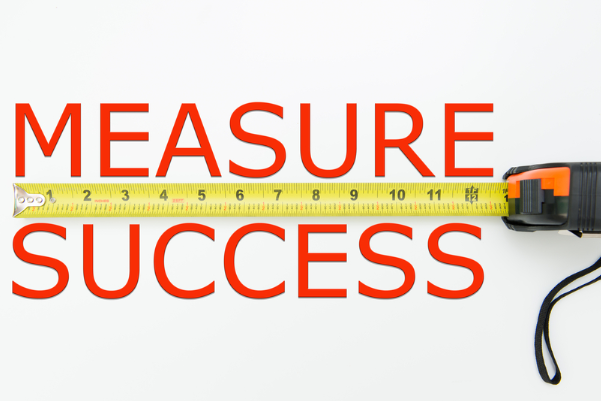
How Do You Measure Success?

By Steve Laubeon December 9, 2019
Share
Tweet
14

A few years ago while talking to an editor, they told the story of an author who was never satisfied (not revealing the name of course). If this author’s latest book sold 50,000 copies. the author wondered why the publisher didn’t sell 60,000. And if it sold 60,000, why didn’t it sell 75,000? The author was constantly pushing for more and was incapable of celebrating success in any form.

Note the title of this post. I’m writing about measuring success, not defining it. To measure is to “estimate or assess the extent, quality, value, or effect of (something).” To define is to “state or describe exactly the nature, scope, or meaning of.”

[For some people, this may be only a matter of semantics; but it should be seen as the difference between setting a qualitative or a quantitative criteria for success.]

When it comes to book sales, many authors have written openly of their own measurement by using numbers and charts. Some even reveal how much money they’ve made. Following these claims can cause a range of emotions from being enlightened, debilitated, or simply frustrated.

I understand the desire to have some objective standard by which we can measure whether or not our efforts are successful. It is a natural instinct. I tried to answer a common question in the post “What Are Average Book Sales?” But it is still only one measure.

In one way, the question “how do you measure success?” is a wise one. It helps to set realistic expectations.

In another way it is unwise because it can end up inside the dangerous game called Comparison. I’ve talked to depressed authors who are wounded by numbers. I’ve talked to angry authors who are incensed by a perceived lack of effort by their publisher. I’ve talked to highly frustrated authors who wonder if it is worth it all.

Ultimately, the quest to know such information is an attempt to define success for the individual author, not measure it. I propose that one must measure before defining. If you can measure it, you can define it. As long as you know what “it” is.

__________

If you can measure it, you can define it.
As long as you know what “it” is.
__________

I think success in book publishing has at least two measurements.

One is yours. The one you define for yourself and your circumstances.

The other is determined by others when looking at your book, either by reading it (an evaluation of content quality), looking at it (an evaluation of production quality), or by evaluating data (sales numbers or market penetration).

The general market tends to both measure and define success based on how much money the author makes or how many copies the book sells.

The Christian market tends to measure success based on the impact of the material on someone’s life. (At least we can hope that is how they measure success.)

I’m aware that the above generalization is simplistic and almost naive, but one cannot deny the sentiment.

At the very least, the Christian author would like to have both. They want their book to both make money and be one that changes lives.

I hope you would agree that impact and changed lives are of primary importance to every writer who is a Christian. To create stories (novels) that reach hearts through the power of story. To write nonfiction that inspires, persuades, encourages, and challenges hearts and minds.

Any discussion of sales numbers should become secondary.

The letters our clients have received from readers include messages from those who chose life over suicide, life over abortion, marriage over divorce, certainty over doubt, reconciliation over stubbornness, hope over despair, a life with Christ over a life of emptiness—because of a book they read.

There is power in words, written and spoken. They can be for good or for evil. Strive for your words to be measured by good. Let them not be banal or benign, but choose the words that challenge and change the lives of those who will read them.


Leave a Comment
Category: Book Business, Career, TrendsTag: Book Business, Career, Money, Success

Never Burn a Bridge!

By Steve Laubeon December 2, 2019
Share
Tweet
21

The sale of Thomas Nelson to HarperCollins and last week's sale of Heartsong to Harlequin brought to mind a critical piece of advice:

Never Burn a Bridge!

Ours is a small industry and both editors and authors move around with regularity. If you are in a business relationship and let your frustration boil into anger and ignite into rage...and let that go at someone in the publishing company, …

Read moreNever Burn a Bridge!
Category: Agency, Book Business, Book Business, Career, Communication, Rejection, The Publishing Life, The Writing Life, TheologyTag: Agents, Editors, Get Published, Rejection, Trends, Writing Craft

What Are Average Book Sales?

By Steve Laubeon June 24, 2019
Share
Tweet
36

A writer asked me, “What does the average book sell? An industry veteran at a writers conference recently said 5,000. What??? I know it all depends …. but … nowhere near 5,000, right?” My simple answer? It’s complicated. It depends. Average is a difficult thing to define. Each publishing company defines success differently. If a novel sells 5,000 copies at one publisher, …

Read moreWhat Are Average Book Sales?
Category: Book Business, Book Sales, Get Published, Money, The Publishing Life, The Writing LifeTag: Book Business, Book Sales, Get Published, Trends

How Long Does It Take to Get Published?

By Steve Laubeon June 3, 2019
Share
Tweet
86

How long does it take to get published? I came to the publishing business from the retail bookstore side of the equation. In the beginning, the biggest adjustment was understanding how long the process for traditional publishing takes. In retail there is instantaneous gratification (customer walks in, buys something, and walks out). With indie publishing there can be nearly instantaneous …

Read moreHow Long Does It Take to Get Published?
Category: Book Business, Book Business, Book Proposals, Contracts, Get Published, Marketing, Publishing A-Z, Self-Publishing, The Publishing Life, The Writing LifeTag: Agents, Book Business, Contracts, Editors, Proposals, waiting

Would You Buy Your Own Book?

By Steve Laubeon May 6, 2019
Share
Tweet
5

When I ask a room of writers if they would buy their own book if they saw it on the shelf at a major bookstore I am met with a variety of reactions. Laughter. Pensiveness. Surprise. And even a few scowls. How would you answer that question?

But the question is meant to ask if your book idea is unique. Whether it will stand out among the noise of the competition.

It is not a question of …

Read moreWould You Buy Your Own Book?
Category: Book Business, Book Proposals, Get Published, Marketing, Pitch, Pitching, Platform, The Publishing Life, Writing CraftTag: Marketing, Pitching, Proposals

Checked Your Copyright Lately?

By Steve Laubeon September 17, 2018
Share
Tweet
11

Have you checked your copyright lately? I mean, have you actually gone to the US Copyright Office web site and searched for your registration? You might be surprised at what you won't find. Here is the link to start your search.

Most publishing contracts have a clause that requires the publisher to register the copyright, in the name of the author, with the US Copyright Office. This is supposed …

Read moreChecked Your Copyright Lately?
Category: Book Business, Copyright, Legal Issues, Publishing A-ZTag: Book Business, Copyright, Legal Issues

Rumbles in CBA

By Steve Laubeon September 10, 2018
Share
Tweet
59

News broke late last week that key staff people in CBA (aka Christian Booksellers Association) are no longer working for the association. In what appears to be a purge, Curtis Riskey, president for 11 years, is no longer working there. Other key people are either no longer with the organization or are on their way out. In addition the chairman of the CBA board resigned last month. According to an …

Read moreRumbles in CBA
Category: Book Business, Book Business, Publishing News, The Publishing Life

New Author Acronyms for The Oxford English Dictionary

By Steve Laubeon August 20, 2018
Share
Tweet
41

Last week the Oxford English Dictionary (OED) added a bunch of new words to their august tome. What made news is that four of the words aren’t words at all but acronyms that have crept into our everyday communication via the Internet. “Words” like LOL, OMG, BFF, and IMHO.
In honor of this auspicious occasion I thought it would be fun to see if we can find other acronyms that should become part of …

Read moreNew Author Acronyms for The Oxford English Dictionary
Category: Book Business, Humor, Writing CraftTag: Humor

The Slush Pile: Enter at Your Own Risk

By Steve Laubeon August 6, 2018
Share
Tweet
26

The publishing world is divided between those who have read the slush pile and those who have not. If you have, then you can understand some of the cynicism and jaded eyes you see behind the glasses of an editor or an agent.

If you have not, then it is difficult to comprehend the unbelievable variety of ideas that can cross our desks.

Read moreThe Slush Pile: Enter at Your Own Risk
Category: Book Business, Book Proposals, Get Published, Writing CraftTag: Agents, Book Business, Editors, Get Published, Pitching, Rejection, Writing Craft

Amazon Rank Obsession

By Steve Laubeon July 30, 2018
Share
Tweet
13

Admit it. You've checked your Amazon.com sales ranking at least once since your book was published. You feel the need to have some outside confirmation of the sales of your book. And Amazon's ranking are free to look at.

I've even seen book  proposals where the author has gone to great lengths to include the Amazon ranking for each title that is competitive with the one the author is proposing. …

Read moreAmazon Rank Obsession
Category: Book Business, Marketing, Publishing A-ZTag: Amazon, Bookselling, Get Published, Marketing
  • Previous
  • Page 1
  • Interim pages omitted …
  • Page 5
  • Page 6
  • Page 7
  • Page 8
  • Page 9
  • Interim pages omitted …
  • Page 22
  • Next
  • Home
  • About
    • Who We Are
    • Frequently Asked Questions
    • Interview with Steve Laube
    • Statement of Faith
    • Terms and Conditions
    • Privacy Policy
  • Guidelines
  • Authors
    • Who We Represent
    • Awards and Recognition
  • Resources
    • Recommended Reading
    • Christian Writers Market Guide Online
    • Christian Writers Institute
    • Writers Conferences
    • Freelance Editorial Services
    • Copyright Resources
    • Research Tools
    • Selling What You Write
  • Blog
  • Contact

Copyright © 2026 · The Steve Laube Agency · All Rights Reserved · Website by Stormhill Media