• Skip to main content
  • Skip to after header navigation
  • Skip to site footer

The Steve Laube Agency

Helping to Change the World…Word by Word

The Steve Laube Agency

The Steve Laube Agency

Helping to Change the World Word by Word

  • Home
  • About
    • Who We Are
    • Frequently Asked Questions
    • Interview with Steve Laube
    • Statement of Faith
    • Terms and Conditions
    • Privacy Policy
  • Guidelines
  • Authors
    • Who We Represent
    • Awards and Recognition
  • Resources
    • Recommended Reading
    • Christian Writers Market Guide Online
    • Christian Writers Institute
    • Writers Conferences
    • Freelance Editorial Services
    • Copyright Resources
    • Research Tools
    • Selling What You Write
  • Blog
  • Contact
  • Twitter
  • FaceBook
  • RSS Feed
  • Get Published
  • Book Proposals
  • Book Business
  • Writing Craft
    • Conferences
    • Copyright
    • Craft
    • Creativity
    • Grammar
  • Fun Fridays
Home » Writing Craft » Page 34

Writing Craft

Read Old Books, Write New Books

By Bob Hostetleron November 14, 2018
Share
Tweet
22

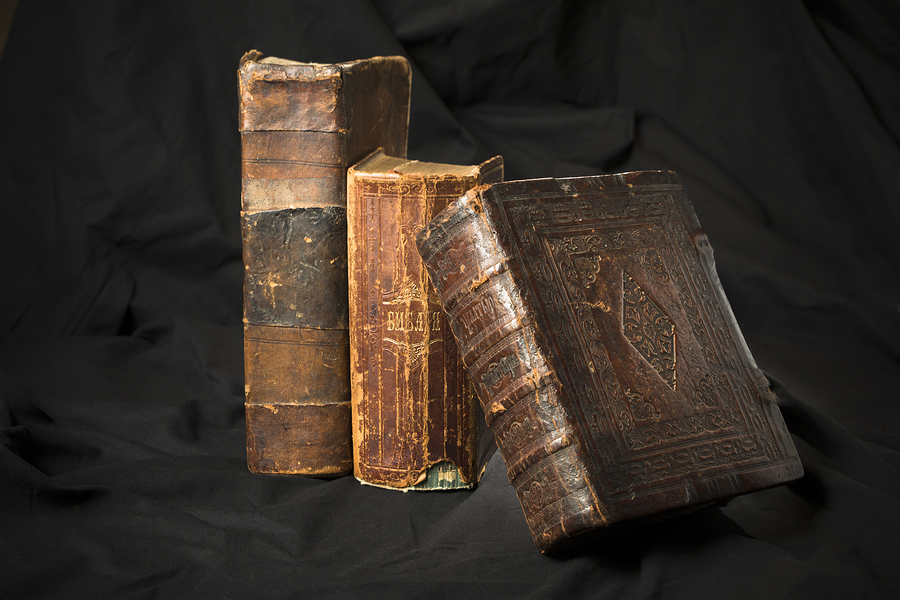
C. S. Lewis (maybe you’ve heard of him) famously commended the reading of old books:

Every age has its own outlook. It is specially good at seeing certain truths and specially liable to make certain mistakes. We all, therefore, need the books that will correct the characteristic mistakes of our own period. And that means the old books…. None of us can fully escape this blindness, but we shall certainly increase it, and weaken our guard against it, if we read only modern books. Where they are true they will give us truths which we half knew already. Where they are false they will aggravate the error with which we are already dangerously ill. The only palliative is to keep the clean sea breeze of the centuries blowing through our minds, and this can be done only by reading old books (from “On the Reading of Old Books” in God in the Dock).

I love it when C. S. Lewis takes the same view as I do. In particular, I consider the reading of old books to be a helpful—even indispensable—habit for writers. I recommend Faulkner, Steinbeck, and Hemingway, Thoreau and Emerson, Bacon and Shakespeare and Dickens, among many, many others. We can learn so much from such authors and their books.

However, I must add a qualification. Read old books, but do not imitate or absorb every writing technique of those authors.

So much has changed over the years in what people read, what they expect when they read, and what they will tolerate when they read. I offer you just four quick examples:

  1. Brevity

Old books—not all, but many—were often written to be read aloud, in the days before radio and television. Others were serialized and published episodically in weekly or monthly magazines. Those formats permitted longer scenes and sometimes rambling descriptions. Such is no longer the case. Today’s readers expect books to move along at a faster pace than, say, James Fenimore Cooper’s Last of the Mohicans—faster, even, than a novel from twenty-five or fifty years ago.

  1. POV

Modern readers of fiction want to get lost in a book’s fictional setting. Careful attention to “point of view” (that is, whose “head” I’m in when I’m reading a fiction scene) maintains the illusion. A Dickens or Dostoevsky novel may shift point-of-view from one character to another several times in a single scene, but that won’t fly these days. “Head hopping” wasn’t a crime in their day, but it is for modern writers.

  1. Dialogue tags

I opened Jane Austen’s classic novel Pride and Prejudice to a random page. On that page, I saw six dialogue tags: “she repeated,” “he then replied,” “she continued,” “said Darcy,” “repeated Darcy,” “cried Elizabeth.” These days, an editor might strike half—or all—of those tags, for various reasons. First, because they describe the obvious. Also because there’s nothing wrong with “said” (in fact, today’s readers barely read the word; their eyes slide over it except when it helps to identify the speaker). And capable writers use fewer tags nowadays, preferring to tag dialogue with action (He stepped to the window. “What do you mean?”) or even letting the tone or manner of speaking identify the character instead of “he said” or “she interlocuted.”

  1. Historical accuracy

Earlier this year, The Association for Library Service to Children (ALSC) announced a decision to change the Laura Ingalls Wilder Award (named for the author of the popular Little House on the Prairie books) to the Children’s Literature Legacy Award. The ALSC said the reason for the decision was the depiction of racist attitudes in the books. Others expressed dismay at the move, pointing out that the wrongness of the attitudes were also depicted. Nonetheless, it is an illustration of the challenges today’s writers face. The need for integrity and accuracy (historical and otherwise) has never been greater, nor the demand for sensitivity and equanimity. Some words can be implied but may not be used. Some attitudes or actions that may be completely accurate will be thoroughly censured. We can’t know every possible reaction to our words, but we must—particularly as Christian writers—consider our words carefully and seek to enlighten and uplift in a dark and downtrodden world.

These are just a few differences to be noted and observed by those of us who read old books. No doubt this blog’s readers can add a few from your own experience. I hope you will.



Leave a Comment
Category: Craft, Reading, The Publishing Life, The Writing Life, Writing Craft

Vegan?

By Tamela Hancock Murrayon November 8, 2018
Share
Tweet
25

This blog is part four of six in a series designed to hone character development of protagonists in your fiction. Pity the poor body under dietary restrictions. And haven’t we all been there at one time or another, for one reason or another? At home, we can manage. Never mind that the grocery store demands steep prices for specialty food. Because they can. Dining in public? An adventure but not …

Read moreVegan?
Category: Writing Craft

Busybodies and Redheads

By Tamela Hancock Murrayon November 1, 2018
Share
Tweet
36

This blog is part three of six in a series designed to hone character development of protagonists in your fiction. One of my elementary school teachers, a blonde, gave birth to twin boys with bright red hair. Her husband was dark-haired. Perhaps in this day and age of sensitivity and multiracial adoptions, no one would flicker a proverbial eyelid at this development. Or at least they would blink …

Read moreBusybodies and Redheads
Category: Writing Craft

Character Quirks

By Tamela Hancock Murrayon October 25, 2018
Share
Tweet
30

This blog is part two of six in a series designed to hone character development of protagonists in your fiction. When on its own and free to be itself, my hair curves into waves that the Atlantic Ocean would envy. Prodigious effort must be made to tame it. That prodigious effort originates in the form of a professional blowout. When trying to preserve a blowout, I have found that the perfect room …

Read moreCharacter Quirks
Category: Writing Craft

Lessons Learned As a Literary Agent

By Dan Balowon October 23, 2018
Share
Tweet
36

Dan is leaving the agency at the end of this month to focus his attention on the work of Gilead Publishing, the company he started in 2016. Here are some parting thoughts. _____ I’ve been a literary agent for about 2,000 of the 13,000 total days spent working with and for book publishers over the last thirty-five years. It’s been a great experience, for sure; but as I look back at the thousands of …

Read moreLessons Learned As a Literary Agent
Category: Agents, Book Business, Branding, Career, Conferences, Craft, Creativity, Encouragement, Inspiration, Marketing, Personal, Pitch, Platform, Self-Publishing, Social Media, The Publishing Life, The Writing Life, Writing Craft

Prized Possessions

By Tamela Hancock Murrayon October 18, 2018
Share
Tweet
42

This blog is part one of six in a series designed to hone character development of protagonists in your fiction. I own a few possessions that I prize though they aren’t worth much moneywise. These possessions represent the love someone has for me. That love is far more valuable to me than the few dollars I could earn from selling my memories on eBay. Take the small trinket box my grandmother …

Read morePrized Possessions
Category: Writing Craft

The Biggest Question About Your Book

By Dan Balowon October 16, 2018
Share
Tweet
11

Authors are like small businesses. They have a finance department, a marketing department and an editorial wing. Then there’s the travel, human resources, IT and facilities management departments, all managed by one person, the author. While writing quality and author platforms are discussed at every writer’s conference, those aren’t the only factors contributing to the success or …

Read moreThe Biggest Question About Your Book
Category: Book Proposals, Creativity, Marketing, Platform

Words That Still Get Misused

By Steve Laubeon October 8, 2018
Share
Tweet
32

The infographic below from GrammarCheck.com is a fantastic reminder of commonly misused words. They did miss one. I have to pause every time before I write “affect” or “effect.” Vocabulary.com reads, “Most of the time, you’ll want affect as a verb meaning to influence something and effect for the something that was influenced. The difference between affect and …

Read moreWords That Still Get Misused
Category: Craft, Writing Craft

Planning Ahead

By Tamela Hancock Murrayon September 27, 2018
Share
Tweet
27

Conference season is coming to a close as we approach the holidays. Our local Lowes store had Christmas trees up last weekend. Does this mean I’m already too late for fall cleaning? Because a budget of time and money is involved in considering whether to attend any conference, it’s not too early to think about your travel in 2019. Don’t miss early-bird savings that conferences may offer. Another …

Read morePlanning Ahead
Category: Conferences

8 Ways to Write Like Shakespeare (Part 2)

By Bob Hostetleron September 19, 2018
Share
Tweet
10

I started a post last week about how much I owe as a writer to Shakespeare. We never met, of course (I’m old, just not that old); but in addition to the four lessons I listed last week, I also learned these crucial and valuable lessons from the Bard of Avon: Do something new. Shakespeare started his career where others did—imitating Chaucer, Milton, Spencer, and others. He not only borrowed and …

Read more8 Ways to Write Like Shakespeare (Part 2)
Category: The Writing Life, Writing Craft
  • Previous
  • Page 1
  • Interim pages omitted …
  • Page 32
  • Page 33
  • Page 34
  • Page 35
  • Page 36
  • Interim pages omitted …
  • Page 88
  • Next
  • Home
  • About
    • Who We Are
    • Frequently Asked Questions
    • Interview with Steve Laube
    • Statement of Faith
    • Terms and Conditions
    • Privacy Policy
  • Guidelines
  • Authors
    • Who We Represent
    • Awards and Recognition
  • Resources
    • Recommended Reading
    • Christian Writers Market Guide Online
    • Christian Writers Institute
    • Writers Conferences
    • Freelance Editorial Services
    • Copyright Resources
    • Research Tools
    • Selling What You Write
  • Blog
  • Contact

Copyright © 2026 · The Steve Laube Agency · All Rights Reserved · Website by Stormhill Media